
Commentary
-
Commentary
In Praise of Electric Power
The fear of losing electric power inspires thoughts about how vital electricity is to our lives. It is fundamental to modern living, and that’s entirely a good thing.
-
Commentary
Wind’s Cost Is Underestimated; Its Value Overestimated
Wind power’s cost is hidden in subsidies; its value is overstated and based on false metrics that don’t account for reliability and dispatchability.
-
Commentary
Beyond the Backyard: Today’s NIMBY
Some amount of NIMBYism should be expected when developing any new project. Good planning and actively engaging community leaders early and often will increase your success quotient.
-
Commentary
Minds for the Future: No. 1, The Disciplined Mind
The regulatory process functions well when citizens and regulators are fully engaged and knowledgeable about important issues. The regulator must also grapple with the ever-changing roles of consumers and utilities to optimize the value of the commodity to society.
-
Commentary
Rethinking the Power Industry’s Dash to Gas
During a recent meeting of state utility commissioners, the CEO of a Fortune 500 electric power company said natural gas prices promise reliability but "always break your heart." What breaks my heart is the electric power industry’s ongoing love affair with natural gas. Using natural gas for generating electricity is not the best or highest use for this clean, green, and domestically abundant resource.
-
Commentary
Radioactive Corporate Welfare
A good default proposition regarding the government’s role in the economy would state that the government should not loan money to an enterprise if the enterprise in question cannot find one single market actor anywhere in the universe to loan said enterprise a single red cent. It might suggest—I don’t know—that the investment is rather … dubious.
-
Commentary
Climate Change: Developing Countries Control the Thermostat
In December 2009, representatives of nearly 200 governments met in Copenhagen, Denmark, to hammer out the details of a new climate change treaty. Treaty drafts indicated that industrialized countries would be required to reduce their greenhouse gas emissions—primarily carbon dioxide (CO2)—up to 80% by 2050. Developing countries would not be required to reduce emissions much, […]
-
Commentary
I’ve Got a Secret
Why did the Environmental Protection Agency (EPA) drop the Cone of Silence around the good news about the continuing trend of improved air quality? The agency’s annual report of air quality trends was released in mid-March with barely a whisper. Even the major media outlets failed to report on the excellent results.
-
Commentary
Copenhagen: The Case for Climate Adaptation
The U.S. Congress won’t pass anything that looks like a cap-and-trade or carbon tax approach to global warming anytime soon. What’s left? Adaptation, the low-tech, low-cost, slow-cooking, most-sensible policy approach.
-
Commentary
TREND: Water, Water Everywhere—But Not in the U.S.
Although hydro power in the U.S. is politically incorrect, even though it generates no greenhouse gases and is by far the largest renewable resource in the country’s generating mix, the rest of the world often has a more sanguine approach to using water to generate electricity. For example…
-
Commentary
Going Coastal: The Case for Offshore Wind
Offshore wind projects involve regulatory, technological, and economic challenges that are greater than those confronted by onshore wind projects. Overcoming these challenges will be necessary to permit offshore wind to achieve its full potential.
-
Commentary
Socrates, Pharmacies, and Regulatory Conferences
How do pharmacy product displays and regulatory conferences differ? A prominent regulatory thinker ponders the differences, and, ironically, the similarities.
-
Commentary
Motivation: Reward Is in the Eye of the Beholder
Motivating workers can be simple and low-cost: Make your employees feel valued and important.
-
Commentary
Are Cap’n’Trade and a National RPS Dead?
Data shenanigans and recent political developments in the U.S. suggest that the climate change frenzy is rapidly fading. Could the backlash also sink renewable energy portfolio standards?
-
Commentary
Electricity 2010: Opportunity Dressed as Hard Work
In their February 10 “state of the industry” speech to the financial community, reprinted here with permission, Edison Electric Institute leaders summarized the challenges and opportunities in the year ahead.
-
Commentary
Greens’ Nuclear Allergy and Its Carbon Costs
Nuclear was such a target of the environmental movement that it embraced the “anything but nuclear” policy with abandon. Is the movement’s consideration of nuclear now a case of better late than never?
-
Commentary
EPA’s Carbon Regs Challenged
In his recent State of the Union address, President Obama made only a passing reference to the American Clean Energy and Security Act of 2009 (H.R. 2545) passed by the House some months ago. “I’m eager to help advance the bipartisan effort in the Senate,” was President Obama’s acknowledgement that the House approach to controlling carbon in the U.S. faces an uncertain fate in the Senate. However, the Environmental Protection Agency’s (EPA’s) endangerment finding, released on the eve of the Copenhagen meetings last December could be the unnoticed uppercut that follows a weak congressional jab at controlling carbon.
-
Commentary
How Myths Distort Energy Policy
Congress and various states are considering a fundamental restructuring and regulation of our energy policy. Any such effort should be based on facts, but legislators, unfortunately, incline to myths, such as the notion that most of our energy comes from oil.
-
 Commentary
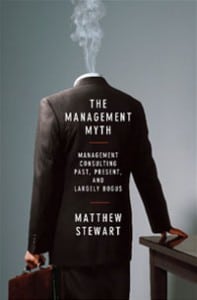
Management Art and Management Science
Is management a science? An enormous intellectual construct developed over the past century—by business schools, consultancies, and major staff components of business firms and government agencies—is dedicated to that proposition.
-
Commentary
Interconnection Animus: Do Regulatory Procedures Create a “Tragedy of the Commons”?
What’s the real “tragedy of the commons?” It is legal, regulatory, cultural, or political? And is there is way out?
-
Commentary
For Utilities, Derivatives Is Not a Dirty Word
Financial derivatives make sense for the electricity business, providing protection against price swings, and don’t require additional regulation.
-
 Commentary
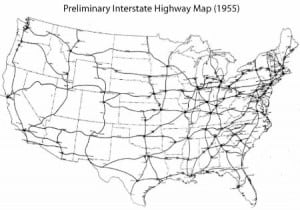
For a Secure Energy Future, Obama Must Be Like Ike
President Dwight David Eisenhower built the interstate highway system more than 50 years ago. Is it time for the U.S., when it comes to the electric power grid, to be like Ike?
-
Commentary
Carbon-Cutting Solution: Dynamic Demand Technology
Once upon a time, climate change felt like a distant threat on the horizon. Now it is happening in front of our very eyes. Across the world, global warming is sparking more intense heat waves, more flooding, and more droughts. If climate change continues at its current pace, the social, environmental, and economic costs don’t […]
-
Commentary
No ‘Cash For Clunkers’ In Climate Bill
Certain small utilities with some of the nation’s highest carbon dioxide emission rates want to change the climate bill pending before Congress to give themselves more allowances to emit carbon dioxide (CO2). This would be the ultimate “cash for clunkers” program for dirty power plants, with one key difference: Unlike the real program, in this case the clunkers would get to stay on the road. The Senate should reject this change.
-
Commentary
Cap and Trade Allowances: Windfalls or Wind Farms?
The commentary "No ‘Cash for Clunkers’ in Climate Bill" creates a fictitious history of climate change and seriously harms good faith efforts within the industry to address the legitimate issues many utilities have raised with the Waxman-Markey bill.
-
Commentary
Time Out!
If the basic science related to man’s contribution to a warming planet is based on flawed fundamental science, a conscious circumventing of the peer review process, political expediency, and refusing to release the fundamental data used by a computer program that has yet to replicate actual ambient temperatures, then it’s time to pause, take a breath, and regroup.
-
Commentary
Power Politics: Enron Lives!
As director of public policy analysis in my last seven years at Enron, I participated in many legislative and regulatory debates involving electricity, although the public policy thrust of the company was the opposite of what I believed. While I favored free markets, the business model of Ken Lay (a PhD economist with years of Washington regulatory experience) centered on special government favor. Enron, for example, had seven profit centers geared to government pricing/rationing of carbon dioxide (CO2) emissions. And in the 1990s, the company was squarely behind a Btu tax. Today, Enron would be pushing cap and trade.
-
Commentary
Is Learning to Regulate Like Learning to Cook?
What’s to learn about regulation from Julia Child and Michael Pollan, gurus of the food world? Plenty, says Scott Hempling of the National Regulatory Research Institute.
-
Commentary
Belt Out Your Best and Overcome Your Doubts
Don’t let your fears of inadequacy limit your ability to succeed in your life and career.
-
Commentary
Pay Attention to the Health Care Debate: It Can Restructure Your Company
The ongoing congressional debate over national health care policy, regardless of the outcome, has important implications for employers who today provide health benefits to their employees. Company management must pay close attention to Washington discussions of health care and to the implications for their companies of what is eventually adopted.