
Commentary
-
Commentary
We Have Proposed Carbon Pollution Standards. Now What?
The most contentious (though not necessarily the most expensive) proposed environmental regulation to hit the power industry in this century was released by the Environmental Protection Agency (EPA) on June 2. The most immediate consequence was an increase in the volume of email. The Big One As I write this column a week after the […]
-
Commentary
As Clean Energy Accelerates, a New Era of Choice Is Upon Us
Though our current power grid is more sophisticated and reliable than when Thomas Edison designed it nearly a century ago, it uses the same model: A company burns fuel to create electricity, which is then sent hundreds of miles along inefficient wires to customers who are given a single energy choice: on or off. Now, […]
-
 Commentary
How Much Energy Will the 2014 World Cup Consume?
Along with 3 billion other viewers around the world, I plan to tune in for the month-long World Cup to see whether the 22-year old Neymar can withstand the colossal pressure that has been put upon his shoulders to deliver a win for team Brazil. Every time I turn on my television set, I’m using World Cup-related energy. And […]
-
Commentary
Who’s Talking About Climate Change?
Everyone, it seems. From Bloomberg Businessweek to Rolling Stone, from ELECTRIC POWER (EP) to Platts Global Power Markets conferences, this spring everyone was talking about climate change. The topic is no
-
Commentary
What to Watch for in EPA Carbon Regulations for Existing Plants
The U.S. Environmental Protection Agency (EPA) is expected to propose first-of-a-kind greenhouse gas (GHG) emission limits for existing power plants by June 2014. The EPA will do so under a rarely used
-
 Commentary
Disruptions vs. Status Quo
There’s been a lot of talk in the past couple of years about “disruption” to the long-established status quo in the electric utility and power generation sector. But I would argue that both terms in this
-
Commentary
What Is a Fossil Power Plant?
That question isn’t as flippant as it may sound. If you look at the type of plant that’s familiar to the generation of power industry personnel who have retirement within view and compare it with the sort
-
Commentary
America Needs Continued Coal Use
Mike Duncan Coal is currently the feedstock for nearly 40% of America’s baseload electricity supply, and in communities and states where coal has the highest utilization, utility bills are the lowest. With
-
Commentary
My Top 10 Predictions for 2013, Part II
My earlier post graded my first five predictions for 2013. This post grades the remaining five posts and suggests my overall grade for 2013. In past years, my best overall grade was a B+. I’m still hopeful I can better that score. 5. The EPA Fracks Gas. On the same day the Environmental Protection Agency […]
-
Commentary
Grading My Top 10 Predictions for 2013, Part I
I have presented my top 10 predictions for the year in the January issue for the past several years. I then graded myself against the actual events of the year and presented the results at the end of that year. My grades over the past three years ranged from mid- to high-B, which wasn’t bad […]
-
Commentary
Global Change Agents
Now more than ever, the power generation business is a global business. Supply chains are more international than in the last century. Thanks to more easily retrievable reserves of shale gas, the prospect of
-
Commentary
Financial Performance – Based Utility Bonuses: Unnecessary Exposure
A series of derivative lawsuits has recently been filed against the officers and directors of Pacific Gas and Electric Co. (PG&E) based on the explosion of a PG&E gas transmission line in San Bruno
-
 Commentary
Is Distributed Generation Really the Future?
If you read the environmental press, clean tech media, or even the New York Times, you might conclude that America is on the cusp of a distributed generation (DG) revolution. “Solar power and other
-
 Commentary
How U.S. Power Generators Are Preparing for 2014
The business environment for generating companies worldwide continues to become increasingly complex, and not just as a result of regulations. Even in the U.S., the concerns and constraints faced by generators
-
 Commentary
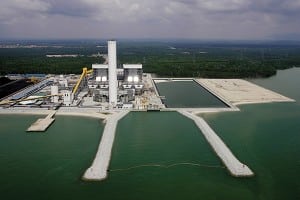
Burns & McDonnell Sees U.S. Market in Transition While Asian Market Grows
The U.S. power generation market is experiencing a unique set of transitional drivers, the biggest being the current economics within the energy market. U.S. Market Drivers A significant portion of the U.S
-
Commentary
The When, Where, and Why of Energy Patents
New research conducted by Massachusetts Institute of Technology and Santa Fe Institute researchers finds that the number of energy patents is increasing faster than patents overall. However, the trend lines
-
Commentary
Federal-State Cooperation Is Needed in Transmission Project Development
Beginning with its landmark Order No. 888 in 1996, the Federal Energy Regulatory Commission (FERC) has aggressively pursued policies designed to foster planning and construction of new transmission facilities
-
Commentary
Defining the Future: Time to Get Real
Christoph Frei The global energy environment is increasing in complexity and uncertainty. We are in a much more challenging world than previously envisaged. The World Energy Council’s (WEC) analysis has
-
Commentary
Fighting Bovine Flatulence
Cows get little respect these days. Except, of course, when cow is in the form of a two-inch-thick steak cooked medium-well and served still sizzling from the grill. Others prefer their beef served in a sack passed through a window. Either way, your favorite serving of beef is under attack. First came the revelation that […]
-
Commentary
Peak Oil, Not
Do you remember the many predictions in past years that oil production has peaked world-wide and we will soon deplete this natural resource? M. King Hubbert, a petroleum engineer with the Shell Research Lab, developed his theory of Peak Oil in 1956, predicting U.S. production of oil would peak between 1965 and 1970 and thereafter […]
-
Commentary
Coal Companies Must Battle NIMBYism with Better Tactics
Coal projects continue to be met with NIMBY [Not in My Back Yard]-type groups protesting coal companies’ efforts to start new projects. Although these projects can create plenty of jobs, they are met by opposition groups who cite environmental concerns. The coal seam Medicine Bow Project in Wyoming is estimated to create 6,000 jobs, but […]
-
Commentary
“Smart Grid” or “Strong Grid”? Words Matter
The Obama administration recently changed its nomenclature on a topic of much interest to readers of this publication and those in the power industry. The administration has said it prefers to talk about its policies advancing a “resilient grid” as opposed to its previous emphasis on developing a “smart grid.” The new policy thrust, for […]
-
Commentary
Utility Rate Proposals: Are We Aligning Compensation With Performance?
The purpose of regulation is to align private behavior with the public interest. That public interest imposes two chief obligations. The first obligation is the utility’s obligation to serve the public. This obligation must be defined by commission-established standards for performance. The second obligation is the commission’s obligation to compensate the utility. This compensation must be based on the […]
-
Commentary
Fracking-based Methane Leakage Determined to be Minimal
The U.S. Environmental Protection Agency (EPA) has put forward three excuses to justify its increasing regulatory authority over the natural gas, an authority that was specifically given to the States in the 2008 Energy Policy Act. The first was the excuse that fracking has caused pollution of potable water wells. After years of searching, the […]
-
Commentary
Natural Gas Is Ready Now to Power Emerging Markets
Paul Smith A few short years ago, our nation was scrambling to import natural gas from abroad, and an energy-secure America was little more than a pipe dream. Oh, the difference a decade makes. Advances in
-
Commentary
Are All Your Eggs in One Basket?
As we announce Top Plant award winners in the nuclear category this month, the global nuclear power industry is at an unusual point in its history: mired in controversy and caution, yet championed by an
-
Commentary
Where’s the Warming? II
In February 2013 I wrote an editorial entitled “Where’s the Warming?” My argument was that the IPCC was facing a significant problem in writing the then-upcoming AR5 because the most recent global temperature data was showing a drop in global average temperatures contrary to its computer model results. One of the reviewers of the draft […]
-
 Commentary
Carbon Dioxide and the Fundamentals of Heat Transfer
With the recent push for the regulation of carbon dioxide emissions from new and existing power plants (see “Turning the Heat Up on Carbon Emissions” in the October 2013 issue of POWER), the science behind this action needs to be revisited. The regulation of carbon dioxide emissions will apply to all fossil fuel energy sources; […]
-
Commentary
Will Washington Finally Resolve the Nuclear Waste Dilemma?
After 30-plus years of false starts, delays, and political interference, the U.S. finally has an opportunity to make good on its obligations to store the spent fuel from our nation’s nuclear reactors. A
-
Commentary
Equal Time
POWER Associate Editor Sonal Patel reported on Sept. 12 that “nearly 100 renewable energy and environmental groups and businesses have asked the Energy Information Administration (EIA) to reevaluate renewable energy forecasts, alleging the agency’s projections don’t reflect ‘the current status and recent, real-world growth rates of renewables.’” The EIA forecasts are presented in its Annual […]