
Coal
-
 O&M
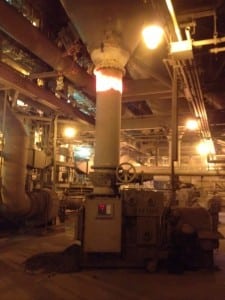
O&MCoal Silo Fires and Hot Spots: Extinguishing and Preventing Recurrence
Many coal-fired power plants in operation today do not have a fire-extinguishing medium installed in their coal storage silos. CO2 injection would generally be the preferred method, and is used in many plants, but what do you do when your plant was left without this option after construction? Wet or just plain “hot” coal making […]
-
 Coal
CoalState Officials to EPA: Allow Energy Efficiency for Compliance with Existing Power Plant Carbon Rule
The Environmental Protection Agency (EPA) should allow states to use energy efficiency programs as a way to comply with its forthcoming rule that will regulate carbon dioxide emissions from existing power plants, state energy officials, regulatory utility commissioners, and clean air agencies from more than 45 U.S. states urged the agency on Thursday. In a […]
-
 Coal
Coal[UPDATED] Fire at Coal Power Plant Takes Facility Out of Service Indefinitely
[Update May 13] A serious fire at the Martin Drake Power Plant in downtown Colorado Springs will leave the facility offline for an indefinite period of time. The fire began at approximately 9:40 a.m. on May 5. The first firefighters arrived on the scene within five minutes and faced a difficult decision on how to […]
-
 Legal & Regulatory
Coal and Nuclear Nearly Invisible at Platts Global Power Markets
Gas, wind, and solar are it for any new generation in North America for the next five to 10 years (with a few one-offs), speakers at this year’s Platts Global Power Markets conference agreed. The annual event for those involved in power project development, financing, and litigation was held in Las Vegas Apr. 7 to […]
-
Coal
Fuel-Flexible CFBs Add Flexibility to Resource Plans
The downward trend in solid fuel quality has negatively affected many power generators that rely on imported fuels. For others, this represents a market opportunity. A quick survey of recent installations found that fuel-flexible circulating fluidized bed (CFB) boilers addressed owners’ fuel source concerns by efficiently burning low-quality, high-moisture coals, even when mixed with biomass and […]
-
Legal & Regulatory
POWER Digest (May 2014)
Netherlands to Ban Financing of Coal Plants Abroad. The Netherlands on Mar. 24 joined an initiative of the U.S., the UK, Denmark, Finland, Iceland, Norway, and Sweden to reach a global climate change agreement
-
 Coal
CoalDuke Energy’s Coal Ash Solution Could Cost More Than $10 Billion
On Apr. 22, Duke Energy updated the N.C. Joint Environmental Review Commission on near- and long-term actions it is considering to address coal ash storage across the state. Paul Newton, N.C. state president for Duke, explained that actions outlined in a letter sent to N.C. Gov. Pat McCrory (R) and N.C. Department of Environment and […]
-
 Coal
CoalWater Shortages Threaten Global Coal Power
Water stresses in developing countries threaten to derail a massive build-out of coal capacity, according to a new analysis from the World Resources Institute (WRI). The WRI estimates that about 1,400 GW of new coal capacity is being proposed worldwide, and of that, three-quarters of it are in China and India. Unfortunately, much of this […]
-
 Renewables
DOE to Open $4B More in Loan Guarantees for Renewables, Energy Efficiency Projects
The Department of Energy (DOE) plans to make an additional $4 billion in loan guarantees available to help commercialize U.S. renewable energy and energy efficiency technologies that avoid, reduce, or sequester greenhouse gases. The DOE on Wednesday issued a draft loan guarantee solicitation under Title XVII of the Energy Policy Act of 2005 (through Section […]
-
 Coal
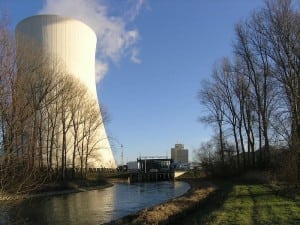
CoalEPA Breaches Legal Commitment to Issue Final 316(b) Cooling Water Rule
The Environmental Protection Agency (EPA) failed to issue a final rule governing power plant cooling water by April 17 as agreed with environmental groups. In court papers, the agency instead stated its intention to complete the rulemaking by May 16, 2014. The agency secured more time under a modified settlement agreement with a coalition of […]
-
 Coal
CoalSpringerville Recognized as PRBCUG Plant of the Year
During the Powder River Basin Coal Users’ Group (PRBCUG) annual conference held Mar. 31–Apr. 3, 2014, in conjunction with the ELECTRIC POWER Conference & Exhibition, Springerville Generating Station was recognized as the PRBCUG Plant of the Year. The 1,600-MW Springerville facility includes four units of roughly equal size. Units 1 and 2 are owned by […]
-
 Coal
CoalDTE Energy’s Best Practices for Minimizing Combustible Dust Issues
Dealing with combustible dust and controlling fuel spillage are struggles faced by almost all coal-fired power plants. During the ELECTRIC POWER Conference & Exhibition held Apr. 1–3, 2014, in New Orleans, La., several breakout sessions covered best practices being utilized at some facilities to overcome these challenges. In one session, David Thomas, fuel systems manager […]
-
Coal
PRBCUG Focuses on Safe Coal Handling
Andy Dobrzanski, Mark Collett, and Dave Markle were among the presenters at the Powder River Basin Coal Users’ Group (PRBCUG) annual conference held Mar. 31–Apr. 3, 2014. The PRBCUG provides in-depth presentations and discussions promoting the safe, efficient, and economic use of PRB coals by companies that currently use, or are considering the use of […]
-
 Legal & Regulatory
[UPDATED] Federal Court Upholds Final MATS Rule, Thwarts Industry Challenges
A federal court on April 15 upheld the Environmental Protection Agency’s (EPA’s) February 2012-finalized Mercury and Air Toxics Standards (MATS), ruling in a 2–1 decision that the agency is not required to take costs into account when it promulgates rules that are “appropriate and necessary” to address hazards to public health. In the U.S. Court […]
-
 Renewables
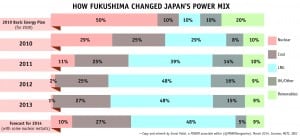
Japan’s Cabinet Formally Drops Zero-Nuclear Ambitions, Adopts New Basic Energy Plan
In a stark departure from the zero-nuclear future proposed by a previous administration, the cabinet of Japan’s Prime Minister Shinzo Abe Friday endorsed restarting the country’s idled nuclear reactors as it develops more renewables. The cabinet on Friday officially adopted the first Basic Energy Plan since the Fukushima disaster, a 78-page document (in Japanese) that […]
-
 Coal
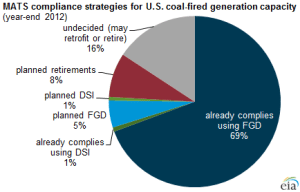
CoalEIA: 70% of U.S. Coal Fleet Is Ready for MATS
At least 70% of U.S. coal-fired generating capacity has already installed environmental control equipment to comply with the Mercury and Air Toxics (MATS) Standards, the Energy Information Agency (EIA) reports. The Environmental Protection Agency’s rule will require coal generators of more than 25 MW to incorporate the maximum achievable control technologies (MACT) to control the […]
-
 Renewables
APS: Arizona to See Dramatic Changes in Energy Mix Within 15 Years
By 2029, renewable sources in Arizona’s energy mix will double and natural gas’s share will surpass coal’s and nuclear’s, the state’s largest utility, Arizona Public Service (APS) projects in its newly released “Integrated Resource Plan.” The report, which foresees that the state’s energy needs will grow 52% while peak demand will surge 60% compared to […]
-
 Coal
CoalDuke Energy Cited for Significant Crack in Cape Fear Coal Ash Dam
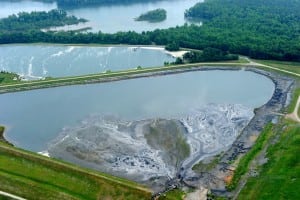
North Carolina state officials on Friday cited Duke Energy for a 40-foot-long crack in an earthen dam at the 2012-retired Cape Fear Plant’s ash impoundment, to which the company last week made emergency repairs. The North Carolina Department of Environment and Natural Resources (DENR) issued Duke Energy with a notice of deficiency on Friday for the longitudinal […]
-
Coal
PRBCUG Focuses on Safe Coal Handling
Andy Dobrzanski, Mark Collett, and Dave Markle were among the presenters at the Powder River Basin Coal Users’ Group (PRBCUG) preconference workshop on Monday. While several speakers mentioned housekeeping’s important role in the safe operation of facilities, other topics were also covered in-depth. One was Fly Ash Handling Systems and PRB Coal Ash. Dobrzanski, fuel […]
-
Coal
How Competitive Are You?
I spent the week before this issue went to press at IHS Energy’s CERAWeek in Houston, listening and talking to many of the attendees representing 55 countries during the annual event that examines strategic
-
 Coal
CoalAdvanced Cooling and Water Treatment Technology Concepts for Power Plants
Technology development to reduce freshwater withdrawals and consumption for all types of thermoelectric power plants is emerging as a top research and development (R&D) priority. Thermoelectric plants in
-
 Renewables
Australia’s Carbon Policy Predicament
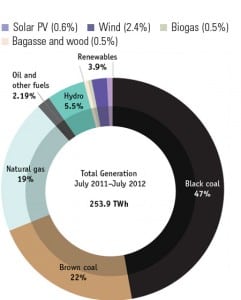
On the energy front, Australia seemingly has it all. It is endowed with significant reserves of coal, natural gas, uranium, and thorium—as well as resources that excel by world standards for wind, solar
-
 Coal
CoalDrones Promise Faster, Easier Inspection of Boilers, Stacks, Towers, and More
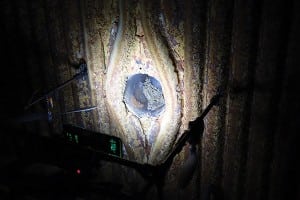
Mention the word “drone,” and most people will have a mental picture of what a drone is and does. They likely will think first of military drones carrying missiles and other weapons that could malfunction
-
 Legal & Regulatory
Proposal to Clarify Clean Water Act Puts McCarthy on Hot Seat
When Environmental Protection Agency (EPA) Administrator Gina McCarthy testified at the House Appropriations subcommittee on Interior, Environment, and Related Agencies today, Rep. Hal Rogers (R-Ky.) made it clear from the start that he would be at odds with her. “For years, it seems the EPA has worked hard to devise new regulations that are designed […]
-
 Renewables
FERC Staff Highlight Changing Power Mix as Demand Falls for Third Straight Year
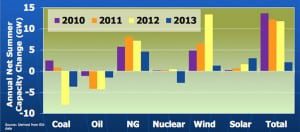
The changing generation mix and recent extreme weather throughout the U.S. have led the power sector to evaluate and begin making changes to address their increased dependence on natural gas and the integration of renewables, staff at the Federal Energy Regulatory Commission (FERC) said in the 2013 State of the Markets report. Gas Price Hikes […]
-
 Coal
CoalDemocrat’s Senate Bill Proposes Federal CCS Subsidies
Sen. Heidi Heitkamp (N.D.)—one of a handful of Democrats that are critical of the Obama administration’s carbon rules for new power plants—on Monday introduced a bill that would provide federal funds, tax credits, and pricing support to private power companies investing in carbon capture and storage (CCS) technologies. Heitkamp’s newly unveiled bill, “Advanced Clean Coal […]
-
 Coal
CoalDan River Ash Spill Could Lead Duke to Retire 932 MW of Coal Generation
The Dan River coal ash spill has forced some serious discussions about the future of Duke Energy’s North Carolina coal fleet. Duke Energy President and CEO Lynn Good said in a March 12 letter to Gov. Pat McCrory (R) and Department of Environment and Natural Resources (DENR) Secretary John Skvarla that the company is planning […]
-
 Legal & Regulatory
GE Executive Markhoff Talks About the Water/Energy Nexus
Source: POWER During IHS CERAWeek in Houston in early March, POWER Editor Gail Reitenbach sat down with Heiner Markhoff, president and CEO of GE Power & Water’s Water & Process Technologies, to ask him about several issues of concern to power plants. Though the “water/energy nexus” theme has gained prominence recently, Heiner Markhoff’s comments underscored […]
-
 Coal
CoalE.ON to Close 13 GW in Europe
Germany’s biggest utility E.ON will shutter nearly 13 GW of capacity—more than a quarter of its conventional fleet in Europe—to offset the “negative effects of a difficult economic and regulatory environment” in the European Union (EU), CEO Johannes Teyssen said on Wednesday. The company released gloomy financial year results for 2013, reporting a 14% drop […]
-
Coal
CCS Is Not Yet “Adequately Demonstrated,” Say Industry Leaders [Corrected]
Janet McCabe, a top air regulation official at the Environmental Protection Agency (EPA) defended the agency’s carbon rule for new power plants at a House hearing on Wednesday, even as industry witnesses countered that technology does not yet exist to meet the regulatory requirements. The EPA’s acting assistant administrator for air and radiation reiterated the […]