
Climate change
-
 T&D
T&DSouthern States Goes SF6-Free with New Switching Products
The company’s O2rigen product line uses a carbon dioxide (CO2) and oxygen (O2) gas blend to eliminate potent greenhouse gas emissions from power switching equipment. Southern States LLC has launched a new line of power switching products that replace sulfur hexafluoride (SF6)—one of the most potent greenhouse gases known—with a natural-origin blend of CO2 and […]
-
 Trends
Why This Summer’s Heat Proved the Case for a Smarter Grid
The summer of 2025 pushed the U.S. electric grid to its limits. A brutal heat dome swept across the East Coast, while a powerful derecho tore through the Midwest, leaving more than 28,000 homes and businesses without power in Iowa alone. Demand surged to record levels. Yet despite the pressure, the grid avoided major blackouts. Smarter, more flexible systems are beginning to deliver results, but the need for faster transformation is undeniable.
-
 Commentary
Powering AI: From CERA Week Optimism to New York Climate Week Realism
This week, the energy world convenes in New York for the United Nations Climate Week. The gathering will encompass the most vital sectors of the U.S. economy at present—technology firms and utilities will be well-represented, along with a host of consultants, suppliers, experts, and academics, who consistently attend these events. UN Climate Week mirrors another […]
-
 Nuclear
Debunking Nuclear Power’s Biggest Misconceptions and Why It’s Needed Today
Despite nuclear power’s unmatched ability to produce reliable, carbon-free energy at scale, it is often dismissed by clean energy advocates in favor of renewable resources like wind and solar. Cost arguments and public misconceptions around safety and radioactive waste have kept it out of many mainstream climate strategies. But as Tim Gregory argues in his […]
-
 Sustainability
How Biogas Is Solving Data Centers’ Clean Energy Challenge
Biogas doesn’t just offer a backup plan for tech companies seeking more power; it provides a blueprint for sustainability. By transforming landfill, agricultural, and wastewater emissions into usable power, biogas solves two problems at once: it reduces fugitive methane emissions, a potent greenhouse gas (GHG), and generates renewable electricity. This is energy that’s good for […]
-
 Coal
CoalIreland Ends Use of Coal for Power Generation
Ireland is no longer burning coal to produce electricity after the country’s last coal-fired unit was converted to use heavy fuel oil. ESB, the plant’s operator, on June 20 issued a notice that the 305-MW Unit 3 of the Moneypoint station, located on Ireland’s southwest coast, has ended its use of coal after 40 years. ESB previously had said Moneypoint after the conversion would operate under direct dispatch instructions from EirGrid, the grid operator, as part of the balancing market.
-
 Trends
The Great Shift: Navigating the Global Energy Transition
As the world grapples with the urgent need to combat climate change, the transition from fossil fuels to renewable energy sources is accelerating, driven by technological advancements and governmental directives. This global shift promises not only to reduce greenhouse gas emissions, but also to create a more sustainable and resilient energy future. The world stands […]
-
 Legal & Regulatory
EPA Weakening Rules on Power Plant Emissions in Boost for Fossil Fuels
The U.S. Environmental Protection Agency (EPA) has announced sweeping changes to regulations on emissions of greenhouse gases (GHG) and other pollutants from coal- and natural gas-fired power plants, weakening rules established under the Biden administration that sought to combat climate change.
-
 Commentary
Trump Administration Moves to Allow Unlimited Pollution from Power Plants
Former EPA employees at the Environmental Protection Network (EPN) strongly oppose the Environmental Protection Agency’s (EPA) proposal to repeal all federal limits on greenhouse gas (GHG) emissions from fossil fuel-fired power plants and to rescind the most recent update to the Mercury and Air Toxics Standards (MATS). These proposals represent a sweeping dismantling of critical […]
-
 Legal & Regulatory
EPA Moving to Axe Emissions Limits from Coal- and Gas-Fired Power Plants
The U.S. Environmental Protection Agency (EPA) has confirmed it is drafting a plan to eliminate all limits on greenhouse gases (GHG) from coal- and natural gas-fired power plants. The EPA on May 24 said a new rule on emissions would be published after interagency review.
-
 Renewables
Eye of the Storm: Mitigating Financial Risks of Extreme Weather on Renewable Energy Systems
Extreme weather events have increased in frequency and intensity, but renewable energy projects can maintain financial stability through sound technical and financial risk mitigation strategies. Extreme
-
 Solar
SolarThe Solar Industry Is Getting Smarter About Storm Defense
Stowing capabilities, tougher modules, and real-time data are the new frontline in solar’s fight against extreme weather. Alex Roedel and Jyoti Jain, Nextracker The global climate crisis is reshaping the way we think about energy resilience. As extreme weather increases, utility-scale solar projects face a new era of challenges. Advanced solar tracker systems, control and […]
-
 Energy Security
What Trump’s First 100 Days Have Meant to the Power Industry
U.S. President Donald Trump was sworn into office for the second time on Jan. 20, 2025. That means April 30 marks his 100th day back in office. A lot has happened during that relatively short period of time (Figure 1). The Trump administration has implemented sweeping changes to U.S. energy policy, primarily focused on promoting […]
-
 Coal
CoalTrump’s EPA Grants Dozens of Coal Plants Exemption from Emissions Rules
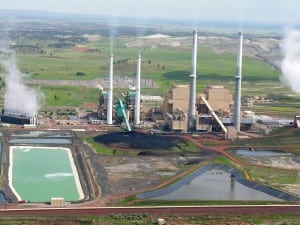
The Environmental Protection Agency (EPA) has granted nearly 70 coal-fired U.S. power plants a two-year exemption from federal requirements to reduce emissions of toxic chemicals such as mercury, arsenic and benzene. It’s another move by the Trump administration to boost the U.S. coal industry, measures that include encouraging electric utilities to continue operating coal-fired power plants that might otherwise be closed.
-
 Renewables
DOE’s Loan Programs Office Offers Game-Changing Possibilities
As the presidential inauguration loomed on the horizon in January this year, the U.S. Department of Energy’s (DOE’s) Loan Programs Office (LPO) published a “year-in-review” article, highlighting accomplishments from 2024 and looking ahead to the future. It noted that the previous four years had been the most productive in the LPO’s history. “Under the Biden-Harris […]
-
 Electrification
Industry Experts: Market Forces Still Support Electrification
A changing policy landscape presents challenges for moving away from fossil fuels. Executives say that may slow, but won’t halt, the momentum to electrify. Remember the slogan “electrify everything”? It
-
 Legal & Regulatory
Trump Energy Policy Changes Signal Major Industry Shifts in 2025 and Beyond
There has been significant outrage from the left around changes the Trump administration has made since taking office, including actions that specifically affect the power industry. Yet, it’s not uncommon
-
 Legal & Regulatory
What Comes Next for Carbon Capture in the Power Industry?
Policy upheavals have cast uncertainty over the future of carbon capture and storage in the power sector, though its momentum is widely expected to continue. In November 2024, the Global CCS Institute, an
-
 Sustainability
Generate a Cleaner Future with Air Products
Let Air Products be your decarbonization partner through the transition to sustainable energy. We can help you utilize oxygen to improve your natural gas efficiency, find a potential carbon capture and sequestration solution, or introduce hydrogen to your process to reduce emissions. Download to read our latest content to learn more and take the first […]
-
 Coal
CoalU.S. Coal Plants Get Reprieve as Market and Policies Change
Several U.S. utilities in recent months have said they plan to keep coal-fired units in their generation fleets operating past their scheduled retirement dates, in most cases citing increased demand for electricity in their service areas. Some also note that the Trump administration is likely to eschew enforcement of current pollution standards, and attempt to […]
-
 Coal
CoalXcel Says Coal-Fired Texas Plant’s Conversion to Natural Gas Nearly Complete
Xcel Energy said the company’s coal-fired Harrington Generating Station in Amarillo, Texas should fully complete its transition to burning natural gas in May. Harrington, whose three units have 1,018 MW of generation capacity, was Xcel’s first coal-fired power plant in Texas. It came online in 1976. The utility in 2020 made the decision to convert […]
-
 Sustainability
District Energy Systems: The Invisible Giant of Urban Efficiency
District energy systems employ a centralized facility to supply heating, cooling, and sometimes electricity for multiple buildings in an area through a largely underground, mostly unseen network of pipes. When district energy systems are utilized, individual buildings do not need their own boilers, chillers, and cooling towers. This offers a number of benefits to building […]
-
 Commentary
Factors Impacting the Transition to Carbon-Free Energy
The production and consumption of carbon-free energy (CFE) has accelerated worldwide in recent years, driven by large private energy consumers who have been leading this transition. For example, Google has been matching 100% of its global annual electricity consumption with purchases of renewable energy since 2017. The public sector is also an increasing driver, as […]
-
 Commentary
The Critical Role Engineers and STEM Educators Play in Addressing Climate Change Challenges
Even with the end of hurricane season, America was once again reminded of the tragic and devastating impact that extreme weather and hurricanes can have on our communities. This hurricane season brought
-
 Interview
Industry Experts Say Storage, Renewables, Transmission Key Parts of 2025 Energy Outlook
The outlook for the power generation sector in 2025 promises a continuation of the energy transition, though there’s plenty of debate about the direction of the industry. Advocates for renewable energy, particularly in the U.S., are concerned about how the incoming Trump administration—with its support for fossil fuels—could impact the growth of clean technologies. Utilities […]
-
 Hydrogen
Siemens Energy Joins Forces for Bold 100% Hydrogen HL Gas Turbine Leap
Siemens Energy is teaming with UK power giant SSE to develop a combustion system that will allow its flagship SGT5-9000HL gas turbine to run 100% on hydrogen while maintaining the flexibility to operate with natural gas and blends of the two. The two companies on Dec. 9 launched “Mission H2 Power,” a project that will […]
-
 Solar
SolarBest Practices for Mitigating Hail Damage to Solar Projects
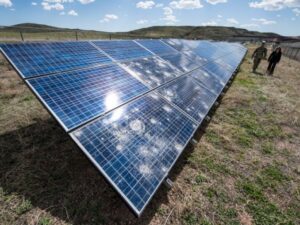
Mitigating against the risk of hail for solar projects is both extremely complicated and more straightforward than you may think. Natural catastrophes (NatCat), particularly hail, pose a significant risk for solar projects and can lead to severe damage with cost impacts for projects and insurers. In this article, we look at the risk that hail […]
-
 Coal
CoalNorth Dakota Carbon Capture Project in Limbo After Canada Group’s Exit
A Canada-based energy group reportedly has withdrawn from a $2 billion carbon capture project in North Dakota. Project Tundra, which aimed to capture carbon dioxide from flue gas from two coal-fired units at the 705-MW Milton R. Young Station near Center, North Dakota, is now in limbo just two months after securing more than $4 […]
-
 Hydrogen
Hydrogen Use Cases for the Power Industry
Hydrogen is becoming increasingly important to the electric power generation industry for several reasons. One is that hydrogen offers a promising pathway to decarbonize the power sector. When used in fuel cells or burned for electricity generation, hydrogen produces only water vapor as a byproduct, making it a zero-emission energy source. This is crucial for […]
-
 Renewables
Solar Power Leads Buildout of India’s Renewable Energy
India has long been dependent on coal-fired power for much of its electricity, and the country still gets about 70% of its energy from burning coal according to government data. The Institute for Energy