
Business
-
Legal & Regulatory
Leveraging State Clean Energy Funds
Consider state clean energy funds as potential replacement funding sources for future clean energy projects.
-
Supply Chains
End Game for Rare Earth Dispute?
The end of the long-running flap over access to markets for rare earth minerals may be in sight, driven by a combination of political and diplomatic pressure at high levels and the normal workings of the marketplace.

-
HR
Power Industry Needs to Focus on Grooming the Next Generation of Leaders
The power industry has not done a good job grooming and mentoring the next generation of leaders and, as a result, is facing a leadership gap as the current generation approaches retirement, two executive search professionals told MANAGING POWER. While prospects for entry-level recruitment have improved, it will be five to 20 years before this cohort is ready to lead. In the near term, a renewed focus on grooming future leaders is critical.
-
Business
Five Ways to Make Energy Real to Your Customers
Lack of customer participation—or outright customer resistance—is likely to kill at least one of your utility’s strategic initiatives. Perhaps it already has. But utilities can take a variety of easy steps to prevent the wounding or premature death of strategic initiatives such as smart meters, new rate and efficiency programs, or capital construction projects.
-
Legal & Regulatory
The Rebranding of Global Warming
Washington’s greenhouse gang has learned that global warming is a losing issue. They’re back with a new strategy.

-
Business
POWER Digest (May 2012)
Three South Korean Firms Opt for MHI’s J-Series Turbines. Japanese firms Marubeni Corp. and Mitsubishi Heavy Industries (MHI) on March 22 said they had been jointly awarded orders for three large-scale combined cycle electric power projects in Korea totaling 3,800 MW. The plants are the 950-MW 2nd Pyeongtaek Combined Cycle Power Plant, the 1,900-MW Dongducheon […]
-
 Business
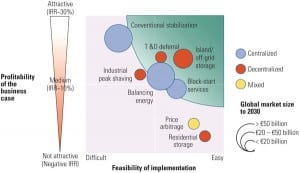
Getting Bulk Storage Projects Built
Unpredictable periods of operation are one of the disadvantages of wind and solar technologies. If there were an economic means of storing the energy from the time of production to the time of demand, the value of renewable energy sources would greatly increase. Here are some ideas for how to bridge that gap.
-
 Business
POWER Gets Social
Do you have professional insights to share with others in the industry—or questions for those with a particular expertise? Do you want to get news and information from POWER more than monthly or weekly? Then join POWER on these social media platforms.
-
Business
POWER Digest (April 2012)
CSP Giants Form Alliance. Concentrating solar power companies Abengoa, BrightSource Energy, and Torresol Energy in early March formed the Concentrating Solar Power Alliance, an organization dedicated to educating U.S. regulators, utilities, and grid operators about the unique benefits of concentrating solar power (CSP) and of thermal energy storage. The U.S. has more than 500 MW […]
-
Legal & Regulatory
A Year of Fukushima’s Economic Fallout
A year has passed since Japan’s Fukushima Daiichi nuclear plant was destroyed by earthquake and tsunami. What is the economic price Japan must pay?
-
 Solar
SolarLarge China Energy Storage Project Begins Operation
Chinese state entity State Grid Corp. of China (SGCC) and battery maker BYD in January said they had finished construction on what they call “the world’s largest battery energy storage station”—a project in Zhangbei, Hebei Province that combines 100 MW of wind and 40 MW of solar capacity, a smart power transmission system, and 36 MWh of energy storage in arrays “larger than a football field.”
-
Business
Investing in Information to Respond to a Changing Climate
Putting more money and effort into information and information technology will pay solid returns when it comes to understanding and adapting to the world around us, including our changing climate.
-
 Business
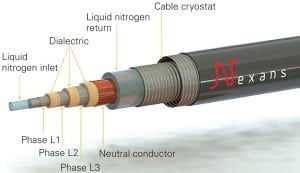
High-Temperature Superconductor Technology Stepped Up
A new project planned by RWE and partners Nexans, the Karlsruhe Institute for Technology (KIT), and Jülich is poised to mark another milestone for high-temperature superconductor (HTS) cable technology, which transports electricity without losses when cooled down to about –200C (–392F).
-
Finance
Buying and Selling Energy Trading Portfolios
The energy trading business is changing as Wall Street adjusts to the requirements of the Dodd-Frank Wall Street Reform and Consumer Protection Act. What does that mean to you?
-
 Gas
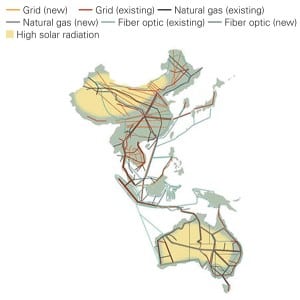
GasDesertec Ambitions Turn to Asia, Australia
The ambitious Desertec project—a $9 billion initiative to develop, harness, and transmit 2,000 MW of renewable power from North Africa and the Middle East to Europe by 2050—has been trumped by a vaster concept that spans Asia and Australia.
-
Business
The Case of the Disappearing Server Hugger
Is your organization being held back by a “server hugger?”
-
Business
POWER Digest (March 2012)
RusHydro Inaugurates New Unit at Restored Sayano-Shushenskaya Hydropower Plant. RusHydro —a hydroelectricity company that is majority-owned by the Russian Federation—announced in mid-December that it had put its first brand new hydropower unit into commercial operation at its Sayano-Shushenskaya hydropower plant on the Yenisei River, near Sayanogorsk in the Republic of Khakassia. Following the catastrophic accident […]
-
HR
Workplace Drama: Seven Tips for Reducing Workplace Negativity
Eliminating the negative and accentuating the positive in the workplace. Here’s the roadmap.
-
 O&M
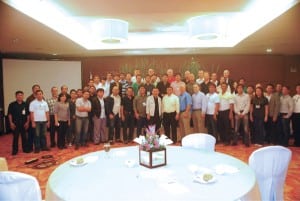
O&MUser Group Profile: Philippine Coal Plant Users’ Group
The Philippine Coal Plant Users’ Group (PCPUG), the leading nonprofit organization involved in generating electricity in the Philippines, recently held a conference introducing its mission and vision.
-
Legal & Regulatory
TREND: Europe’s Enthusiasm for Renewables Wanes
The EU has poured billions of dollars in support of the development of wind and solar projects over the past decade. Have the Europeans now lost their appetite for all things green?
-
Legal & Regulatory
Rethinking Security Requirements for Generation Developers
A universal reality for U.S. power generation developers is the challenge of obtaining funding in today’s tight credit markets.
-
 Coal
CoalVietnam Works Hard to Power Economic Growth
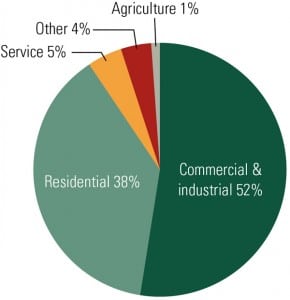
For the past 15 years, Vietnam has enjoyed enviable gross domestic product increases, averaging 7% annually. That kind of economic growth increases power demand, but financing new capacity remains a challenge. Reaching its ambitious capacity growth goals will require Vietnam to expand its financing and vendor base, attract foreign investment, and ensure future fuel supplies in a region thick with competition for those resources.
-
 Business
Ensuring Resource Adequacy in Competitive Electricity Markets
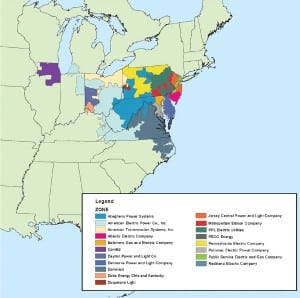
Planning for resource adequacy—something that was relatively simple in the context of vertically integrated utilities—continues to be a difficult issue in competitive electricity markets. Whereas state public utility commissions used to have exclusive authority to determine what generation needed to be built and when it was to be available, this responsibility has been assumed by RTO/ISOs in regions with competitive markets. Each region approaches resource planning differently, and each region faces unique problems.
-
 Smart Grid
EEI Proposes Road Map for Electric Vehicle Integration
Several new models of plug-in electric vehicles will enter the market in 2012, joining the Nissan LEAF and Chevrolet Volt. The Edison Electric Institute has prepared four suggestions to help utilities smoothly handle the introduction of these vehicles to roads and grids.
-
 Business
Automating Crew Callouts
Progress Energy has adopted an emergency worker callout program that has eliminated manual dialing, improved work acceptance rates, and increased the speed of worker reporting. The standardized process also complies with union work rules that require equality in overtime opportunities, by seniority. The business case for automating the worker callout process is compelling.
-
Business
POWER Digest (February 2012)
ANDRITZ to Rebuild Oldest Egyptian Nile Dam. Austrian firm ANDRITZ HYDRO on Dec. 22 won a $138.4 million contract from the Egyptian Ministries of Energy and Water Resources for the supply and installation of four bulb turbines, generators, and the electrical and hydro-mechanical equipment to rebuild the Assiut barrage—the oldest dam in the Egyptian section […]
-
 Business
Data Center’s Standby Power System Is “Money in the Bank”
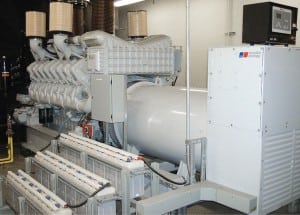
Synovus relies on emergency standby generator sets to prevent any loss of services or data in the event of a utility outage.
-
 Coal
CoalAbundant Clean Energy Fuels Brazil’s Growth
Brazil’s power industry has long been dominated by its vast hydro resources, which historically have accounted for over 80% of the country’s generation capacity. With engineering marvels like the massive Itaipú dam and the proposed Belo Monte project, the country is a leader in the development and use of hydroelectricity on a grand scale. But as the 2001 energy crisis proved, dependence on a single source leaves the country vulnerable to severe shortages. Thanks to government programs designed to take advantage of the country’s favorable climate, Brazil is committed to diversifying its energy mix while continuing to maintain a renewable energy focus.
-
 Coal
CoalU.S. Confronts Pipeline Gaps While Europe Juggles Renewables and Debt
U.S. optimism has been restored by reports of abundant, reasonably priced natural gas to fuel most new generation; however, huge gaps in the fuel delivery system (thousands of miles of pipelines are needed) will soon challenge gas plant development. Meanwhile, the cloud of sovereign debt hangs over all major capital projects in Europe, where the UK moves ahead with new nuclear projects while many of its neighbors shut the door on nuclear and struggle to finance their commitment to renewables.
-
Legal & Regulatory
Getting Peak Returns out of Peaking Turbines
Gas turbines are expensive. Although peaking units aren’t as costly as baseload units, letting them sit idle is still a waste. Yet that is what peaking units spend nearly all their time doing. Some operators only fire up their units a few days a year. That is like putting money in the bank and collecting interest a few hours at a time, rather than all year round. That strategy only works when the payback is extremely high for those short periods.