
Articles By

-
 Coal
CoalJinzhushan 3: The World’s First PC-Fired Low Mass Flux Vertical Tube Supercritical Boiler, Part 1
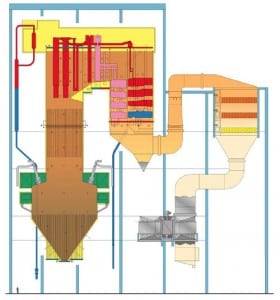
The world’s first supercritical pulverized coal–fired low mass flux vertical tube Benson boiler is Jinzhushan 3, located in the Hunan Province of the People’s Republic of China. The 600-MW Babcock & Wilcox Power Generation Group Inc. once-through boiler burns Chinese anthracite using downshot pulverized coal (PC) technology. Part 1 of this three-part article provides a project summary and overview. The other two parts will look at technology features of the unique boiler design and plant performance test results.
-
 O&M
O&MCycle Chemistry Commissioning Deserves Its Own Strategy
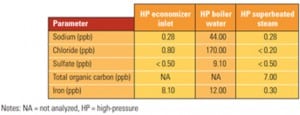
After years of development, design, and construction, your plant is finally nearly ready for startup. But don’t light that cigar yet—at least not until you’ve developed a strategy for commissioning your water cycle chemistry. Root causes of corrosion can be predicted and avoided. The best way to avoid corrosion is to develop and implement plant-specific cycle chemistry commissioning guidelines.
-
Coal
PPL Montana to Mothball Corette Coal Plant, Cites Environmental Rules, Economic Factors
PPL Montana plans to mothball its 154-MW coal-fired J.E. Corette power plant in Billings, Mont., starting in April 2015. The company cited "effects of pending Environmental Protection Agency [EPA] regulations combined with economic factors," as reasons for its decision.
-
Business
NYISO Braces for Generation Gap By 2020
About 1,792 MW of existing generation in the New York bulk power system is expected to retire or be mothballed over the next decade, and if demand heightens as has been forecast by 2020, the state’s grid could see a 1,000-MW generation gap, the New York Independent System Operator (NYISO) warned in its recently released 2012 Reliability Needs Assessment (RNA).
-
Coal
Progress Shutters 382-MW H.F. Lee Coal Plant
Progress Energy last week shuttered its 382-MW coal-fired H.F. Lee power plant near Goldsboro, N.C. The 1951-built station is the second to be retired under the Duke Energy subsidiary’s fleet modernization program.
-
Coal
RWE Sets Closure Dates for 2-GW Didcot and 1-GW Fawley Plants
RWE npower, the German energy company’s UK arm, on Tuesday said it would shutter its coal-fired 2,000-MW Didcot A Power Station in Oxfordshire and the 1,000-MW oil-fired Fawley Power Station in Hampshire at the end of March 2013 under the European Union’s (EU’s) Large Combustion Plant Directive (LCPD).
-
News
Japan Presents Nuclear-Free Energy Strategy—and Stops Short of Endorsing It
Japan’s Cabinet on Wednesday refrained from endorsing a much-awaited, controversial recommendation made just days before by an advisory panel urging Japan to seek to close all its viable nuclear reactors by 2040 and increase its reliance on renewable energy, energy efficiency, and fossil fuels.
-
News
GAO Report: Spent Nuclear Fuel Stored Onsite Could Double Before Disposal
Spent nuclear fuel stored onsite at commercial nuclear reactors in the U.S. will increase by about 2,000 metric tons per year and balloon to more than 140,000 metric tons by 2055, before it can be moved offsite when storage or disposal facilities are expected to have been developed, the Government Accountability Office (GAO) found in a recently released report.
-
News
Public Interest Groups Charge Senate Bill for State Oversight of Coal Ash
More than 300 state and national public interest groups on Friday asked U.S. senators to oppose a bill introduced in August by Sens. John Hoeven (R-N.D.), Kent Conrad (D-N.D.) and Max Baucus (D- Mont.) that they say will fail to protect public health and the environment because it encourages "unsafe dumping of toxic coal ash."
-
News
CAISO Looks to New Options to Replace Lost Nuclear Capacity
One of the best ways California would be able to endure another summer without power from Southern California Edison’s (SCE’s) San Onofre Nuclear Generating Station would be to convert the Huntington Beach Units 3 and 4 into synchronous condensers, allowing them to act somewhat like spinning flywheels to adjust grid conditions, experts from the California Independent System Operator Corp. (CAISO) told its Board of Governors at a meeting last week.
-
Business
SDG&E Settles with Feds on 2007 California Wildfire Claims
San Diego Gas & Electric (SDG&E) has agreed to pay $6.4 million to the U.S. Forest Service to settle claims related to one of the largest wildfires in California history. The utility has already paid more than $1 billion to settle thousands of lawsuits after state investigations concluded that the company’s high-voltage power lines produced electrical arcing and ignited the 2007 Witch Creek Fire that ravaged 198,000 acres near Santa Ysabel in San Diego County, Calif.
-
Commentary
Workplace Drama: Master Your Energy
One strong way to master your energy drain at work is to understand how to interpret your emotional experiences differently. Then you can make positive and empowering choices that don’t drain your energy.
-
Commentary
London’s Lessons for Good Management
The recent London Olympics were not just a triumph of athletics. They also showed how solid project management can bring an enormously challenging job to a successful conclusion, putting on one of the most successful Olympic Games ever.
-
Finance
Trend—How Strong Is the Urge to Merge?
After a slowdown in the first half of 2012, merger activity in the power sector may be heating up again. One surprising target given the current environment: Coal.
-
Legal & Regulatory
NERC Cyber Security Rules: Evolution or Brownian Motion?
Making sense out of the NERC cyber security rules is inherently difficult; the ever-changing regulatory scene makes it even harder. With Version 4 now in hand, Version 5 is on the way.
-
Supply Chains
Rare Earths: China Strikes Back
Facing increasing competition and a slumping economy, China is moving to strengthen its already robust monopoly over rare earth minerals vital to many advanced energy technologies.
-
HR
Helpful Tips When Terminating an Employee
Firing a worker is not an easy task, something no conscientious manager takes lightly. And the decision can come back to bite. But it is sometimes necessary and there are ways to do the job that minimize the risks to the organization.
-
Business
Energy PR—Forget Facts, Show Value
Whatever utility communicators are selling these days, it doesn’t look like customers are buying. And the problem likely will get worse before it gets better.
-
Legal & Regulatory
Understanding Consequential Damages
One set of legal provisions that anyone in a business or operational role should be aware of is the “consequential damage waiver.” These provisions dictate two of the most vital aspects of any contract: What can you recover if the other party breaches the contract, and what do you have to pay if you do?
-
Commentary
Thriving in a World Without 30-Year Careers
Long careers with one company ending with the presentation of a gold watch are passé. It’s every person for themselves these days. You should be preparing for that new job right now.
-
Commentary
If This Is What It Takes to Produce 8 Kilowatts . . .
The cost of regulatory review is often equal to the cost of the cost of installation for very small projects. It’s time some common sense is used by legislators and government regulators when it comes to small power projects.
-
Solar
Ariz. Now Home to World’s Largest Solar PV Plant
The title of world’s largest operating solar photovoltaic (PV) power plant goes to Arizona. On Monday, First Solar Inc. announced that the Agua Caliente solar project has achieved a peak generating capacity of 250 MW connected to the electrical grid. The project, under construction in Yuma County, will have a total capacity of 290 MW when completed.
-
Smart Grid
Regulators Cannot Move Fast Enough to Protect Grid, FERC Warns
In testimony before a congressional subcommittee, Joseph McClelland, director of the Federal Energy Regulatory Commission (FERC) Office of Electric Reliability, enumerated the ways in which the U.S. regulatory system is ill-equipped to deal with time-sensitive threats to physical and cyber assets of its power system.
-
Nuclear
Quebec’s Only Nuclear Plant to Close
The Canadian province of Quebec’s newly elected Parti Quebecois government announced on Tuesday that it has decided to shutter the province’s 30-year-old Gentilly-2 nuclear plant.
-
Solar
DOE Offers $10M to Bring Down Rooftop PV "Soft Costs"
The Department of Energy (DOE) on Wednesday announced its SunShot Prize, a new competition to make it faster, easier, and cheaper to install rooftop solar energy systems. A total of $10 million in cash awards are available to the first three teams that repeatedly demonstrate the non-hardware costs, or price to plug in, can be as low as $1 per watt for small-scale photovoltaic (PV) systems on American homes and businesses.
-
General
Energy Politics of Republicrats and Democans
By Kennedy Maize (@kennedymaize) Washington, D.C., 9 September 2012 — If you are looking for direction on what energy policy and politics in the U.S. might look like after the November election, don’t expect much guidance from the two party platforms. Nor have the contenders had much of substance to say on the topic. Given […]
-
Nuclear
NRC to Start EIS, Revise Waste Confidence Rule for Spent Nuclear Fuel
The Nuclear Regulatory Commission (NRC) on Thursday directed its staff to develop an environmental impact statement (EIS) and a revised waste confidence decision and rule on the temporary storage of spent nuclear fuel (SNF). Last week’s decision was in response to a June 8 federal court ruling, which said the NRC had erred in deciding that SNF from the nation’s power plants could be stored as long as 60 years after a plant’s operating license expires.
-
Coal
Congressional Briefs: Back from Recess
Congress has returned from its summer break. As the House prepares to vote on its Upton-Stearns "No More Solyndras Act," lawmakers also expect to focus on a bill that could prohibit finalization of any Environmental Protection Agency (EPA) power plant rules that curb greenhouse gas emissions while carbon capture and storage technology is commercially unavailable. House Democrats, meanwhile, called for hearings to examine the impacts of climate change on the nation’s generators.
-
Business
Western Cuba Goes Dark After Power Line Disruption
Residents of Cuba’s capital Havana and millions of others living in an area stretching 450 miles from the nation’s southeastern province of Camaguey to the westernmost province of Pinar del Rio experienced a massive blackout on Sunday night caused by an "interruption" in a 220-kV transmission line, the government said.
-
Smart Grid
USDA Reaches $250M Goal for Smart Grid Technologies
The U.S. Department of Agriculture (USDA) last week said it had reached its $250 million goal to finance smart grid technologies. Agriculture Secretary Tom Vilsack also announced nine rural electric cooperatives and utilities in 10 states would receive loan guarantees to make improvements to generation and transmission facilities and implement smart grid technologies.