
Articles By

-
 Business
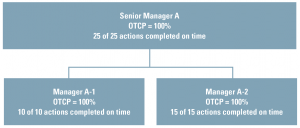
Measuring On-Time Completion to Improve Your EHS Audit Program
A number of factors promote effective and responsible completion of EHS audit action plans, with the most important being the proper alignment of responsibility and authority for developing and implementing the audit action plan.
-
 Coal
CoalPotential Impacts of Closed-Cycle Cooling Retrofits at U.S. Power Plants
The Clean Water Act Section 316(b) rule changes regarding cooling water intake structures that are expected next year could affect up to 428 power plants, representing 1,156 individual units, according to the Electric Power Research Institute. Depending on plant size and the complexity of the retrofit project, retrofit capital costs could range from very low to over $500 million for large nuclear plants. The power industry total cost is projected to be over $100 billion.
-
 Environmental
Hazy Timetable for EPA’s Proposed Tighter PM2.5 Standards
On June 15, in response to a court order, the U.S. Environmental Protection Agency (EPA) proposed new lower limits on particulate matter (PM) emissions that are scheduled for release in mid-December, although that deadline may be missed. Even with implementation delays, now is a good time to start paying closer attention to the requirements of the proposed standard.
-
 O&M
O&MThe Evolution of Steam Attemperation
The fundamental design principles and process for modern steam desuperheating, or the attemperation of superheated steam in the power generation industry, have been evolving since the early 1930s. Meeting the requirement for steam quantity, quality, and temperature consistency is the foundation of traditional attemperator component design, particularly for fast-response combined cycle plants.
-
 News
NewsPortable Milling Machine for Linear and Gantry Milling
The Climax LM5200 and LM6200 portable milling machines are designed with a split rail system to easily perform both linear and gantry milling with a minimum of changeovers. A rigid, modular bed design allows shorter bed sections to be combined to fit the length of the work area, without losing rigidity, and to extend the […]
-
General
Could Cap-and-Trade Have Cut It?
By Kennedy Maize (@kennedymaize) Washington, D.C., 24 October 2012 – Here’s one for climate science and policy wonks. Remember the Waxman-Markey cap-and-trade bill? Among the community of the climate alarmed, there was much gnashing of teeth, tearing of hair, and sack cloth and ashes when the legislation that passed the Democratic House in 2009 died […]
-
News
SCS Energy Cancels 750-MW Coal Gasification Plant with Carbon Storage
A 750-MW coal gasification plant with carbon sequestration proposed to be built in in Linden, N.J., is no longer under development, owner SCS Energy says on its website. The company said it has moved the commercial structure and process design for the PurGen project to the Hydrogen Energy California project, a fossil fuel gasification plant with carbon storage proposed for Kern County, Calif.
-
News
Duke Prepares for Testing at Edwardsport IGCC Plant
Duke Energy last week said that testing was under way in preparation for commercial operation next year of its 630-MW integrated gasification combined cycle (IGCC) Edwardsport power plant in Knox County, Ind.
-
News
Cuomo’s Energy Task Force Calls for $5.7B and 3.2 GW New Capacity in N.Y.
A task force appointed by New York Gov. Andrew Cuomo (D) on Monday released a plan that calls for 3,200 MW of new power generation and transmission capacity funded with up to $5.7 billion in private investments.
-
News
FERC Proposes Stricter Standards to Mitigate Geomagnetic Disturbances on Grids
The Federal Energy Regulatory Commission (FERC) last week proposed to require new standards addressing the impacts of a geomagnetic disturbance (GMD), saying that, though it recognized the strong disturbances that result in distortions to Earth’s magnetic field are infrequent, current mandatory reliability standards do not adequately address vulnerabilities.
-
News
NRG Gets DOI Lease for Wind Farm Offshore Delaware Coast
The Department of the Interior (DOI) on Tuesday awarded NRG’s Delaware-based unit Bluewater Wind a lease for commercial development of a 450-MW offshore wind farm on 96,430 acres of federal waters about 11 nautical miles off the coast of Delaware. But NRG last year put that project on hold and has considered selling it.
-
Nuclear
Dominion to Decommission Kewaunee Nuclear Plant, Cites Poor Economics
The Kewaunee Power Station—a 556-MW nuclear facility in Carlton, Wis.—will be shut down and decommissioned starting in the second quarter of 2013, its owner Dominion said on Monday. The company said the decision to shutter the plant was based “purely on economics.”
-
News
Bruce Power’s Unit 2 Synchronized with Ontario’s Grid
Bruce Power on Tuesday synchronized its Bruce Power Unit 2 to Ontario’s grid, marking a milestone in its program to refurbish Units 1 and 2 at the Bruce A nuclear generating station. The company, which synchronized the 750 MW Bruce A Unit 1 with the grid on Sept. 19, said that first synchronization of Unit 2 will allow it to carry out final planned commissioning activities at the plant.
-
News
Lawmakers to EPA: Consider MATS Subcategory for Waste Coal Plants
A bipartisan delegation of lawmakers from Pennsylvania on Monday urged the Environmental Protection Agency (EPA) to consider creating a separate subcategory for power plants that convert coal refuse into energy in its final Mercury and Air Toxics Standards (MATS). Though waste coal plants made an important environmental contribution by reducing coal refuse piles, the hydrochloric acid (HCl) standard in the MATS rule could push them out of business, they said.
-
News
A123, Satcon Are Latest Clean Tech Casualties
A123 Systems, maker of an advanced lithium iron phosphate battery and energy storage systems on Tuesday filed voluntary petitions for reorganization under Chapter 11, as Satcon, a provider of utility-grade power conversion solutions for the renewable energy sector, filed for bankruptcy on Wednesday.
-
News
EPA Gives PNM More Time to Consider State Proposal to Reduce Haze from San Juan Coal Plant
The U.S. Environmental Protection Agency (EPA) extended until Nov. 29 an administrative stay of a federal implementation plan to address regional haze under the Clean Air Act at PNM Resources’ 1,800-MW San Juan Generating Station near Farmington, N.M. The agency’s action last week gave the utility 45 more days to consider an alternative proposed by the New Mexico Environment Department (NMED), but did not extend the current September 2016 compliance date of the federal implementation plan.
-
News
Australian Generator Curtails Coal Power Output, Citing Pinch from Carbon Tax, Renewables Target
The owner of one of Victoria’s largest coal-fired power stations announced on Wednesday it would cut output at the Gippsland-based Yallourn power station, saying the July 1-implemented carbon tax is driving up operating costs and that Australia’s renewable energy target is squashing wholesale power prices to uneconomic levels.
-
News
LG&E to Shutter Kentucky Coal Units Earlier Than Planned
Louisville Gas and Electric Co. (LG&E) on Monday said it would shut down three coal units in Kentucky—a total capacity of 563 MW—eight months earlier than originally planned.
-
News
DOI Establishes 17 Solar Energy Zones on Public Lands in Six Western States
The Department of Interior on Friday finalized its Programmatic Environmental Impact Statement (PEIS), establishing an initial set of 17 solar energy zones totaling about 285,000 acres of public lands that will serve as priority areas for commercial-scale solar development. The initiative is part of the Obama administration’s goal to authorize 10,000 MW of renewable power on public lands.
-
General
Cato Crushes Romney on Energy R&D
By Kennedy Maize (@kennedymaize) Washington, D.C., 15 October 2012 – Would Republican Mitt Romney be tougher-minded than Barack Obama when it comes to some of the most egregious energy subsidies flowing out of Washington? As election day mercifully approaches, a duo of libertarian energy experts has examined Romney’s rhetoric on energy. They find that “the […]
-
Coal
EPA Petitions Full Federal Court to Rehear CSAPR Appeal
The Environmental Protection Agency (EPA) on Friday appealed a federal court decision handed down on Aug. 21 that vacated the agency’s July 2011–finalized Cross-State Air Pollution Rule (CSAPR) because, the court said, it violated federal law. The EPA is now seeking a rehearing en banc that would involve all eight judges that serve at the U.S. Court of Appeals for the D.C. Circuit.
-
News
Regulators Approve First New Power Plant to Use Marcellus Shale Gas in Penn.
Pennsylvania’s Department of Environmental Protection (DEP) on Wednesday issued an air quality plan approval for a project to build the state’s first power plant to run at least partially on locally sourced Marcellus Shale gas. Moxie Energy’s proposed 936-MW plant in Asylum Township, Bradford County, uses two power blocks that will each consist of a combustion gas turbine and a steam turbine.
-
News
CEZ Disqualifies AREVA Bid for Two-Unit Czech Reactor Expansion
Czech utility ÄŒEZ on Wednesday told AREVA that a bid submitted to build two new EPR units at the Temelín Nuclear Power Plant—a site that already houses two VVER-1000 reactors built in 2000 and 2003—has been disqualified because it failed to fulfill “some other crucial criteria” defined in the tender. The decision, which AREVA said it would appeal, means only Westinghouse and an AtomStroyExport-led consortium remain as contenders for that project contract.
-
News
Growth Spurt Foreseen for Global Nuclear Capacity as Japan Resumes Construction of ABWR
Global nuclear power capacity is expected to grow nearly 25% from current levels to 456 GW by 2030 according to low projections, International Atomic Energy Agency (IAEA) Director General Yukiya Amano told conference attendees in Kyoto, Japan, on Monday. The Fukushima Daiichi accident was a "big wake-up call" on nuclear safety, but it would not mean "the end of nuclear power," he said as he called on Japan to engage in dialogue about its stated policy to shut down all existing reactors by 2040.
-
News
SCE Submits Restart Plan for SONGS Unit 2 as NRC Considers Requiring License Amendment
Southern California Edison (SCE) last week outlined measures it had completed to correct issues identified in the steam generator tubes of its beleaguered San Onofre Nuclear Generating Station (SONGS) Units 2 and 3, as requested by the Nuclear Regulatory Commission (NRC). As part of a restart plan also submitted to regulators last week, the company proposed to restart Unit 2 at 70% power for a five-month trial period.
-
News
PPL to Shut Down Susquehanna Unit 1 for Turbine Blade Inspection
PPL Corp. on Friday said it was preparing to shut down Unit 1 of its two-reactor Susquehanna Nuclear Plant in northeastern Pennsylvania for additional turbine inspection and to confirm data provided by new instrumentation that could finalize a plan to resolve turbine blade cracking that has afflicted both reactors at the plant.
-
General
Another Fusion Failure Bites the Dust, Maybe
By Kennedy Maize (@kennedymaize) Washington, D.C., 6 Oct. 2012 — A big science boondoggle bit the dust this month, giving the quest for fusion energy another black eye. But look for the high-energy physicists who have been living off of fusion confusion for more than a generation to mount a rescue mission, claiming somehow that […]
-
Nuclear
Report: Crystal River Repair Technically Feasible, But Costs Could Surge to $3.5B
Repair of the damaged containment structure at Progress Energy’s Crystal River nuclear power plant in Florida will likely hover at $1.5 billion, but it could escalate to as much as $3.5 billion and take eight years to complete in the worst-case scenario, an independent review of a potential repair plan shows.
-
News
New House Bill Seeks to Reform EPA’s Science Advisory Board
A bill introduced on Friday by a ranking member of the U.S. House Science, Space, and Technology Committee seeks to reform the Environmental Protection Agency’s (EPA’s) Science Advisory Board (SAB) and its sub-panels to deal with concerns about “balance, impartiality, independence, and public participation.”
-
Coal
State Proposal to Resolve EPA Dispute Calls for Retirement of San Juan Coal Units
A settlement proposed by New Mexico’s Environment Department on Wednesday calls for retiring two units at the 1,800-MW San Juan Generating Station located 15 miles west of Farmington, N.M., by December 2017 and installing selective noncatalytic reduction, a less-costly air emissions control technology than one proposed by the U.S. Environmental Protection Agency (EPA), on the other two units, 3 and 4. Plant owner PNM Resources said in statement that it was hopeful the state’s proposal would resolve a long-standing dispute with the EPA to address regional haze.