
NRC
-
 Nuclear
NRC’s New Chairman Urged to Heed Agency’s Climate Policy Role
Christopher Hanson, a nuclear energy government and industry veteran, has taken the helm of the Nuclear Regulatory Commission (NRC). The designation by President Joe Biden on Jan. 23 may provide a boost to the administration’s climate initiatives, experts told POWER. Hanson, a Democrat, is expected to fill the role for remainder of his five-year term […]
-
 Nuclear
Bipartisan Bill to Preserve Existing Nuclear Plants Clears Senate Committee
The Senate Committee on Environment and Public Works (EPW) has approved the American Nuclear Infrastructure Act of 2020 (ANIA), just two weeks after it was introduced. Among the bill’s major provisions are that it will seek to strengthen the nuclear fuel supply chain, help incentivize commercial deployment of new reactor designs, and create a credit […]
-
 News
NewsHow Biden’s Presidency Could (Further) Transform the Power Sector
Joe Biden on Nov. 7 clinched the 270 electoral votes needed to win the presidency, barring Donald Trump’s prospects for a second-term. Almost immediately, reactions from various parts of the power sector streamed in, highlighting possibilities and pitfalls of Biden’s wide-ranging energy and environment agenda. Energy, and its implications on the environment, figured prominently as […]
-
 Markets
Shakeup for 720-MW Nuclear SMR Project as More Cities Withdraw Participation
At least eight cities have now dropped shares in the Carbon Free Power Project (CFPP), a 720-MWe NuScale Power small modular reactor (SMR) project proposed by Utah Associated Municipal Power Systems (UAMPS). Despite the Department of Energy’s (DOE’s) Oct.16–announced $1.4 billion, 10-year award to fund one-time costs for the first-of-a-kind project, four Utah cities withdrew […]
-
 Markets
DOE Issues Emergency Order to Alleviate California Power Crisis
The U.S. Department of Energy (DOE) on Sept. 6 took the rare but drastic action of issuing an emergency order under the Federal Power Act (FPA) to authorize the maximum operation of three natural gas–fired facilities on the California Independent System Operator’s (CAISO’s) grid whose full capability had been stranded by federal air quality and […]
-
 Nuclear
Age-Old Problem in Search of a Solution
Industry experts agree that deep geological repositories are needed for long-term storage of spent reactor fuel. They’re also digging for alternative methods. The U.S. Department of Energy earlier this year
-
 Nuclear
NRC Gives Final Approval to NuScale’s SMR Design
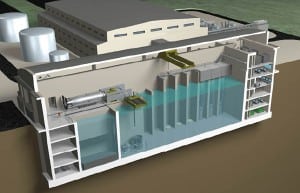
NuScale Power said the U.S. Nuclear Regulatory Commission (NRC) has completed its Phase 6 review of the Design Certification Application (DCA) of the company’s small modular nuclear reactor (SMR), and said the company’s SMR is the first such reactor to receive NRC approval of its design. NuScale on August 28 announced that with the DCA […]
-
 Nuclear
License Renewals Could Modernize U.S. Nuclear; Supply Base Will Need to Keep Pace
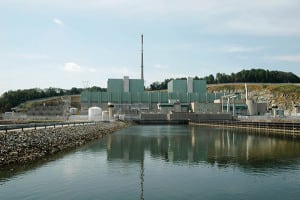
Nuclear power plants approaching license expiration are faced with three options: obtain initial license renewal to continue operations (nine U.S. units have not yet received an extension of their initial
-
 Nuclear
NRC Accepts Crucial Advanced Nuclear Applications from Centrus, Oklo
The Nuclear Regulatory Commission (NRC) on June 23 accepted for formal review Centrus Energy Corp.’s application to produce high-assay low-enriched uranium (HALEU) at its Piketon, Ohio, facility. The move marks a third major regulatory milestone for advanced nuclear over the past month. The NRC’s acceptance of Centrus’ application follows a 4-0 vote by the commission on […]
-
 Legal & Regulatory
Trump Expands Regulatory Rollback, Including for Power, Amid Economic Fallout
President Trump in a new executive order (EO) has directed federal agencies to rescind, modify, waive, or provide exemptions from regulatory requirements that may inhibit economic recovery. The Executive Order on Regulatory Relief to Support Economic Recovery, issued May 19, is sweeping and extends beyond the administration’s previous efforts to scale down regulatory mandates—including the […]
-
 Nuclear
Nuclear Reactor with 3D-Printed Core Slated for Operation in 2023
A first-of-its-kind nuclear reactor that will use a 3D-printed core, advanced materials, and integrated sensors and controls is on track for completion by 2023. Despite the COVID-19 pandemic, work is ramping up to demonstrate the Transformational Challenge Reactor (TCR), an innovative micro-reactor program spearheaded by Oak Ridge National Laboratory (ORNL) and project partners, to include […]
-
 Nuclear
Industry Seeks Clarity on White House Nuclear Strategy
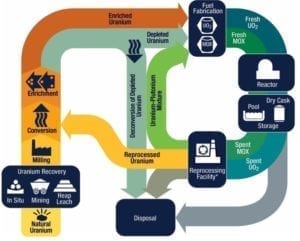
Propelled in part by the White House Nuclear Fuel Working Group’s (NFWG’s) recent roadmap to strengthen the U.S. nuclear fuel cycle, the nation’s nuclear industry this week blazed ahead on efforts to energize a U.S. commercial fuel supply that it says will be crucial for the widespread development and deployment of advanced nuclear reactors. At […]
-
 Nuclear
Nuclear Fuel Working Group Outlines How U.S. Could Regain Global Leadership
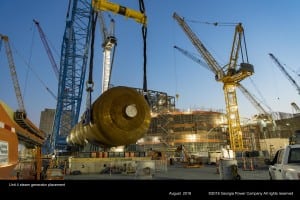
The U.S. will attempt to regain its international standing as a world leader in nuclear energy through a three-pronged strategy that will essentially seek to strengthen the full domestic nuclear fuel cycle, possibly deny imports of nuclear fuel fabricated in Russia or China, and promote advanced reactor technologies. The strategy is outlined in the White […]
-
 Timeline
Seven Nuclear Plants Get COVID-19–Related NRC Work-Hour Exemptions
To help nuclear generators manage worker fatigue amid the intensifying COVID-19 pandemic, the Nuclear Regulatory Commission (NRC) has so far granted individually requested exemptions from work-hour controls to seven U.S. nuclear power plants. As described by NRC Director of Nuclear Reactor Regulation Ho Nieh in March 28 letters sent to at least three industry leaders, […]
-
 News
NewsPower Sector Resources for Coronavirus Pandemic Response
As part of POWER magazine’s in-depth coverage of the COVID-19 pandemic, its editors are curating a list of resources that may provide actionable information helpful to anyone involved in the world’s vast bulk power systems. Please write to editor@powermag.com if you know of additional resources that should be added to this page. POWER Magazine’s Live […]
-
 Workforce
Power Industry Pleads for Priority COVID-19 Testing, PPE for Mission-Essential Workers
The U.S. power sector is rallying together to implore state and local governments to treat sector-wide “mission-essential employees” with higher priority and ensure they have top-level access to testing and personal protective equipment (PPE) amid the intensifying COVID-19 pandemic. In a four-page April 2 white paper presumably addressing federal leadership, the Electricity Subsector Coordinating Council […]
-
 Nuclear
THE BIG PICTURE (Infographic): U.S. Nuclear Lifetimes
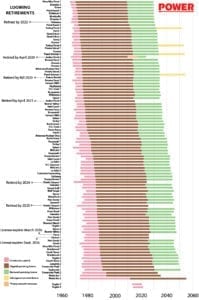
The U.S. has 96 licensed-to-operate nuclear power reactors and two reactors under construction. But the average age of the nation’s 96 licensed nuclear units is about 39 years old. That has been of some concern to the nuclear industry, which has provided roughly a fifth of the nation’s power since the 1990s. About 88 of […]
-
 Nuclear
The Quest for Next-Generation Nuclear Fuels
In Part 1 of this series, published in the March 2020 issue, POWER explored how existing reactors may leverage advances in nuclear fuel to boost power generation safety and economics. This installment surveys
-
 News
NewsNRC to Consider COVID-19 Exemptions for Nuclear Plant Work-Hour Controls
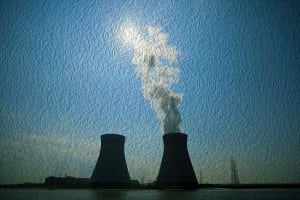
The Nuclear Regulatory Commission (NRC) on March 28 told industry that it is prepared to grant requests from individual nuclear generators for exemptions from work-hour controls specified in its rules to help provide more flexibility to the sector as it grapples with workforce issues related to the COVID-19 public health emergency. The objective of the […]
-
 Nuclear
COVID-19 Threatens Outages Scheduled at 97% of U.S. Nuclear Sites in 2020
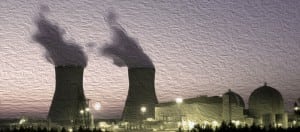
Challenged by the COVID-19 pandemic, the U.S. nuclear industry has asked the Trump administration to ensure nuclear workers, suppliers, and vendors will have access to nuclear plants and personal protective equipment (PPE) during the 2020 spring and fall refueling outage seasons and beyond. All but two of the nation’s nuclear sites had scheduled planned outages […]
-
 News
NewsSole U.S. Uranium Conversion Plant Secures NRC License Renewal
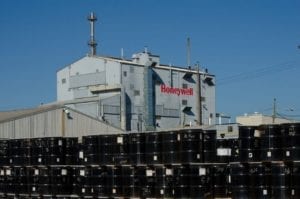
Honeywell International’s uranium conversion plant in Metropolis, Illinois, has received the Nuclear Regulatory Commission’s (NRC’s) approval to run for 40 more years. The approval for the nation’s sole conversion facility is key to ensure it can continue supplying uranium hexafluoride (UF6), a basic component of enriched nuclear fuel used in commercial nuclear power reactors. The […]
-
 News
NewsNRC Preparing Rule Changes Due to Coronavirus
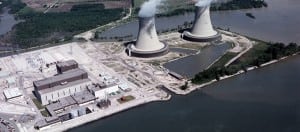
The agency that regulates nuclear power in the U.S. is preparing to allow reactor operators to work longer shifts, and could also issue new rules that would let facilities put off some maintenance and plant inspections. The actions are in response to the coronavirus pandemic. Comments during a Nuclear Regulatory Commission (NRC) conference call on […]
-
 Business
Utilities Plan to Keep Key Staff Housed at Power Plants
U.S. electric utilities and other energy companies are preparing to have key personnel remain at power plants and operations centers to ensure the facilities remain online during the coronavirus pandemic. The federal government considers power plants part of the nation’s critical infrastructure. The U.S. Department of Homeland Security (DHS) is responsible for working with power […]
-
 News
NewsOklo Submits First Non-LWR Combined License Application to NRC
Oklo, developer of the 1.5-MW Aurora micro-reactor, has submitted the first-ever combined license application (COLA) for an advanced non-light water reactor (LWR) to the Nuclear Regulatory Commission (NRC). The move formalizes the start of a new era for nuclear regulation in the U.S. The Silicon Valley company, which last year received a first-of-its-kind site use […]
-
Nuclear
Exelon’s Peach Bottom Nuclear Plant Licensed for 80 Years—Will It Make It?
The U.S. Nuclear Regulatory Commission (NRC) granted a 20-year license extension for Peach Bottom Atomic Power Station Units 2 and 3. The extension authorizes the two reactors—both of which began commercial operation in 1974—to continue operating through 2054. “We are pleased with the NRC’s decision to grant a subsequent license renewal for Peach Bottom Units […]
-
Nuclear
Oklo Microreactor Is INL’s Pick for First-of-a Kind HALEU-Fueled Nuclear Demonstration
Oklo, developer of a 1.5-MW passive compact fast reactor, will be the first to receive high-assay, low-enriched uranium (HALEU) nuclear fuel from Idaho National Laboratory (INL) to aid a first-of-its-kind demonstration of its Aurora microreactor, which could begin in 2024. Marking a significant boost for advanced nuclear innovation, which industry experts are banking on to […]
-
 News
NewsEnergy Northwest Study Makes a Case for SMRs in Future Power Mix
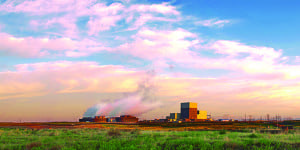
Deep decarbonization of the U.S. Northwest can be achieved at “manageable” costs by 2045, but only if utility agency Energy Northwest secures zero-emitting firm capacity, such as by relicensing Columbia Generating Station—the sole nuclear plant in the region—and building small modular reactors (SMRs), a new study suggests. The study by San Francisco-based consulting group Energy […]
-
 History
GEH Launches NRC Licensing Process for BWRX-300, an ESBWR-Derived SMR
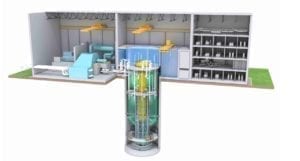
Marking another major milestone for U.S.-based small modular reactor (SMR) development, GE Hitachi Nuclear Energy (GEH) said it has formally begun the regulatory licensing process for its BWRX-300, a 300-MW boiling water reactor that it claims could be competitive with natural gas power. The company revealed on Jan. 30 that it submitted the first licensing […]
-
 Nuclear
Top 6 Nuclear Power Achievements of 2019
The past year has been filled with firsts for the nuclear power industry. Three power plants sporting first-of-a-kind reactors entered commercial operation, while the first U.S. AP1000 nuclear project reached key milestones on its path to completion. Furthermore, the U.S. Nuclear Regulatory Commission (NRC) granted the first early site permit for a utility to construct […]
-
Press Releases
NuScale’s SMR Design Clears Phase 4 of Nuclear Regulatory Commission’s Review Process
PORTLAND, Ore. (December 12, 2019) — NuScale Power today announced that the U.S. Nuclear Regulatory Commission (NRC) has completed the fourth phase of review of the design certification application (DCA) for the company’s revolutionary small modular reactor (SMR). NuScale reached this milestone on schedule, marking yet another significant achievement along its path to commercialization. The […]