
Energiewende
-
 News
NewsUAE Set to Start First Nuclear Plant; Sweden, Germany Shut Units
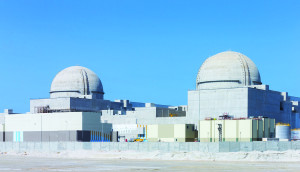
The first nuclear power plant in the United Arab Emirates (UAE) reportedly will come online in early 2020. The report comes one day after Sweden on Dec. 30 shut down one of four reactors at the nation’s largest nuclear plant, closing Unit 2 at the Ringhals facility after more than 40 years of operation. Germany […]
-
 Commentary
Has Germany Paved the Way for the World’s Energy Transition?
Germany is often touted as a leader in the global energy transition. Energiewende has been part of the country’s public discourse since the 1970s, stemming from an anti-nuclear movement prevalent at the
-
 Renewables
Germany’s New Coalition Government Agrees to Phase Out Coal, but Will Miss 2020 Emissions Targets
Germany’s Social Democratic Party (SPD) members agreed to join their longtime rival and governing partner, the Christian Democratic Union (CDU), and reluctantly entered into a third grand coalition government on March 4. While this ended months of anxious handwringing following September’s national elections, the entire process was mired in frustration as the prospect of yet […]
-
 Renewables
Can Angela Merkel, the So-Called “Climate Chancellor,” Hold Germany to Its Greenhouse Targets?
On Sunday, September 24, Germany finalized voting in its 2017 federal elections. Citizens were able to vote by mail ahead of Sunday’s election or they could chose to efficiently breeze through a voting center, make a physical “X” next to, first, the local direct candidate of their choice. And then make a second mark next […]
-
 Legal & Regulatory
Germany Puts the Brakes on Rapid Renewables Expansion
In July 2016, the German parliament approved three major pieces of legislation specifically laying out the future of the celebrated Energiewende: the 2017 revision of the Renewable Energy Sources Act, the Electricity Market Act, and the Act on the Digitization of the Energy Transition. “These three pieces of legislation will ensure that the transition of […]
-
 Renewables
Germany Backs Measure to Replace Renewable Incentives with Competitive Auctions
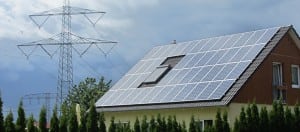
Lawmakers in Germany have voted to replace subsidies for wind and solar with competitively priced electricity prices. The country’s upper (Bundesrat) and lower (Bundestag) legislative chambers on July 8 voted to adopt an amendment to the Renewable Energy Sources Act (EEG 2016) introduced by Minister of Economics and Energy Sigmar Gabriel. The legislation aims to […]
-
Legal & Regulatory
German Companies Hope to Take Energiewende to Iran
Taking full advantage of the international political thaw with Iran, Germany has begun working closely with the fossil fuel–rich nation to develop renewable energy strategies based on the successes and failures its policymakers have learned from its own Energiewende (energy transition). To jumpstart this, Germany’s government recently released a commissioned report titled “Enabling PV Iran,” […]
-
 Renewables
Rise of Populist New Right Party AfD May Trump Germany’s Energiewende
On March 13, three of Germany’s 16 states held regional elections that were largely seen as a referendum on Chancellor Angela Merkel’s increasingly controversial refugee policies as well as the waning importance of energy and climate policies. Perhaps the biggest challenger and winner in this election was the far right, those against both the Energiewende […]
-
 Legal & Regulatory
Germany’s Energiewende at a New Turning Point
Germany’s Energiewende (energy transition) was adopted as policy beginning in September 2010, some six months before the disaster at Japan’s Fukushima nuclear plant, and full legislative support was
-
 Coal
CoalSolar and Wind Power Each Surpass Nuclear Generation in Germany Since Mid-Year
According to data compiled and reported by Fraunhofer-Institut für Solare Energiesysteme ISE—a German-based solar energy research institute—from July 1 through August 5, solar and wind energy produced 6.24 TWh and 7.09 TWh of electricity respectively, compared to 5.94 TWh of nuclear power generation in Germany. Although it’s not the first time wind production has exceeded […]
-
 Legal & Regulatory
Germany Moves to Idle Coal Plants, Set up “Capacity Reserve”
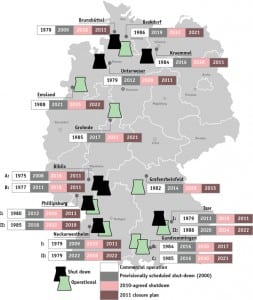
Five of Germany’s largest lignite power plants will be mothballed to allow the country that is already phasing out nuclear power to meet ambitious climate goals by 2020. In what it called a “milestone decision,” the government on July 2 agreed to scrap plans to impose a controversial—and by some accounts, illegal—climate tax for conventional […]
-
 Renewables
RWE’s Thomas Birr on Corporate Strategy in a Changing German Electricity Ecosystem
RWE AG is Europe’s third-largest electricity and fifth-largest gas marketer, with holdings in upstream oil and gas production, power grids, and energy trading. Its German power subsidiary has been the utility poster child for the effects of the Energiewende, the transformation of the Germany power system away from nuclear and coal toward renewable energy and […]
-
Coal
Germany’s Energy Transition Experiment
Germany has chosen to transform its energy system within a few decades—an ambition that has evoked equal admiration and confusion. Has Europe’s largest economy embarked on a rational path to an energy future that will make it the bellwether for global acceptance of renewables, or will the complex array of current challenges encumber its grand transformation?