
curtailment
-
 Commentary
The Grid’s Wasted-Power Problem Has a Sector-Coupling Fix
For most of the last century, electricity and heat have been planned and regulated as two separate systems, a design choice that made sense when both were produced by burning fuel on demand. However, that design is a poor match for how the grid actually runs today. Generation, transmission constraints, and price all shift by […]
-
 Connected Plant
Energy Management Goes Beyond Monitoring to Decision-Making
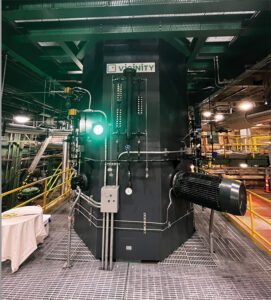
Utilities and independent power producers have spent years adding sensors to their generating fleets and creating dashboards to view what they relay. But visibility into how a plant is operating isn’t the same as knowing what to do about it—and that gap is where Siemens Energy’s Omnivise Energy Management System is increasingly shedding light, explained […]
-
 Legal & Regulatory
Shapiro Sets Binding GRID Requirements in Pennsylvania, Targets Data Center Power Costs
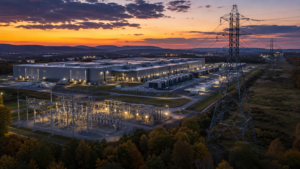
Pennsylvania Gov. Josh Shapiro signed an executive order on Aug. 18 that raises the bar for large data center development in the state, directing agencies to condition favorable permitting treatment and tax benefits on compliance with new energy, infrastructure, environmental, workforce, and community requirements. Executive Order 2026-05 applies its central permitting provisions to data centers with […]
-
 Commentary
Why Smarter Interconnection Must Power the Next Phase of Solar Growth
The demand for distributed generation (DG) solar has never been higher, yet many projects are getting stuck before they even break ground. The problem is utility interconnection. For community or net metered solar systems in the 1 MW to 5 MW range, in particular, the utility’s review of whether the grid can handle new power […]
-
 T&D
T&DWhy Utilities Can’t Afford to Wait to Deploy DLR
Transmission congestion currently affects approximately 70% of the U.S. grid. Bottlenecks delay the interconnection of cost-effective clean energy sources, limit the transfer of electricity between regions, and raise operational and consumer costs. Dynamic line rating (DLR) technology mitigates these challenges with valuable newfound transmission capacity. DLR allows operators to utilize the maximum capacity of existing […]
-
 O&M
O&MHow Does the Western Energy Imbalance Market Work?
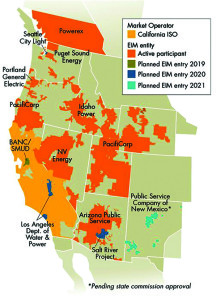
The California Independent System Operator’s Energy Imbalance Market (EIM) is a real-time energy market, the first of its kind in the western U.S. EIM’s advanced market systems automatically find low-cost