
capacity markets
-
 Trends
Vistra to Bolster Gas-Fired Fleet by 5.5 GW with $4B Cogentrix Acquisition
Vistra Corp. has executed definitive agreements to acquire Cogentrix Energy, a portfolio company of Quantum Capital Group, in a $4 billion transaction that will expand its generation footprint across the PJM Interconnection, ISO New England, and the Electric Reliability Council of Texas (ERCOT). Announced on Jan. 5, 2026, the acquisition includes 10 modern natural gas […]
-
 Trends
Google, I&M Strike Landmark Deal to Share Clean Capacity and Flex AI Load
American Electric Power (AEP) subsidiary Indiana Michigan Power (I&M) has filed a special customer-specific contract with technology giant Google that could create a dual-purpose arrangement to address power capacity constraints in one of the fastest-growing digital infrastructure regions in the U.S. AEP on Aug. 4 announced that the two companies filed a petition to the […]
-
 Legal & Regulatory
Nation’s Power Operators Warn Congress of a Coming Reliability Shortfall
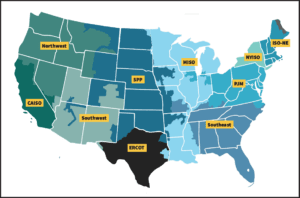
Seven major U.S. grid operators have raised a unified alarm about an impending capacity crunch, warning that the pace and scale of explosive demand—including from data centers, manufacturing, and electrification—pose a precarious misalignment with accelerating generator retirements and transmission constraints. At a March 25 hearing before the House Energy and Commerce Subcommittee on Energy, the […]
-
 Markets
PJM Market Challenges Demand Bold Reforms, Experts Warn
Energy experts have called for bold reforms—from transmission planning to permitting streamlining and faster interconnection approvals—to prevent further volatility and ensure PJM Interconnection meets its reliability mandate without disproportionately burdening consumers. During a March 19 webinar hosted by Advanced Energy United—a trade group that advocates for policies supporting the transition to 100% clean energy—industry experts […]
-
 Legal & Regulatory
PJM, Facing Capacity Shortage as Early as 2026/2027 Delivery Year, Agrees to Lower Auction Price Cap
PJM Interconnection and Pennsylvania Governor Josh Shapiro have settled a lawsuit over PJM’s capacity market pricing, agreeing to lower the grid operator’s auction price cap from over $500/MW-day to $325/MW-day. The move comes as PJM acknowledges a capacity shortage could affect its system as early as the 2026/2027 delivery year. The agreement announced on Jan. […]
-
Legal & Regulatory
Are PJM’s Plunging Capacity Prices a Harbinger of Power Markets’ Demise?
Few observers outside the electric utility industry understand the U.S. power grid, often called the world’s largest machine. It’s three grids, actually—the Eastern Interconnect, the Western Interconnect, and the Texas Interconnect. Much of the Eastern and Western Interconnects are subdivided regionally into independent organizations—independent system operators (ISOs) or regional transmission operators (RTOs)—that monitor, coordinate, and […]
-
Markets
Market Transitions: The MOPR Merry-Go-Round
The PJM Interconnection’s Minimum Offer Price Rule (MOPR) was introduced in 2006 as a floor to bar new generators from artificially depressing capacity auction clearing prices through below-cost bids.
-
 Legal & Regulatory
FERC Nixes PJM’s Fixes for Capacity Market Besieged by Subsidized Resources
In a 3–2 decision, the Federal Energy Regulatory Commission (FERC) rejected approaches filed by PJM Interconnection to reform its capacity market, whose integrity and effectiveness has been increasingly and “untenably threatened” by state subsidies for preferred generation resources, the federal regulatory body acknowledged. The June 29 order sharply divided the commission, prompting Democrat Commissioners Cheryl LaFleur […]
-
 Renewables
MISO: Avoiding the Mess Facing Other Wholesale Competitive Electric Markets
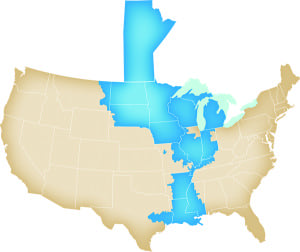
The Midcontinent Independent System Operator’s (MISO’s) geographic footprint extends down the middle of the U.S. Because of the structure of its market, MISO has artfully avoided some nasty policy and
-
 Legal & Regulatory
FERC Order 745 and the Epic Battle Between Electricity Supply and Demand
From its modest origins as a way to shed load when the grid is stressed, demand response (DR) has grown to be a significant player in electricity markets. In the PJM region, demand response has accounted for as much as 14,833 MW of capacity, almost 10% of the total. Customer Gains and Generator Losses Demand […]
-
 Legal & Regulatory
PJM Tightens Capacity Market Rules to Improve Reliability
The effects of the January 2014 polar vortex have led to big changes in the PJM capacity market, as the board has approved changes to tighten up operations and improve reliability. The polar vortex storm of Jan. 6–8, 2014, saw temperatures plunge across the Midwest and Mid-Atlantic, causing a spike in demand for electricity and […]
-
 Legal & Regulatory
Texas and Germany: Energy Twins?
Geographically and politically, Texas and Germany are on opposite sides of the world, but both believe strongly in competitive energy markets, and both have largely deregulated their power industries. Now both are reconsidering their market designs. Its easy to think that Germany and Texas could not be more different. One is northern, cold, and Old […]