
POWER
-
 Water
WaterFlue Gas Desulfurization Wastewater Treatment Primer
Purge water from a typical wet flue gas desulfurization system contains myriad chemical constituents and heavy metals whose mixture is determined by the fuel source and combustion products as well as the stack gas treatment process. A well-designed water treatment system can tolerate upstream fuel and sorbent variation over time and consists of multiple process treatment steps arranged in just the right order to produce wastewater acceptable for discharge.
-
 News
NewsTemperature Detectives
Wahl Instruments’ two newly released digital resistance temperature detectors (RTD) — the DST500 Temperature Indicator and the DSX500 Transmitter Thermometer (shown here) — feature high-precision temperature measurement technology and a 1-inch LCD display. The units are available in a variety of standard and custom-built probe configurations, including mercury-in-glass (MIG) standard tapered bulb for drop-in direct […]
-
 Water
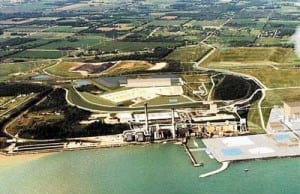
WaterOak Creek Power Plant Upgrades Cooling Water System
Formed suction intake designs have been used in many large vertical pump stations in flood control projects. Space limitations at the Oak Creek Power Plant Expansion Project near Milwaukee, Wisconsin, created a unique opportunity to apply this technology to an 800,000-gpm cooling water system upgrade for the entire Oak Creek Power Plant.
-
 News
NewsOil Eater
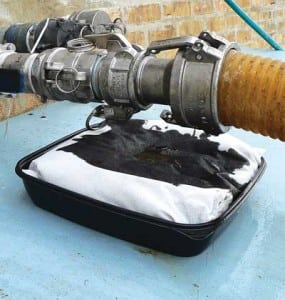
Kafko International’s new Oil Eater Absorbent Drip Pan is designed to handle leaks that are too large for an absorbent pad, and which occur in tight spaces, such as under machinery and pipes. The drip pan is made of sturdy plastic and houses an absorbent pillow made of plant fibers and other reusable resources. When […]
-
Nuclear
900 U.S. Reactors by 2035?
A professor and consultant who has experience and connections with just about every part of the nuclear power world concludes that the U.S. will need to add 900 nuclear reactors in the next quarter century.
-
 Instrumentation & Controls
Distributed Control Technology: From Progress to Possibilities
The past decade has seen an explosion of technology that has significantly altered the process control industry. The adoption of commercially available technology driven by desktop computing has allowed suppliers to focus on applications to enhance the process and deliver ever-greater value to the user.
-
 Coal
CoalSri Lanka Commissions Major Thermal Power Plant
The Sri Lankan government in December commissioned the first phase of the 300-MW Kerawalapitiya Thermal Power Plant, the nation’s biggest combined-cycle power plant project. The $300 million plant in the western part of the country commenced operations by generating 200 MW (Figure 7). In its second phase, it will expand to 300 MW. Per government estimates, power produced by the plant is priced at about 20 rupees or $0.18/kWh.
-
 Instrumentation & Controls
Optimize Your Plant Using the Latest Distributed Control System Technology
Distributed control systems are powerful assets for new and modernized power plants. Thanks to three product generations of technology innovations, these systems now provide new benefits — including improved O&M efficiency, greater plant design flexibility, and improved process control and asset reliability — that help competitive plants advance in the game.
-
 O&M
O&MFERC Focuses on Internal Compliance Programs
By now, most electric industry participants are aware of the mandatory reliability standards required by the Energy Policy Act of 2005 and managed by the North American Electric Reliability Corp. (NERC). Bulk-power system users, owners, and operators (known as NERC registered entities) are responsible for complying with the set of standards that are applicable to their operations in their specific region. Compliance is monitored by the NERC regions (Texas Regional Entity, Western Electric Coordinating Council, Reliability First Corp., Midwest Reliability Organization, SERC Reliability Corp., Florida Reliability Coordinating Council, Northeast Power Coordinating Council, and Southwest Power Pool) through spot checks, self-certifications, audits, and investigations.
-
 Instrumentation & Controls
Power Plant Automation: Where We Are and Where We’re Headed
Over the past decade, power plant control systems have evolved from DCS-centered platforms with proprietary software, to open systems using industry standard hardware and software, and then to totally integrated plant automation systems with almost unlimited connectivity and the ability to interrogate field instruments from many different manufacturers. What’s next?