
Global Monitor
-
Coal
POWER Digest (September 2011)
Australia Pursues Carbon Tax. Australia’s Prime Minister Julia Gillard on July 10 laid out an ambitious plan to cut national greenhouse gas emissions by 5% of 2000 levels by 2020 by imposing a A$23 (US$23.4) per metric ton carbon tax, starting next year. If parliament approves the plan before year-end, the carbon tax will increase […]
-
O&M
BIG PICTURE: Lights Out (Web Supplement)
A web supplement to the September issue with details of global power shortages.
-
Nuclear
The Fukushima Fallout: Six Months After the Nuclear Crisis
(WEB EXCLUSIVE) Much has transpired during the nearly six months following the Great East Japan Earthquake—a 3-minute, magnitude 9.0 temblor that generated a series of tsunami waves as tall as 38.9 meters (130 feet), killed more than 25,000 people, and set off the worst nuclear disaster in 25 years.
-
 Gas
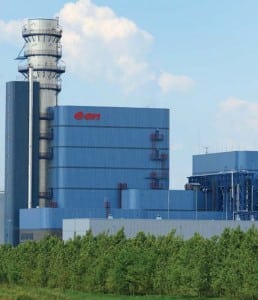
GasE.ON Commissions 433-MW Hungary CCGT
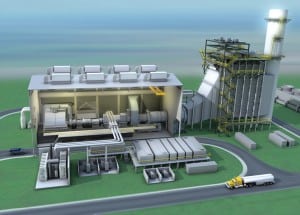
Two years after it laid the foundation stone, Germany’s E.ON on June 27 opened Hungary’s most efficient combined cycle gas turbine (CCGT) power plant (Figure 7). The €400 million ($573 million) plant in Gönyü has a capacity of 433 MW and an efficiency of over 59%, E.ON claims. Siemens supplied the main components: an SGT5-4000F gas turbine, an SST5-5000 steam turbine, an SGEN 5-3000W generator, and the entire electrical and instrument and control equipment. The natural gas–fired power plant is of single-shaft design with the main components arranged in a single driveline.
-
Business
POWER Digest (August 2011)
The Tide Turns for Marine Energy Devices. Siemens Energy recently secured a 10% stake in Marine Current Turbines, the UK company that owns SeaGen, a 1.2-MW tidal power plant, which was commissioned in 2008 on the Irish Sea. Marine Current Turbines is planning to build a larger, 8-MW plant off the coast of Scotland by […]
-
 Nuclear
THE BIG PICTURE: Underground Nuclear Waste Disposal
According to the International Atomic Energy Commission, deep disposal in stable geological formations is the only sustainable way to safely manage spent fuel and high-level waste (HLW) from nuclear power reactors. No permanent geological repository has yet been built, but some countries have found a location for a future repository. Others are researching the option…
-
 Smart Grid
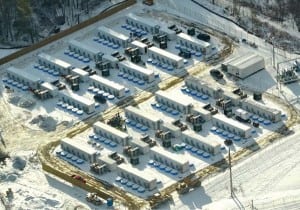
Milestones for Flywheel, Lithium Battery Grid-Scale Projects
Energy storage developments got a boost as Beacon Power Corp. in June announced that its first flywheel energy storage plant in Stephentown, N.Y., achieved its full 20-MW capacity, and AES Energy Storage said its Los Andes battery storage system in Chile had performed continuously for more than 18 months as a critical reserve unit for the nation’s northern grid.
-
 Gas
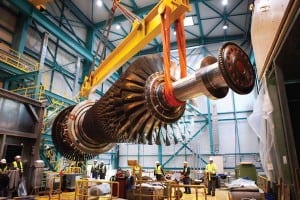
GasAlstom Launches Upgraded GT26
Just as GE Energy, Siemens, and Mitsubishi Heavy Industries (MHI) in May announced gas combustion technology developments—each seeking to push the 60% barrier with new gas turbine designs—Alstom has quietly been upgrading its KA26 combined cycle power plant. (See the July 2011 “Global Monitor” for more information on the GE, Siemens, and MHI turbines.) The firm says that the next generation of the 500-MW power plant, based on the advanced class GT26 gas turbine, features “achievable” efficiencies of over 61%, increased flexibility, and more than 350 MW, which can be delivered in less than 15 minutes to help integrate renewable energy sources (Figure 3).
-
 Coal
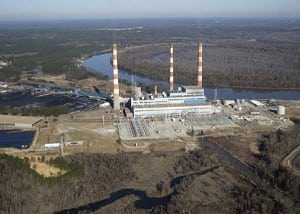
CoalLargest CCS Project in Operation
Companies continue to increase the size of carbon capture and sequestration test projects. Mitsubishi Heavy Industries (MHI) has launched operation of what it calls the world’s largest demonstration of carbon capture on a pulverized coal plant.
-
 Hydro
HydroChile, Peru Put the Brakes on Mega-Hydro Projects
Weeks after Brazil’s environmental agency, IBAMA, granted final approval for construction of the mammoth 11.2-GW Belo Monte Dam in the Amazon region to proceed, an appeals court in Chile suspended plans for the 2.75-GW multi-dam HidroAysen project in the Patagonia region, and Peru’s government terminated a concession for the 1.5-GW Inambari in the Peruvian Amazon area after month-long mass protests (Figure 5).
-
 Hydro
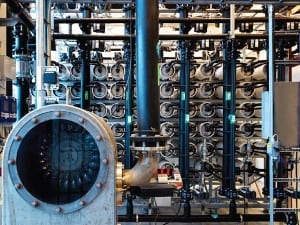
HydroOsmotic Power Makes Headway
Statkraft began operating its 4-kW prototype osmotic power plant at Tofte, just outside Oslo, Norway, in 2009. Now the firm reports that it is close to developing a large-scale plant. In June, Statkraft and Japanese materials manufacturer Nitto Denko/Hydranautics signed an agreement for the development and supply of membranes specifically designed for use in large-scale osmotic power plants.
-
 Gas
GasPushing the 60% Efficiency Gas Turbine Barrier
Gas turbine makers GE, Siemens, and Mitsubishi Heavy Industries (MHI) in the last week of May separately profiled unprecedented results from development or testing of three innovative combined-cycle gas turbine (CCGT) technologies.
-
Nuclear
Germany to Shut Down All Nuclear Reactors
Germany’s Chancellor Angela Merkel at the end of May officially endorsed a plan to shut down all 17 of the nation’s nuclear power plants by 2022. The decision, which gives the power-intensive nation just over a decade to find new sources of power for 23% of its energy needs, has had reverberations all over the world, though the future of nuclear—through growth in developing nations—continues to look sturdy.
-
 Nuclear
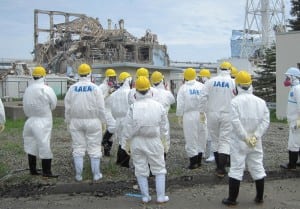
TEPCO: Most Fuel at Daiichi 1 Melted
Tokyo Electric Power Co. (TEPCO) in May discovered—after calibrating water gauges—that the water level in the reactor pressure vessel of Unit 1 at the quake- and tsunami-ravaged Fukushima Daiichi nuclear plant may have dropped to such low levels that the fuel was completely uncovered. This caused almost all the fuel pellets to melt and fall to the bottom of the vessel at a relatively early stage in the accident—roughly 15 hours after the March 11 earthquake that killed an estimated 28,000.
-
 Nuclear
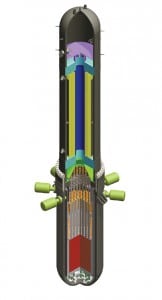
Holtec, Westinghouse Roll Out Small Modular Reactor Designs
As the Daiichi nuclear crisis has governments around the world reconsidering their nuclear-heavy energy plans and scrutinizing the safety of existing reactors and third-generation designs, several developers are touting the merits of small modular reactors (SMRs).
-
 Hydro
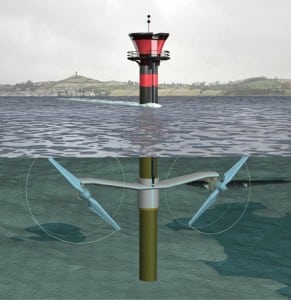
HydroCarbon Trust: Marine Energy Has High Potential but Faces Several Challenges
In a an analysis released this May, nonprofit UK group Carbon Trust admits that there is “still considerable uncertainty as to whether wave and tidal systems will play a meaningful role in meeting global energy needs,” but it suggests, based on high and low scenarios, that up to 240 GW of marine capacity could be deployed globally by 2050. Roughly 75% of this capacity will come from wave and the remainder from tidal energy.
-
Business
POWER Digest (July 2011)
Indonesia Sees Surge in Contracts for New Power Plants. Indonesia is Southeast Asia’s largest economy, but because it is stricken by chronic power shortages that limit economic growth, the nation’s government is pushing for massive infrastructure improvements. A consortium of Japan’s Electric Power Development (J-Power), Itochu Corp., and Adaro Energy, an Indonesian coal miner, on […]
-
 Nuclear
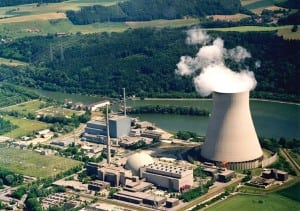
Germany Considers Accelerated Nuclear Exit on Fukushima Worries
In the wake of the devastating nuclear crisis afflicting the Fukushima Daiichi nuclear plant in Japan, Germany has embarked on an abrupt shift away from nuclear power, shutting down eight reactors for safety checks and ditching concerted efforts to keep nuclear power plants open in the long term. In mid-April, Chancellor Angela Merkel told reporters that leaders of Germany’s 16 states all want to “exit nuclear energy as soon as possible and make the switch to supplying via renewable energy.” The policy reversal has incited ardent opposition from the energy sector and industry.
-
Solar
Countries Abandon Subsidies for Renewables en Masse
Stricken by the economic crisis and forced to implement austerity measures, several countries around the world have been forced to abandon or slash subsidies for renewable power producers.
-
 Water
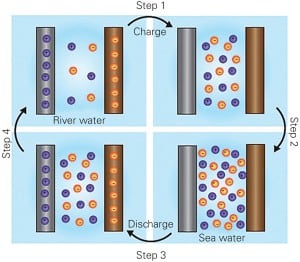
WaterBattery That Extracts Energy from Water Salinity Difference
A rechargeable battery developed by researchers from Stanford University employs the difference in salinity between freshwater and saltwater to generate a current.
-
Business
POWER Digest (June 2011)
Italian Firm Wins Contract to Build Massive African Hydropower Plant. Italian construction firm Salini Costruttori said on March 31 it has signed a €3.35 billion contract with Ethiopia state-owned Ethiopia Electric Power Corp. to build a 5,250-MW hydropower plant on the Blue Nile, a tributary of the Nile River. The project, slated to be completed […]
-
 Hydro
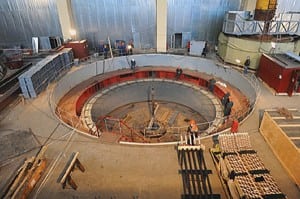
HydroSeven Charged in Siberian Hydropower Plant Accident
The Russian Investigative Committee has completed a probe into the August 2009 accident at the Sayano-Shushenskaya Hydro Power Plant in Siberia that killed 75 people. The committee has charged seven people—including the plant’s former head, Nikolai Nevolko, his deputies, and the plant’s former chief engineer, Andrei Mitrofanov—for violating safety rules. If found guilty, the officials could face five years in jail.
-
 Nuclear
Recovery Efforts Continue at Fukushima Daiichi
In April, Japan’s Nuclear and Industrial Safety Agency provisionally raised the accident rating for three reactors at the crippled six-unit Daiichi nuclear plant in Fukushima Prefecture to Level 7—making it a “major accident” and putting it on par with the 1986 Chernobyl accident in the Ukraine. Recovery efforts continue at the nuclear plant with workers […]
-
 Nuclear
The Battle to Stabilize Daiichi
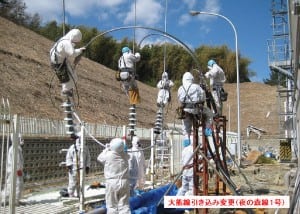
Weeks after a massive magnitude 9.0 earthquake and subsequent 14-meter-high tsunami devastated Fukushima Prefecture in northeastern Japan, workers from the Tokyo Electric Power Co. (TEPCO) were still struggling to regain control of four severely damaged reactors at the six-unit Fukushima Daiichi nuclear power plant.
-
 Coal
CoalChina’s Five-Year Plan Is Heavy on Non-Fossil Generation
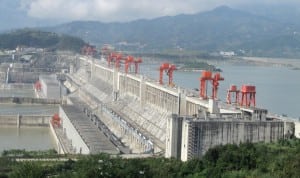
The People’s Republic of China’s Congress approved a much-anticipated draft of the country’s 12th Five-Year Plan (2011–2015) on March 14. Along with key objectives that included boosting its gross domestic product (GDP) by 7% annually on average, the country for the first time in a five-year plan established targets to tackle climate change. It plans to reduce carbon dioxide emissions per unit of GDP by 17% from 2010 levels by 2015 and to reduce energy consumption per unit of GDP by 16% from 2010 levels by 2015.
-
 Coal
CoalLarge-Scale Tests Begin to Convert Flue Gas to Usable Water
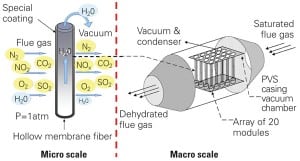
Subsidized by the Dutch government, a number of Dutch utilities, the European Membrane Institute at the University of Twente, and Dutch consulting firm KEMA have, for over a decade, been testing membrane technology that promises to directly convert water vapor from power and other industrial plants’ flue gases into drinking water. The technology could provide a new source of large volumes of potable water.
-
 Wind
WindMajor Offshore Players Introduce Colossal Wind Turbines
Competition among offshore wind turbine vendors vying for market share went into overdrive in the first three months of 2011 as several key players announced gigantic new turbine models.
-
 Hydro
HydroChina Dam Gets World’s First Self-Closing Ring Gate Control System
A major technical advance in hydroelectric dam safety was achieved this March as Alstom’s Chinese arm, the Tianjin Alstom Hydro Co. (TAH), delivered what it called “the world’s first self-closing electronic ring gate control system” to the Ahai hydropower project in China.
-
 Environmental
Researchers Develop Supercritical CO2 Brayton Cycle Turbines
Researchers at Sandia National Laboratories say a project that focuses on supercritical carbon dioxide (CO2) Brayton cycle turbines is moving to the demonstration stage.
-
 Solar
SolarInterest, Funding Buoys Floating Solar Power Plants
Like most forms of generation, solar power has its disadvantages. Two cited most by critics of photovoltaic (PV) or concentrating solar power facilities are that they require large expanses of land and that solar cell fabrication and maintenance costs are high. Several companies have been assessing a new approach to tackling these factors: installing solar plants on water.