Ethiopia is a landlocked country in the Horn of Africa with a population of more than 130 million. Until recently, its power grid only extended to a small percentage of its population—those nearest to major urban areas. That changed markedly with the recently commissioned Grand Ethiopian Renaissance Dam (GERD). With an estimated capacity of more than 5,000 MW, it has pushed grid connectivity to nearly 50%. By 2030, the government targets 75% electrification.
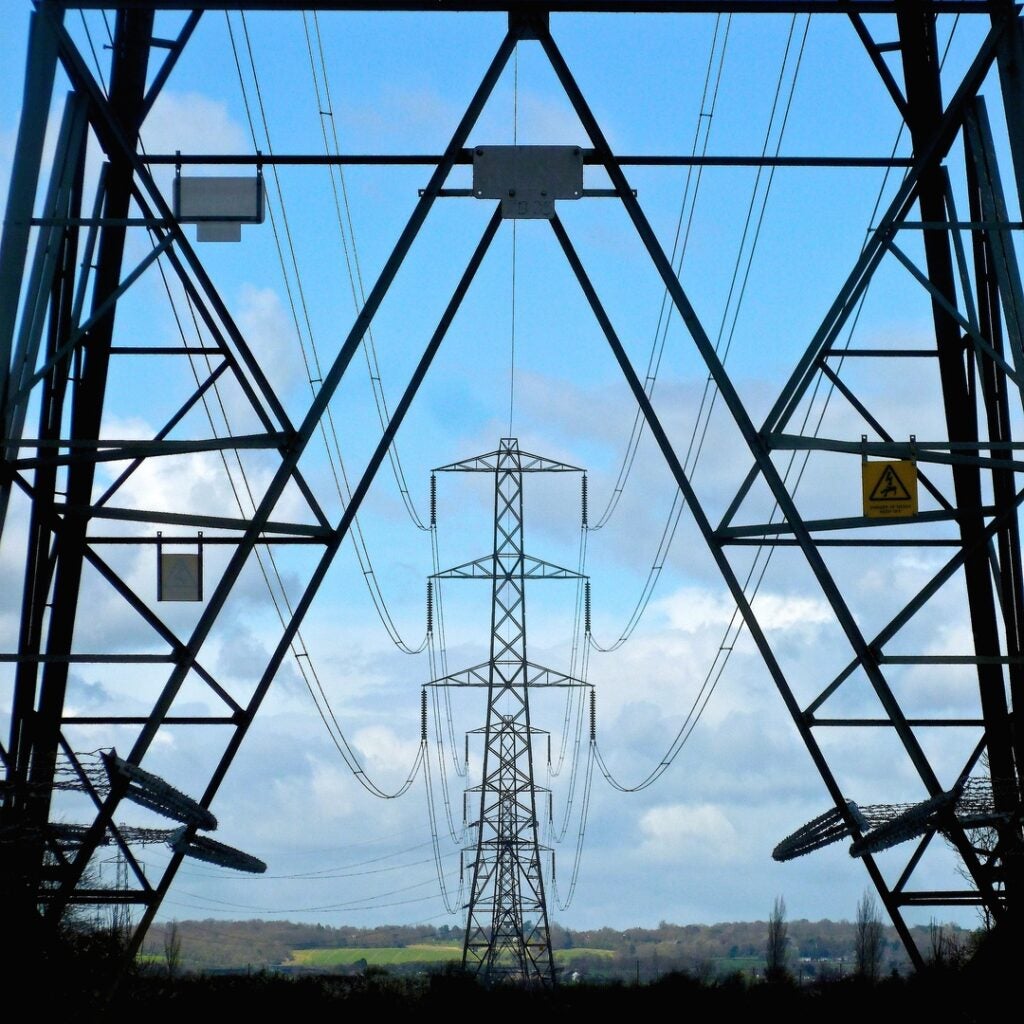
The grid currently encompasses 20,390 km of transmission and 179,000 km of distribution lines. Ethiopian Electric Power (EEP) is engaged in an aggressive plan to expand and modernize the grid. This includes a 50% increase in transmission lines and more than doubling the energy distribution networks. Further, efficiency measures and ongoing technology upgrades will drastically reduce transmission losses. Installed power capacity, currently 9,761 MW, is scheduled to reach 14,000 MW by the end of the decade.
EEP manages a clean energy network that includes 16 hydropower plants, one geothermal power station, one waste-to-energy facility, and four wind power stations. Over the next few years, the quantity of clean energy will be expanded to ensure the availability of a stable power supply across the country.
Central to the success of these plans is the need for power dispatch automation and grid structure upgrades. These improvements are urgently required for two key reasons:
- The grid faces growing challenges from multi-directional fluctuations in generation output, load demand, voltage stability, and frequency regulation.
- EEP needs to implement information technologies such as artificial intelligence (AI) to enable more accurate power generation forecasting and collaborative grid optimization.
EEP firmly believes that reliable power and a stable grid will improve the livelihood of the nation’s population, underpin the expansion of industrial operations, attract more foreign investment, nurture digital industries, and advance education and healthcare for all. Beyond the necessity of bringing electricity to regions devoid of it, a modern power grid sets the stage for sustainable industrialization across Ethiopia while injecting lasting momentum into the prosperity of the entire East Africa region.

Creating the Ethiopian Smart Grid
To realize Ethiopia’s smart grid future, EEP deployed cutting-edge solutions from Huawei such as AI-driven diagnostics and video-based inspection—enhancing the reliability and intelligence of Ethiopia’s national power infrastructure.
At the heart of this transformation lies a robust, resilient, and reliable power communication network, which offers true power grid intelligence. EEP has fully upgraded its power backbone communication network by leveraging Huawei’s advanced optical communication technologies, building an intelligent power grid for the future.
The digital transformation of an entire nation began by confronting an aging network that utilized Synchronous Digital Hierarchy (SDH). SDH is a standardized multiplexing protocol for transmitting large volumes of data over optical fiber. It originated in the late 1980s to facilitate data transmission in global telecom systems. However, SDH is no longer capable of dealing with modern applications and AI-based systems. The limitations of traditional SDH networks include insufficient bandwidth and added complexity when addressing multi-vendor operations.
Committed to becoming the most reliable power transmission service provider in East Africa, EEP has launched a nationwide grid modernization program in partnership with Huawei to deploy next-generation smart grid services, including video-based inspection, remote control, and intelligent substations, on a robust optical transmission foundation. Such services demand the most advanced communications standards based on the highest possible standards of performance and reliability. To meet these requirements, EEP harnessed Huawei’s next-generation multi-service optical transport network (MS-OTN) architecture as well as future-oriented fine-grain optical transport network (fgOTN) technology to comprehensively modernize its optical communication network. This helped EEP to successfully establish a next-generation power communication backbone network that can deliver high bandwidth, high reliability, robust security, and seamless scalability.
During this upgrade, EEP deployed Huawei OptiXtrans E6600 series devices to increase network backbone bandwidth from as little as 2.5 Gbit/s to 100 Gbit/s. Based on dense wavelength division multiplexing (DWDM) and time division multiplexing (TDM) convergence technology, EEP has achieved the physical isolation of critical services. This ensures ultra-low latency of less than 12 ms and fast protection switching within 50 ms for core services such as teleprotection and dispatch automation. Moreover, it reserves sufficient bandwidth resources and expansion room for high-level applications, including AI-powered grid load forecasting and digital twins to manage the entire power grid.
Unleashing the Potential of Optical Networks
Telecommunication networks have made enormous advances in recent years courtesy of various digital technologies. Yet, most networks continue to operate on aging protocols and systems. EEP’s network architecture was designed from the outset with the future in mind. This guarantees a smooth migration as fgOTN and DWDM converge in the coming years.
fgOTN technology eliminates the minimum granularity limitation of traditional OTN and supports “hard pipe” connections of small-granularity services at rates between 10 Mbit/s to 1 Gbit/s. Combined with OTN, small-granularity production control services and large-bandwidth information management services can be carried out in a unified manner. This helps EEP to streamline scheduling and utilize the entirety of bandwidth resources across its expanding network. This approach brings the Ethiopian grid to the forefront of the global power communication field.
With such a robust, future-proof telecommunications network in place, EEP has been able to introduce Huawei’s AI-driven intelligent network management system known as iMaster NCE-T. As well as delivering greatly simplified operations and maintenance experiences, this system supports innovative functions such as intelligent fault prediction, latency visualization, and elastic bandwidth adjustment. By choosing to adopt these state-of-the-art technologies, EEP has significantly enhanced network availability and efficiency.
A New Business Model for the Electric Power Industry
As part of its strategic vision, EEP is transforming from a traditional power operator into an integrated energy and digital service provider—and this upgraded communication network, powered by Huawei’s sophisticated technologies, is a key enabler of that journey. With the support of a reliable and intelligent optical communication network, EEP is converting modern network capabilities into sustainable commercial value.
With this future-ready communication backbone in place, EEP is no longer just a power provider—it is becoming a catalyst for Ethiopia’s digital economy. From enabling AI-driven grid optimization to supporting cross-regional data infrastructure, EEP’s upgraded network lays the foundation for a green, intelligent, and inclusive energy future—not only for Ethiopia, but for the entire East African region.