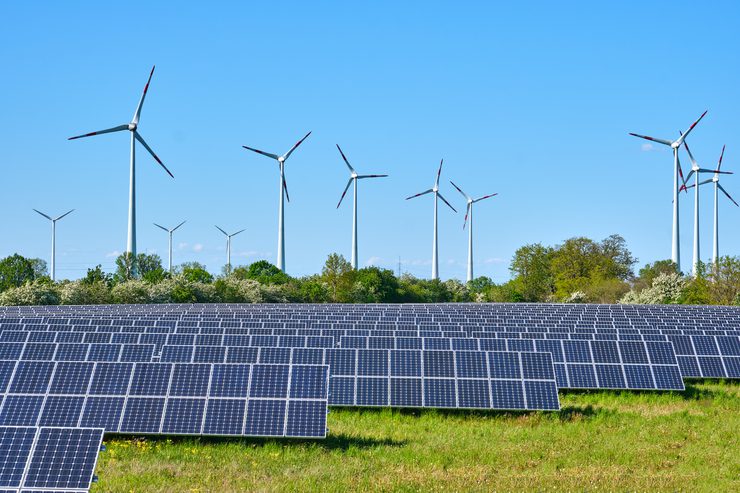
Despite changing tax laws and regulations, demand remains strong for renewables. Renewables accounted for 93% of total capacity additions (30.2 GW) to the grid in the first nine months of 2025, according to Deloitte analysis, and renewables deployment is expected to be robust this year amid new One Big Beautiful Bill (OB3) deadlines.
Renewable energy is an important element of the “all of the above” strategy to meet America’s growing energy needs. Further, advances in battery storage, solar and wind are helping to make renewable energy available 24/7/365 and to support AI data center buildout. Those who have sufficient capital and a well-developed pipeline of actionable projects will be best suited to serve this demand.

Nonetheless, we see challenges ahead. Digital innovation and resilient supply chain strategies are essential success factors and should move to the top of the renewable energy builder and operator’s playbook.
Where to focus in 2026
Diving deeper, here are five trends to watch this year as detailed in Deloitte’s 2026 Renewable Energy Industry Outlook.
- Policy shifts. Tax credits for solar and wind investment and production remain in effect for projects that begin construction by July 4, 2026, and longer for certain other renewable energy and storage technologies. As a result, developers, builders, and operators are expected to rush to break ground or repower projects to capture grandfathered tax credits when placed in service through the end of the decade.
Tariffs may increase renewable energy costs, and the recently passed lesser-known Foreign Entity of Concern (FOEC) restrictions – limits on certain foreign supplies, investment, or ownership – may negate credits for developers who buy too much from or enter into economic arrangements with Prohibited Foreign Entities (PFEs). Therefore, developers may need to reconsider their supply chains and balance costs vs. tax credit qualification.
Although Deloitte’s Renewables Outlook is optimistic, the report accounts for these policy shifts by adjusting projected robust 2026-2030 capacity additions downward from the pre-OB3 55 GW-85 GW range to 30 GW-66 GW. But that’s still enough capacity to serve upwards of 24 million homes, conservatively.
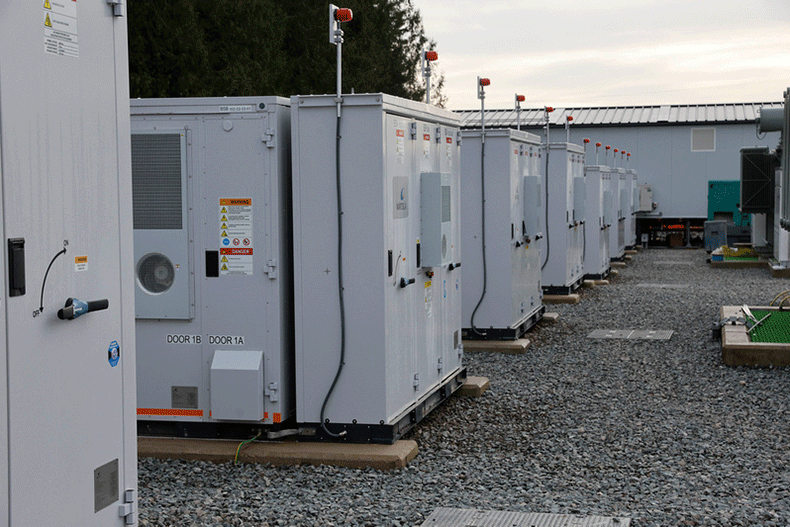
- Storage Integration. Clean power will increasingly deliver low-carbon, reliable energy on demand thanks to continuous advances in battery storage. As of August 2025, the U.S.’s operating storage capacity had reached 36.4 GW. Another 19 GW is under construction through 2026, with 176 GW in the pipeline entering service by 2030, according to Deloitte analysis.
This year will likely see developers accelerate solar-plus-storage to serve hyperscaler demand. It is expected that they will use storage to diversify revenue models, blend energy sales, manage capacity payments, and hedge instruments to stabilize returns. And they will support long-duration and distributed storage – the latter combining energy sources like batteries, solar panels, and electric vehicles to function as a single energy resource.
- Industry pursues efficiency. As construction costs rise and credit windows shrink, efficiency becomes paramount. Developers are expected to standardize design, optimize procurement, and streamline operations and maintenance.
Similarly, renewable energy producers and storage operators are expected to use AI to optimize their energy arbitrage (buying low and selling high), reduce risk, and improve their workforce’s productivity. In fact, three out of four (76%) U.S. power and renewable executives had plans to increase AI spending in 2025, as noted in our Outlook. That trend is likely to continue this year as the industry seeks leaner practices and more digital tools to automate processes.
- Strategic M&A. Investors are prioritizing near-term pipelines, de-risked portfolios, and established platforms. Deloitte analysis found that deal volume decreased in the first nine months of 2025, but platform acquisition value (or company-level deals) increased by more than four and a half times relative to 2024 based on a limited number of larger transactions.
Following fundamentals, the most attractive targets will likely be projects that are already operating as well as late-stage, safe-harbored pipelines. However, development of assets with longer dated windows for credit eligibility and that offer long-term base load solutions will also be attractive.
- Supply chain agility. New tariffs and FEOC restrictions are raising material costs, pushing energy developers to diversify their sourcing to include non-PFE manufacturers. Non-PFE production of solar and batteries, however, cannot yet satisfy demand.
Thus, renewable developers are expected to diversify their inputs, stockpile when they can, and pursue increased supply chain visibility – even as they consider long-term actions like reshoring and forming new partnerships.
Bottom line
These five trends support two final takeaways: First, the opportunity for quickly developing low-carbon, affordable energy is strong, driven as much by reshoring, industrialization, electrification and data center development associated with AI.
And secondly, the renewables playbook has gotten even more complicated. Success demands business agility, strategic thinking, and smart decision-making. Deloitte is here to help energy developers, builders, operators, and investors enhance these capabilities and successfully navigate this complex energy landscape through 2026 and beyond.
Keith Adams is Deloitte’s US renewable energy sector leader and a Partner at Deloitte Financial Advisory Services LLP. Tom Stevens is Deloitte’s US renewable energy tax leader and a Partner at Deloitte Tax LLP.
This article contains general information only and Deloitte is not, by means of this article, rendering accounting, business, financial, investment, legal, tax, or other professional advice or services. This article is not a substitute for such professional advice or services, nor should it be used as a basis for any decision or action that may affect your business. Before making any decision or taking any action that may affect your business, you should consult a qualified professional advisor.
Deloitte shall not be responsible for any loss sustained by any person who relies on this article.
Deloitte refers to one or more of Deloitte Touche Tohmatsu Limited, a UK private company limited by guarantee (“DTTL”), its network of member firms, and their related entities. DTTL and each of its member firms are legally separate and independent entities. DTTL (also referred to as “Deloitte Global”) does not provide services to clients. In the United States, Deloitte refers to one or more of the US member firms of DTTL, their related entities that operate using the “Deloitte” name in the United States and their respective affiliates. Certain services may not be available to attest clients under the rules and regulations of public accounting. Please see www.deloitte.com/about to learn more about our global network of member firms.
Copyright © 2026 Deloitte Development LLC. All rights reserved.