Editorial
-
Stock_CoalTrainColo_GR_web
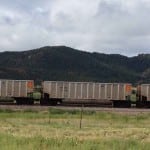
Coal train, southern Colorado, September 2013. Source: POWER, Gail Reitenbach
-
Stock_FERC_GMD costs_Jan2014.jpg
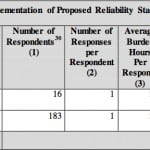
FERC burden estimate for implementation of proposed Reliability Standard EOP-010-1. Source: http://www.ferc.gov/whats-new/comm-meet/2014/011614/E-3.pdf
-
PWR_020114_China_Controls_Emerson_XueWei
Xue Wei, manager for Emerson Process Management Power & Water Solutions, China Business Development

-
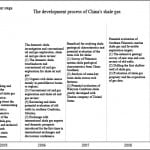
PWR_010114_ChinaShale_Fig3
3. Chinese shale gas development history. Source: Government departments
-
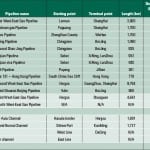
PWR_010114_ChinaShale_Table2
Table 2. Existing and planned gas pipelines in China. Source: Government departments
-
ContributorGuidelines_POWER__2013
Guidelines for contributors to POWER print and digital publications. Updated Nov. 2013.
-
GEORGIA POWER CO. CONSTRUCTION
Georgia Power today successfully placed the basemat structural concrete for the nuclear island at the Vogtle Unit 4 nuclear expansion site near Waynesboro, Ga. The basemat concrete placement was completed in just under 41 hours and encompassed approximately 7,000 cubic yards of concrete, which will serve as the foundation for all of the nuclear island structures. (PRNewsFoto/Georgia Power Co.)

-
ContributorGuidelines_POWER_2013
Contributor Guidelines for POWER
-
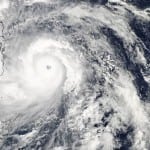
Stock_SuperTyphoonHaiyan_11_7_13_NASA
Super Typhoon Haiyan from space, Nov. 7, 2013.
-
Stock_ISA_Logo_ISA
ISA logo International Society of Automation

-
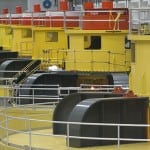
Stock_GeneratorHall_GlenCanyonDam_Oct2013_GReitenbach
Glen Canyon Dam, near Page, Arizona, was built primarily as a Colorado River water storage facility but also generates power. It is operated by the U.S. Bureau of Reclamation. The Glen Canyon Powerplant (1964) consists of eight generators, driven by eight 155,500-horsepower turbines. Total nameplate generating capacity for the powerplant is 1,296,000 kilowatts. Eight penstocks through the dam convey water to the Francis turbines.
-
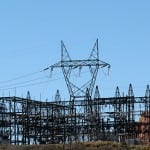
Stock_Transmission 2_GlenCanyonDam_GReitenbach
Transmission lines at Glen Canyon Dam, near Page, Arizona.
-
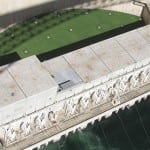
Stock_GlenCanyonDam_Powerhouse_Oct2013_GReitenbach
Glen Canyon Dam, near Page, Arizona, was built primarily as a Colorado River water storage facility but also generates power. It is operated by the U.S. Bureau of Reclamation. The Glen Canyon Powerplant (1964) consists of eight generators, driven by eight 155,500-horsepower turbines. Total nameplate generating capacity for the powerplant is 1,296,000 kilowatts. Eight penstocks through the dam convey water to the Francis turbines.
-
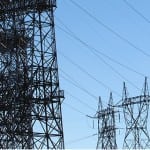
Stock_Transmission_GlenCanyonDam_GReitenbach
Transmission lines at Glen Canyon Dam, near Page, Arizona.
-
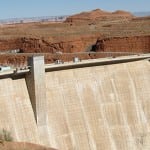
Stock_Glen_Canyon_Dam_Arizona_Oct2013_GReitenbach
Glen Canyon Dam, near Page, Arizona, was built primarily as a Colorado River water storage facility but also generates power. It is operated by the U.S. Bureau of Reclamation. The Glen Canyon Powerplant (1964) consists of eight generators, driven by eight 155,500-horsepower turbines. Total nameplate generating capacity for the powerplant is 1,296,000 kilowatts. Eight penstocks through the dam convey water to the Francis turbines.
-
Stock_Glen_Canyon_Dam_Oct2013_GReitenbach
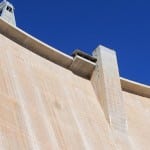
Glen Canyon Dam, near Page, Arizona, was built primarily as a Colorado River water storage facility but also generates power. It is operated by the U.S. Bureau of Reclamation. The Glen Canyon Powerplant (1964) consists of eight generators, driven by eight 155,500-horsepower turbines. Total nameplate generating capacity for the powerplant is 1,296,000 kilowatts. Eight penstocks through the dam convey water to the Francis turbines.
-
Stock_ChollaGenStation_AZ_Oct2013_GReitenbach
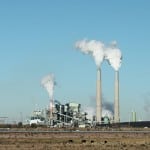
The 995-megawatt Cholla Power Plant is located in northeastern Arizona near Holbrook. APS operates the plant and owns Units 1, 2 and 3, which are capable of producing 615 megawatts of electricity. PacifiCorp (PAC) owns the 380-megawatt Unit 4 – the largest unit at the plant. The two utilities participate in a seasonal power exchange in which PAC customers in the Pacific Northwest receive electricity from the APS system in the winter when their electricity demands are high and APS receives PAC power in the summer, during APS’ peak demand.
Cholla is fueled by coal from the McKinley Mine in New Mexico.
-
Stock_Navajo_Generating_Station_Plant_Oct2013_GReitenbach
The Navajo Generating Station, near Page, Arizona, serves electric customers in Arizona, Nevada, and California. The station also supplies energy to pump water through the Central Arizona Project.
More info: http://www.srpnet.com/about/stations/navajo.aspx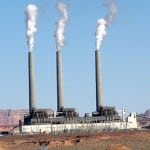
-
Stock_Navajo_Generating_Station_homes_GReitenbach
The Navajo Generating Station, near Page, Arizona, serves electric customers in Arizona, Nevada, and California. The station also supplies energy to pump water through the Central Arizona Project. It has a golf course community and Glen Canyon Dam as neighbors.
More info: http://www.srpnet.com/about/stations/navajo.aspx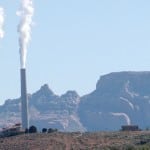
-
Stock_Navajo_Generating_Station_AZ_water_GReitenbach
The Navajo Generating Station, near Page, Arizona, is owned by SRP and serves electric customers in Arizona, Nevada, and California. The station also supplies energy to pump water through the Central Arizona Project.
More info: http://www.srpnet.com/about/stations/navajo.aspx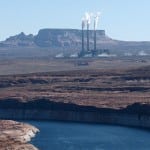
-
Stock_Navajo_Generating_Station_AZ_mesa_Oct2013_GReitenbach
The Navajo Generating Station, near Page, Arizona, is owned by SRP and serves electric customers in Arizona, Nevada, and California. The station also supplies energy to pump water through the Central Arizona Project.
More info: http://www.srpnet.com/about/stations/navajo.aspx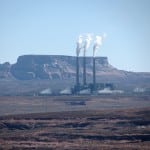
-
Stock_Navajo Generating Station_stacks_GReitenbach
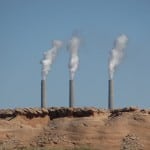
Stacks of the Navajo Generating Station, near Page, Ariz. October 18, 2013. Courtesy: Gail Reitenbach