Editorial
-
Great River Energy DR screen
Online load management schedule for Great River Energy’s demand response programs. Screenshot taken February 10, 2016. Source: Great River Energy http://lmguide.grenergy.com/

-
EPA Janet McCabe EUEC16 PWR TO
Janet McCabe, the Environmental Protection Agency’s acting administrator of the Office of Air and Radiation, speaking at the 2016 EUEC conference in San Diego, February 3. Source: POWER/Thomas W. Overton
-
don wharton
Don Wharton, managing director of coal transition, TransAlta. Courtesy: TransAlta

-
Power Substation BC
A small British Columbia substation on a winter day, December 2015. Courtesy: Gail Reitenbach

-
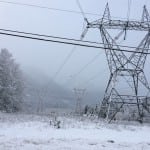
Transmission lines BC snow
Transmission lines near Squamish, British Columbia, December 2015. Courtesy: Gail Reitenbach
-
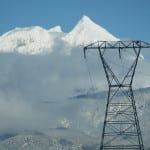
Transmission lines Squamish BC Dec 2015 GR crop
Transmission lines near Squamish, BC, December 30, 2015. Courtesy: Gail Reitenbach
-
Carbon Engineering Squamish BC Dec 2015 GReitenbach
Carbon Engineering’s pilot project in Squamish, B.C., aims to prove that direct air capture of carbon dioxide is more feasible and easily deployed than processes used to capture the greenhouse gas from power plant flue stacks. By the end of 2016 the company hopes to add a small fuel synthesis process that would combine captured CO2 with hydrogen to create synthetic gasoline. Courtesy: Gail Reitenbach
-
Carbon Engineering Squamish Dec 2015 GReitehbach Vert
Carbon Engineering’s pilot project in Squamish, B.C., aims to prove that direct air capture of carbon dioxide is more feasible and easily deployed than processes used to capture the greenhouse gas from power plant flue stacks. Courtesy: Gail Reitenbach
-
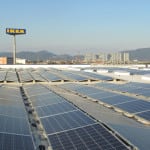
IKEA-Solar-Italy
In May 2014, Martifer Solar delivered one of the first unsubsidized solar power plants in Italy for the Ikea Group on the rooftop of a new commercial store in Pisa, Tuscany. The project has a total capacity of 696.15 kW and was structured without a feed-in-tariff. Courtesy: Martifer Solar
-
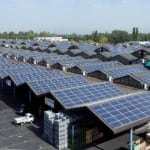
Bologna Market PV
The canopy of Bologna’s fruit and vegetable market, Centro Agro-Alimentare di Bologna (CAAD), consists of 43,750 solar panels with a total area of 100,000 square meters, equivalent to 14 football fields. Courtesy: CAAD
-
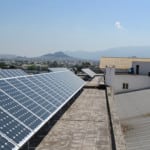
PV park Ethel Tavros Greece_PPCR
This 19.96 kW solar PV plant at the Ethel depot in Tavros, Greece, was installed in 2009. Courtesy: PPC Renewables
-
PV National Park Brijuni Croatia Luxor
This 1-kW PV installation at the National Park Brijuni in Croatia was installed by Luxor Solar in 2013. Courtesy: Luxor Solar
-
120815_LMBCzechCoalPlant
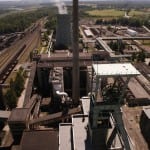
Many mines were built with the assumption they would generate up to 10,000 jobs each. Mines often have their own power plants too, like the Dul CSM in eastern Czech Republic. Courtesy: LMB Photography 2006
-
120815_LMBCzechCoal-workers
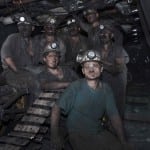
“We are miners. Who is more?” That old slogan of solidarity still holds sway as eastern European nations struggle with jobs losses if they move away from coal. This Czech longwall mining crew took a break deep underground at the Dul CSM hard rock mine. Courtesy: LMB Photography 2006
-
120815_EU climate goals 2015_CoalAtlas2015
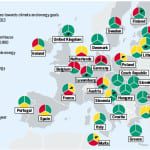
EU progress toward climate and energy goals is mixed. Courtesy: Coal Atlas 2015, Heinrich Böll Foundation in Berlin and Friends of the Earth International
-
NARUC 2015 Committee on Electricity_11915_GR.jpg
NARUC Committee on Electricity meeting, Austin, Nov. 9, 2015. Source: POWER

-
SaskPower BD3 CC compression_POWER
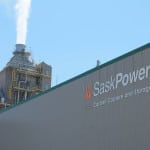
Missed steps in a three-step process. After flue gas is ducted from Unit 3 of the Boundary Dam Power Station, it runs through the SO2 absorber (the shorter tower on the left), then through the CO2 absorber (the taller tower with water vapor showing), and then the CO2 is released from the amine in a stripper before being sent to the adjacent compression facility in the foreground. SaskPower recently admitted that the capture facility has only been operating at around 40% capacity over its first year, rather than the design 90%. Courtesy: POWER/Gail Reitenbach
-
SaskPower BD3 amine tank_POWER
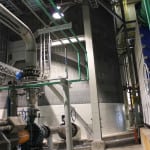
CO2 lean amine tank. To prevent degradation of the concrete absorber tower, 70,000 ceramic tiles line the inside of two amine tanks inside the carbon (and SO2) capture facility at SaskPower’s Boundary Dam plant in southern Saskatchewan. Courtesy: POWER/Gail Reitenbach
-
PWR_120115_SOP_Bodie Transmission_GReitenbach
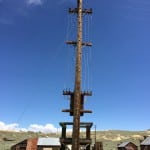
Transmission lines, Bodie State Historic Park. Courtesy: Gail Reitenbach
-
PWR_120115_SOP_Bodie Substation_GReitenbach
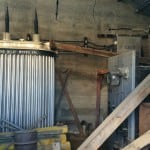
Substation, Bodie State Historic Park. Courtesy: Gail Reitenbach
-
PWR_120115_SOP_Bodie Lightning Arresters_GReitenbach
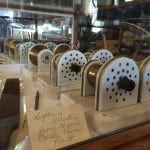
Lightning arresters, Bodie State Historic Park Museum. Courtesy: Gail Reitenbach
-
Solar PV Hawaii GReitenbach
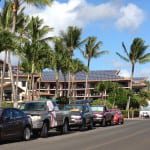
1. Solar is hot in Hawaii. In 2014, 21% of the power used by customers of Hawaiian electric companies came from renewable energy resources, including wind, solid waste, geothermal, hydro, solar, and biofuel energy. The state wants to produce 100% of its power from renewables by 2045. Courtesy: POWER/Gail Reitenbach
-
PWR_120115_GenTranSeminole_Fig 1 lisaj
1. Lisa D. Johnson. Courtesy: Seminole Electric Cooperative

-
PWR_120115_GenTranSeminole Fig 3 Midulla
3. Added gas. Gas fuels 810 MW of Seminole Electric Cooperative’s units: 500 MW of combined cycle power and 310 MW of peaking capacity from five aeroderivative combustion turbine units, all at the Midulla Generating Station. Courtesy: Seminole Electric Cooperative

-
PWR_120115_GenTranSeminole Fig 2
2. Coal, as required by federal policy. Coal fuels the 1,300-MW Seminole Generating Station in Putnam County, Fla., providing more than half of the cooperative’s power. The plant was built when the Power Plant and Industrial Fuel Use Act of 1978 banned all new oil- or gas-fired generating facilities. Courtesy: Seminole Electric Cooperative
-
Climeworks Direct Air Carbon Capture_Climeworks
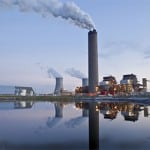
Swiss company Climeworks plans to build a pilot plant that will capture CO2 directly from the air and sell the captured greenhouse gas to an actual greenhouse, where it will enhance plant growth by 20%. Courtesy: Climeworks
-
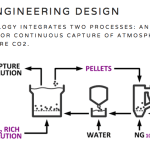
Carbon Engineering carbon capture process
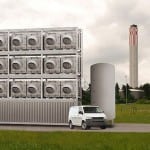
Calgary-based Carbon Engineering Ltd.’s direct-air carbon capture process. Courtesy: Carbon Engineering Ltd.
-
GE Digital Twitter feed Digital Power Plant screenshot 9_22_15.jpg
Twitter post from a GE Digital coder with a poster for the company’s new “Digital Power Plant” in the background.
-
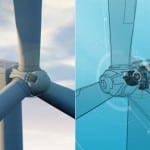
GE Digital Wind Farm_GE Power & Water
A GE wind turbine and its digital twin. Image credit: GE Power & Water
-
Cybersecurity Rating 2015 BitSight
Security ratings for the 12 months ending August 1, 2015, for six major sectors. Courtesy: BitSight Technologies