
Latest
-
Gas
Supply Constraints Plague Winter Gas Power Markets—Again
Gas market regulators and observers have been warning for several years that the rapid shift toward reliance on natural gas was creating a risk of shortages in the event of unplanned demand shocks. A series of mild winters in the 2010s reduced demand for heating, freeing up supplies and pipeline capacity for power generation. Even […]
-
 Renewables
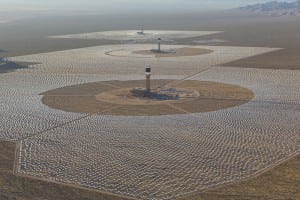
Ivanpah Launches as the World’s Largest CSP Plant
The Ivanpah Solar Electric Generating Station, the world’s largest concentrating solar power (CSP) facility, was dedicated Thursday afternoon at a ceremony keynoted by U.S. Secretary of Energy Ernest Moniz. In his remarks, Moniz hailed the Obama administration’s leadership on supporting renewable energy projects. “President Obama and the Department of Energy [DOE] are committed to ensuring […]
-
 News
NewsCCS Could Increase Coal-Fired Electric Generation Costs By 70%–80%
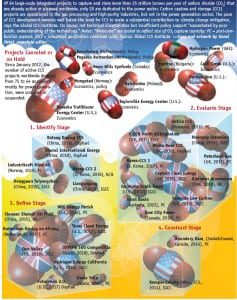
The first generation of carbon capture and storage (CCS) technologies could increase wholesale power prices by 70% to 80%, but second generation technologies could halve those costs, an Energy Department official told lawmakers at a House hearing on Tuesday. “I continue to believe that coal is actually a required part of a vibrant American economy—part […]
-
 Coal
CoalEPA Considered Few Projects Not Funded by EPACT for CCS Determination
The Environmental Protection Agency (EPA) is seeking comment on its interpretation of provisions in the Energy Policy Act of 2005 (EPACT 2005), which it claims do not alter the agency’s determination that the best system to reduce carbon emissions for new coal and gas-fired power plants is partial carbon capture and storage (CCS). The issue […]
-
 Nuclear
Fusion Research Milestone Reached
Scientists at the U.S. Department of Energy’s Lawrence Livermore National Laboratory (LLNL) have achieved a significant milestone in the development of fusion energy: achieving fuel gains greater than 1 for the first time ever at any facility. Ignition—when the energy released is equal to or greater than the energy required to confine the fuel—remains the […]
-
 Cybersecurity
NIST Issues Final Cybersecurity Framework, Version 1.0
The National Institute of Standards and Technology (NIST) today released its final version of a national framework for improving critical infrastructure cybersecurity. The “living” document will be updated as industry reports back on its implementation. The “Framework for Improving Critical Infrastructure Cybersecurity” is essentially composed of a core, tiers, and profiles. The core presents five […]
-
 Energy Storage
What is the Future of Electric Utilities?
What’s the utility of the future going to look like within two or three decades? That was a question put to former Duke Energy CEO Jim Rogers, Great Plains CEO Mike Chesser, and former chairman of the Colorado Public Utilities Commission Ron Binz by the head of the Brookings Institute’s Energy Security Initiative (ESI) last […]
-
 Nuclear
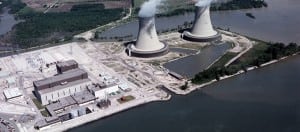
Every Megawatt Counts — Nuclear Plant Uprate Approved
While other companies contemplate early retirement for some nuclear plants due to economic woes, DTE Electric Co. is working to bump up the capacity of its nuclear unit. On Feb. 10, the company received approval from the Nuclear Regulatory Commission (NRC) to increase the generating capacity of the Fermi 2 nuclear power plant by 19 […]
-
 Partner Content
High-performance piping systems
Corzan® Industrial Systems are built to take on the pressure of industrial environments, outperforming the competition by providing superior mechanical strength and high-impact resistance. Made from non-corrosive chlorinated polyvinyl chloride (CPVC), Corzan Industrial Systems are ideal for chemical processing, semiconductor and electronics, water treatment, industrial manufacturing, mining, and power generation. They are also field-proven
-
 Nuclear
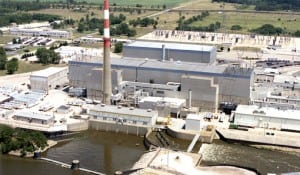
Exelon May Shutter Some Reactors in 2014
Some of Exelon Corp.’s 10 nuclear power plants are unprofitable and may need to close in 2014 if “a path to sustainable profits” cannot be found, company President and CEO Chris Crane said in a Feb. 6 conference call to discuss fourth quarter results. Exelon runs the nation’s largest nuclear fleet, operating 17 reactors in […]