
Latest
-
Commentary
As Clean Energy Accelerates, a New Era of Choice Is Upon Us
Though our current power grid is more sophisticated and reliable than when Thomas Edison designed it nearly a century ago, it uses the same model: A company burns fuel to create electricity, which is then sent hundreds of miles along inefficient wires to customers who are given a single energy choice: on or off. Now, […]
-
 Renewables
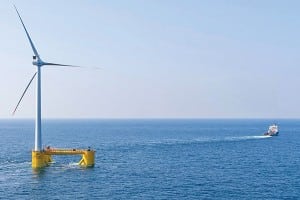
New Floating Wind Array Planned in Scotland
The world’s first floating wind turbine array could be installed offshore of northeast Scotland by 2017 if a project recently unveiled by Kincardine Offshore Windfarm Ltd. proceeds as planned. The joint project between Pilot Offshore Renewables and the construction giant Atkins entails the installation of eight turbines on semi-submersible platforms about 8 miles off the […]
-
 Renewables
The Expanding Wood Pellet Market
Last year, the U.S. exported nearly twice the amount of wood pellets it sent overseas in 2012—and almost all of it went to Europe for heat and power needs. This trend has gained momentum since 2009, when the European Commission (EC) enacted its 2020 climate and energy package, and will possibly continue in the long […]
-
News
POWER Digest July 2014
Chile Banks on Renewable Capacity Expansion, Energy Efficiency. Chile in mid-May released a $650 million investment plan to reduce energy costs and promote non-hydro renewable energy development for the country that imports about 60% of its primary energy resources. The plan calls for a 30% cut in marginal power costs on Chile’s central grid, which […]
-
 Energy Storage
Grid-Scale Iron-Chromium Redox Flow Battery Connected
One of the world’s first grid-scale iron-chromium redox flow batteries was interconnected this May to the distribution grid. The EnerVault Turlock, which its developer EnerVault says is a 250-kW, 1-MWh battery grid-scale energy storage system, will be charged by a 150-kW dual-axis tracking solar photovoltaic system in an almond orchard in California’s Central Valley, will […]
-
 Environmental
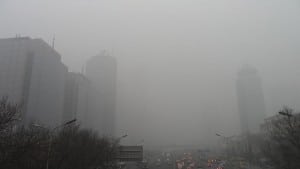
Is China Considering Carbon Targets?
China, the world’s biggest emitter of greenhouse gases (GHGs) could limit its total carbon dioxide (CO2) emissions for the first time, possibly starting in 2016. He Jiankun, chairman of China’s Advisory Committee on Climate Change, reportedly told conference attendees in Beijing in June—one day after the U.S. Environmental Protection Agency proposed rules to slash carbon […]
-
 O&M
O&MLatest Electromagnetic Technology Device Improves Inspection Accuracy and Repeatability
Eddy currents are electrical currents induced within conductors by changing magnetic fields. They are commonly used in nondestructive evaluation (NDE) and corrosion monitoring of structures with painted surfaces. The work of eddy current technicians, who specialize in the electromagnetic modality, requires a high degree of accuracy even when working under challenging testing conditions. Traditionally, technicians relied on […]
-
 Environmental
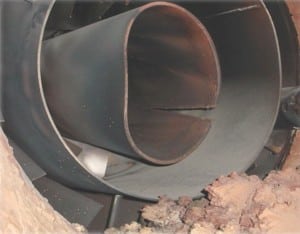
Is Your Plant Ready for MATS?
It has been more than two and a half years since the Environmental Protection Agency (EPA) issued national emission standards for hazardous air pollutants from coal- and oil-fired electric utility steam generating units (EGUs), and standards of performance for fossil fuel–fired electric utility, industrial/commercial/institutional, and small industrial/commercial/institutional steam generating units. Specifically, the rule created mercury […]
-
 Gas
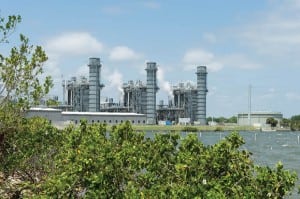
GasFlorida Power & Light Going to the Source to Feed its Gas Demand
Florida Power & Light (FPL), Florida’s largest utility, announced on June 25 that it was looking to invest directly in natural gas exploration and production as a means of securing future gas supplies and guarding against price volatility. NextEra Energy subsidiary FPL, the largest consumer of gas in the state, has been rapidly expanding its […]
-
 Partner Content
3 Quick Questions – Water is an Invaluable Part of Our Lives
Water is an invaluable part of our lives. How do we treat it better?
Water and waste-water treatment plants are needed 24 hours/day, 365 days/year. How can their operation be optimized?
There are about 54,000 water and/or wastewater service providers in the United States, so there is a broad range of plant controls that can be used