
Latest
-
 Renewables
China Rolls Out Proposal for Worldwide Grid
A proposal put forth by China—and one that it says has received “positive responses” and substantial backing from international groups, including the United Nations—foresees a global smart ultra-high-voltage (UHV) grid that transmits only “clean energy.” The Global Energy Interconnection (GEI) outlined by State Grid Corp. Chairman Zhenya Liu on February 25 at the IHS CERAWeek […]
-
 Coal
CoalDynegy and Energy Capital Partners Agree to Acquire ENGIE’s 8.7-GW U.S. Fossil Portfolio
Dynegy Inc. and Energy Capital Partners (ECP), through a newly formed joint venture, have agreed to acquire ENGIE’s U.S. fossil-fueled power generation portfolio, consisting of 8,731 MW of capacity located in the ERCOT, PJM, and ISO–New England transmission regions. The $3.3 billion deal was announced on February 25, with an expected closing date in the […]
-
 Legal & Regulatory
Twenty States Call on Supreme Court to Stay EPA Mercury Rule
Rallied by the Supreme Court’s unprecedented stay of the Environmental Protection Agency’s (EPA) Clean Power Plan, a coalition of 20 states has asked the high court to stay another disputed agency rule: the Mercury and Air Toxics Standards (MATS). The states are: Alabama, Alaska, Arizona, Arkansas, Idaho, Iowa, Kansas, Kentucky, Michigan, Mississippi, Missouri, Nebraska, North […]
-
 Legal & Regulatory
U.S. Power Sector Carbon Emissions See Fractional Increase
Power generators consumed 34% of total U.S. energy uses from fossil fuels and accounted for 39% of the nation’s carbon emissions from fossil fuel combustion in 2014—a fraction of a percent more than in 2013—the Environmental Protection Agency (EPA) said in its newly released Greenhouse Gas Inventory report. In 2014, 2,054.8 million metric tons […]
-
 Legal & Regulatory
EPA Chief: Clean Power Plan to Win on Merits
Despite the unprecedented stay by the Supreme Court, the Environmental Protection Agency’s (EPA’s) Clean Power Plan will withstand legal challenges “based on its merits,” predicted the agency’s head, Gina McCarthy, at the IHS CERAWeek conference in Houston. McCarthy discussed the plan and other recent initiatives to stem greenhouse gas emissions—including recently announced rules to curb […]
-
 Nuclear
DOE Secretary Moniz on WIPP and Spent Nuclear Fuel Storage
Department of Energy (DOE) Secretary Ernest Moniz reaffirmed that the Waste Isolation Pilot Plant (WIPP) in Carlsbad, N.M., is on track for reopening later this year, but he did not offer any encouragement to those in the southwest corner of the state who support using the site for permanent disposal of the country’s spent nuclear fuel.
-
 Partner Content
Powering The Future
Discover the Power of Digital
White Paper: Powering the Future
Leading the Digital Transformation of the Power Industry
By:
Marco Annunziata, GE’s Chief Economist
Ganesh Bell, Chief Digital Officer of GE Power
Digital technologies are transforming the power sector. From delivering power to underserved markets to managing variations in market conditions and fuel costs, power leaders are using analytics and -
 Partner Content
Improve Your Mercury Compliance Testing
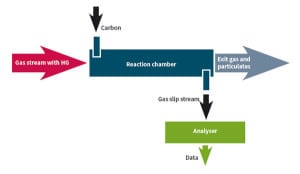
US power generators and cement plants are now under pressure due to recent legislation. Many plants are now scrambling to tighten up their mercury control procedures. Luckily, ADA Carbon Solutions’ Dynamic Mercury Index test has been developed to ensure consistent quality of sorbents used in activated carbon injection.
-
 Coal
CoalOne Dead, Three Missing After Power Plant Collapse
Shortly after 4 p.m. on February 23, part of the boiler house at the Didcot A Power Station in Oxfordshire, UK, unexpectedly collapsed, killing one person. Three others are missing and feared dead. The plant—located about 55 miles west of London—was closed in March 2013 and was in the process of being demolished by Coleman […]
-
 Gas
GasWhat Unites OPEC, U.S. Shale, and Power Generation
The OPEC secretary general and Saudi Arabia’s minister of petroleum shared their views on low oil prices, shale, and climate change at IHS CERAWeek.