Latest
-
 Wind
WindSteel Winds Project, Lackawanna, New York
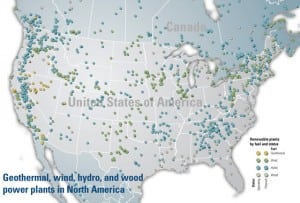
This year, for the first time, the U.S. wind power industry is poised to push past the 3,000 MW installed per year milestone. At 20 MW, Steel Winds may seem like a footnote, but its importance is measured in more meaningful terms than just size. Steel Winds is the first commercial deployment of the Clipper Windpower 2.5-MW Liberty turbine, the first installation on a former Superfund site, and is said to be the largest wind farm in the U.S. developed in an urban setting. In addition, the project anchors Lackawanna’s redevelopment of a former industrial site along Lake Erie for public use.
-
 Wind
WindDeveloping wind projects in California—or anywhere
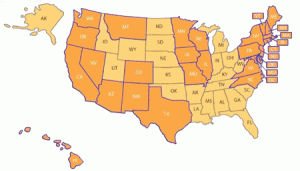
Acquiring capacity from renewable resources is now mandatory for many electric utilities, and nowhere is green generation being pursued with more vigor than in California. Regulators there want power from renewables to account for at least 20% of utilities’ annual sales by 2010, and Governor Schwarzenegger is proposing increasing the minimum to 33% by 2020. Wind power appears to have the lowest technical risks of the renewables options, but don’t ignore the rising development risks. Here’s a primer on developing wind projects in the Golden State—and elsewhere.
-
 Water
WaterForgotten water: Stator cooling water chemistry
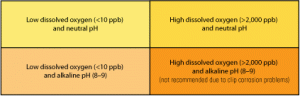
Stator cooling water treatment is often ignored—until the generator fails. Proper treatment and monitoring is essential to keeping the copper in your stators, where it belongs.
-
 Business
This month in POWER…
During this 125th anniversary year, Retrospective has surveyed the evolution of the power industry as chronicled in POWER. The magazine’s original focus in the 1880s was to fill the fledgling industry’s technical information vacuum and share common operating experiences. Our goals today are remarkably similar, as technology continues to change and operators continue to learn […]
-
 Nuclear
Do the math
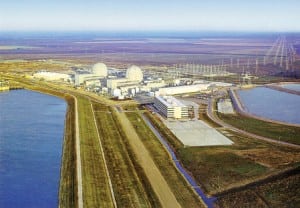
The eyes of Texas—and the rest of the world—are upon NRG Energy after its September application for licenses for two new reactors at South Texas Project (see Global Monitor). The filing was the first of its kind in nearly three decades and the first of up to 30 like it expected over the next few […]
-
 Coal
CoalGlobal Monitor (November 2007)
NRG applies for first COL / TVA green-lights Watts Bar 2 / Southern Co. and Florida muni launch IGCC project / UK approves wave energy "hub" / New Jersey-New York HV system launched / Membrane strips CO2 from methane faster / POWER digest
-
 O&M
O&MFocus on O&M (November 2007)
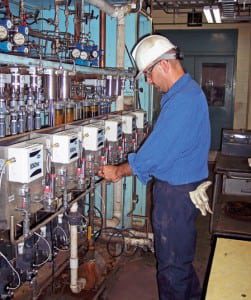
The NERC auditors are coming / Winning encore for on-line pH monitoring / Using baloons as temporary barriers / How data logging can cut power bills
-
 Legal & Regulatory
Can FERC deliver transmission?
This May, the Arizona Corporation Commission (ACC) rejected a proposal by Southern California Edison (SCE) to build Devers-Palo Verde No. 2 (DPV2)—a 230-mile-long, high-voltage transmission line connecting California and Arizona. The line, approved by the California Public Utilities Commission (CPUC) four months earlier, would enable SCE to import additional low-cost electricity from Arizona. The ACC’s rejection of DPV2 highlights a significant challenge for state and regional resource planners—weighing state interests against the regional benefits of interstate electricity commerce.
-
 Nuclear
Browns Ferry Nuclear Power Plant, Athens, Alabama
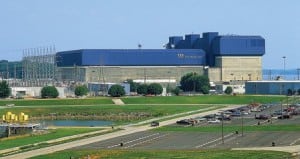
TVA’s 1,155-MW Browns Ferry Unit 1 returned to service on May 22 after sitting idle since 1985, when all three units were shut down to address management and operational concerns. Units 2 and 3 returned to service in 1991 and 1995, respectively, after extensive upgrades to controls, electrical systems, pumps, motors, and more. The return of Unit 1 began in 2002 with a five-year $1.8 billion restart plan to make all three units essentially identical, and that goal was accomplished in style. Welcome back, Unit 1.