
Latest
-
News
DOE Pours Recovery Act Funding into Wind, Laboratory Improvements
The Department of Energy (DOE) last week said it would provide $93 million from the American Recovery and Reinvestment Act to support further development of wind energy in the U.S., as well $100 million from the act for facility and infrastructure improvements at the National Renewable Energy Laboratory (NREL).
-
 Business
Fabulous Wealth and Fabulous Poverty
Mark Twain summed it up best when he described India more than a century ago as a place of “fabulous wealth and fabulous poverty.” Today, for all its surging economic growth, 300 million Indians still live below the poverty line.
-
Business
The Foreign Investment Factor (supplement to Powering the People: India’s Capacity Expansion Plans)
Recognizing that the long-term sunk cost, long project planning and construction timeframe, and high-risk portfolio make it difficult for private investors to raise funds whose maturity matches project completion dates, the Indian government has since 1991 allowed 100% foreign direct investment in the power sector.
-
News
Spain Is Tilting at Windmills
President Barack Obama has praised Spain as a global leader in renewable electricity generation and has lauded its success at creating so-called "green jobs." However, a recent Spanish university study concluded that Spain’s mad rush to meet overly aggressive renewable standards has destroyed jobs and driven up the real cost of electricity, without cutting carbon emissions.
-
-
 Coal
CoalNew Federal Rules for Coal Ash Storage on the Horizon
By the end of this year, U.S. power plants with coal ash surface impoundments could face new federal regulations related to the management of coal ash at their facilities. Currently, there are no federal requirements governing coal ash management because in 2000 the U.S. Environmental Protection Agency (EPA) determined it to be a nonhazardous waste under the federal Resource Conservation and Recovery Act.
-
Legal & Regulatory
Will Stars Align for Transmission Policy in 2009?
In the 1990s, alarm bells were sounded because the construction of electric transmission infrastructure was not keeping pace with the United States’ rapidly increasing electric demand. More than 10 years later, despite considerable debate and the passage of new legislation, we continue to search for ways to get transmission built. However, it now looks as if 2009 may the year in which the stars finally align to fix the transmission system.
-
 Water
WaterReconsider Start-up Controls to Avoid Boiler Deposits and Underdeposit Corrosion
Water treatment programs for boilers and heat-recovery steam generator (HRSG) units appropriately focus on chemistry controls during normal operation. However, rates of corrosion product transport and deposition can be much greater in boilers and HRSG units during start-up than during routine operation. For that reason, in addition to standard programs for monitoring and control of corrosion product transport, deposition, and underdeposit corrosion, consider adding contingency plans for boiler water chemistry holds in the start-up process.
-
 Water
WaterHow to Measure Corrosion Processes Faster and More Accurately
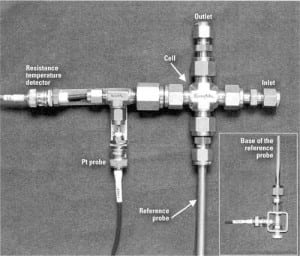
Maintaining reliable and efficient plant operations requires good control of corrosion and corrosion product transport in power plant water systems. The Electric Power Research Institute recommends oxidation-reduction potential for passivator control in feedwater systems, as do many industry experts. Here’s how to turn that recommendation into a robust feedwater monitoring program.
-
 O&M
O&MLessons Learned from a Hydrogen Explosion
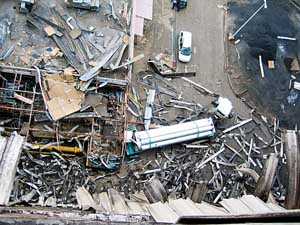
On January 8, 2007, a hydrogen explosion at the Muskingum River Power Plant’s 585-MW coal-fired supercritical Unit 5 caused one fatality, injuries to 10 other people, and significant damage to several buildings. The explosion occurred during a routine delivery of hydrogen when a hydrogen relief device failed, which allowed the contents of the hydrogen tank to escape and be ignited by an unknown source. This article covers the findings of the incident investigation and the actions the plant has taken to prevent a reoccurrence.