
Latest
-
News
Carbon Controls Fail Business Case Study
Cap-and-trade programs are featured in at least two U.S. legislative proposals to reduce carbon emissions, usually by around 80% by 2050 using a 2005 baseline. The benefits that accrue from the immense investment required to reach these goals are nebulous and don’t occur until decades after the investment. Based on my back-of-the-envelope analysis, the cost-benefit ratio of these proposals does not pass a cursory cost-benefit analysis.
-
 O&M
O&MNew Coating System Extends Life of Cooling Tower
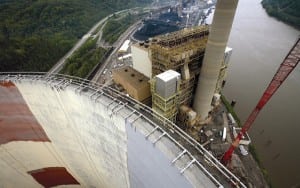
American Electric Power’s (AEP’s) Cardinal Power Plant Unit 3 cooling tower in Brilliant, Ohio, was coated and lined in the spring of 2008 by a team of coatings professionals that included the plant’s project and coatings engineering staff, Sherwin-Williams (coatings supplier), Cannon Sline Industrial (contractor), and OTB Technologies (third-party inspector). The team completed the project in just 11 weeks through damp springtime conditions in the Ohio River Valley.
-
 O&M
O&MNew Process Transforms Waste into Product for Controlling Emissions
In April, Solvay Chemicals Inc. commissioned a new facility that uses an innovative process to recover and transform sodium carbonate waste streams into a market-grade sodium bicarbonate used in air emissions control.
-
 News
NewsShoring System Uses First Built-In Ladder Supports
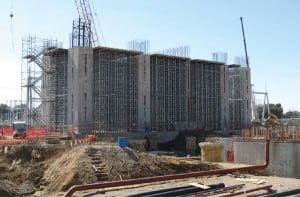
Safety is the imperative for any construction project, and Duke Energy’s 630-MW Edwardsport integrated gasification combined-cycle station in Knox Country, Ind., is no exception.
-
 Solar
SolarAbengoa Solar Begins Operation of 50-MW Parabolic Trough Plant
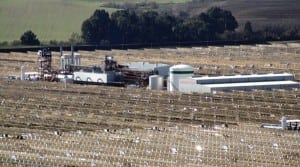
Abengoa Solar in early May began commercial operation of Solnova 1, the company’s first 50-MW parabolic trough plant. Covering 980,000 square feet with mirrors requiring an area totaling 280 acres (Figure 2), it is one of five planned concentrating solar power (CSP) plants to be built at the Solúcar Platform in Spain. All will use a technology developed by Abengoa with experience gained from a trough pilot built in 2007. Solnova 1 will also be equipped to burn natural gas if sunlight is weak.
-
 Hydro
HydroAustralia Gets Hydropower from Wastewater
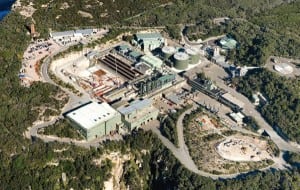
An Australian sewage plant this April began using treated wastewater falling down a 60-meter (m) shaft to produce its own power.
-
Gas
Qatar Opens 2,000-MW Gas Plant
The gas-rich emirate of Qatar, holder the world’s third-largest gas reserves, inaugurated another massive 2,000-MW gas power plant in the industrial city of Mesaieed, south of the capital Doha this May.
-
 Hydro
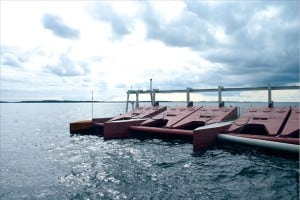
HydroIntegrating Wave and Wind Power
While Europe’s offshore wind sector has taken off, interest is resurging in marine energy. The UK’s Crown Estate took the major step this March, for example, of awarding leasing rights to 10 wave power projects to develop generation in Scotland’s Pentland Firth and Orkney waters of the North Sea.
-
News
Letter to the Editor (July 2010): Natural Gas Piping
Re: “Natural Gas Piping: It’s Time for Better Risk Control,” by John Puskar, PE (May 2010) Mr. Puskar’s recommendations to address the hazards associated with purging and blowing natural gas from large industrial piping systems are a significant contribution to the dialogue that is taking place on this important subject. Mr. Puskar correctly identifies two […]
-
 Business
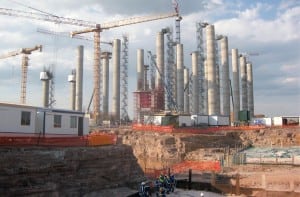
Is Eskom Ready for the World Cup?
The FIFA World Cup, the biggest sports event on the planet, is under way in South Africa through July 11. More than 300,000 fans are expected to attend the global soccer tournament, and hundreds of millions more will be watching on television. But a focus will also be on South Africa itself, which 20 years ago ended apartheid and has spent the following decades in a recovery process. And the pressure is on for Eskom, South Africa’s state-owned utility, which generates nearly 95% of the nation’s power (and 45% of Africa’s total).