
Latest
-
 O&M
O&MConveyor Upgrades Increase Plant Availability, Reduce Airborne Dust
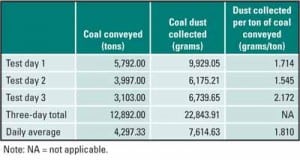
The loading and discharge of conveyor belts is the area where many, if not most, of the problems in solids conveying occur. Fortunately, a new technology provides chutes to accomplish conveyor loading and discharge without blockages while minimizing the dust generated: engineered-flow transfer chutes.
-
 Coal
CoalKnoxCheck Reports Reactor Potential and Catalyst Activity
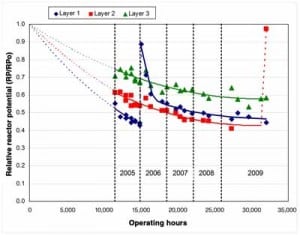
Adding a selective catalytic reduction (SCR) system to an operating coal-fired plant may be an expensive and time-consuming project, but the environmental benefits are without question. However, once construction is complete and operations staff assume control of the SCR, proper measurement tools are required to monitor the catalyst performance life cycle.
-
O&M
A Game Plan for Improving Boiler Operations
Operating a boiler is not difficult, but operating a boiler safely and efficiently requires skill and proper training. Following boiler operation best practices will keep your equipment in like-new condition for years to come. This game plan includes a compendium of best practices, with web links to a number of additional key resources you should be famililar with.
-
Coal
EPA Proposes To Tighten Ozone Standard
In one of the most far-reaching of numerous new air regulations expected from the Obama administration, the Environmental Protection Agency (EPA) has proposed to tighten the primary federal standard for ground-level ozone, the principal constituent of smog, to within a range of 60 to 70 parts per billion, saying the tougher standard is needed to protect human health.
-
Coal
DOE Official Floats NSR ‘Carve-Out’ for Some Coal Plants
The Energy Department’s top fossil energy official said [in December that] he might seek exemption or relaxation of “new source review” requirements for certain U.S. coal-fired power plants that are boosting efficiency through retrofits if the plants are also good candidates for subsequent installation of carbon capture and storage systems.
-
O&M
Fuels Used for Power Generation Expected to Rebound in 2010
The Energy Information Administraion has predicted that, as the economy gathers steam this year, rising demand for gasoline, crude oil, coal, and natural gas is expected to push up energy prices, aided by a projected boost in crude oil production.
-
News
Investigation into Cause of Middletown Gas Plant Blast Continues
Investigative efforts continue into the cause and origin of Sunday’s catastrophic explosion that killed five workers and injured 27 others at Kleen Energy System’s natural gas–fired plant being built at a remote location in Middletown, Conn.
-
News
Renewable Industry Groups Jointly Call for Tax Incentives, Federal RES
Executives from U.S. wind, biomass, geothermal, hydropower, and solar industry groups on Tuesday jointly called on Congress to enact tax incentives, a federal renewable energy standard (RES), and comprehensive legislation—measures they said would accelerate growth in those energy sectors.
-
News
Coal Digest: Boosts for CCS Projects
The week brought important policy and technology news concerning carbon capture and storage (CCS) from around the world. President Barack Obama unveiled a task force to make “clean coal” a reality as the European Union struck a major deal with member states for CCS funding. Caterpillar joined the FutureGen Alliance, and Siemens Energy said it would conduct a feasibility study for a novel postcombustion CCS system in West Virginia.
-
News
Final Approval for Calpine’s Hayward Plant Includes GHG Limits
Calpine Corp. last week received final approval to build its long-delayed 600-MW Russell City Energy Center in the City of Hayward, Calif. The Prevention of Significant Deterioration (PSD) permit issued by the Bay Area Air Quality Management District (BAAQMD) puts limits on the natural gas–fired power plant’s carbon emissions.