
Latest
-
News
Judge Orders Immediate Suspension of 11.2-GW Brazilian Hydro Project
A federal judge in Brazil on Friday ordered immediate suspension of a license permitting construction of the controversial 11,233-MW Belo Monte dam complex. The license was recently issued by Brazil’s environmental agency, IBAMA, and it would have allowed dam-building consortium Norte Energia to begin clearing forestland on the margins of the Amazon’s Xingu River.
-
News
DOE Grants First Geothermal Loan Guarantee
The U.S. Department of Energy on Thursday finalized a $96.8 million Recovery Act–supported loan guarantee to Neal Hot Springs, a project sponsored by U.S. Geothermal, to construct a 23-MW geothermal project in Oregon’s Malheur County.
-
 Coal
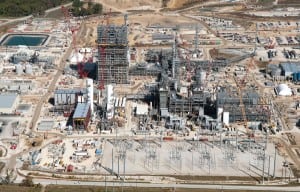
CoalU.S. and China Push Forward with Cleaner Coal Projects, Amid Setbacks
In his January State of the Union speech, President Barack Obama called on Congress to pass legislation that would allow the U.S. to source 80% of its electricity from “clean energy” sources by 2035—including traditional renewable sources like wind and solar as well as nuclear and “clean coal.” That broadened definition of “clean energy” was designed to inspire bipartisan interest, as was widely reported. But, as was also widely pointed out, the speech followed a visit to Washington from Chinese government officials and a series of key agreements aimed at increasing “clean energy” cooperation between the two countries.
-
 Nuclear
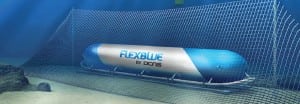
Small Nuclear Reactor Concept Goes Underwater
France in January announced its contribution to the wave of small and modular reactors (SMRs): a submarine-like nuclear plant that can be submerged in waters 60 meters (m) to 100 m deep and several kilometers offshore.
-
 Hydro
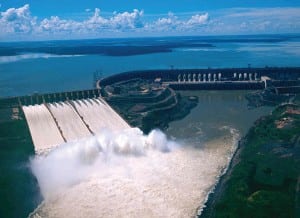
HydroBrazil Greenlights 11-GW Belo Monte Project
Brazil’s environment agency, IBAMA, in January issued a partial installation license that allows for construction of the controversial Belo Monte dam complex, an 11,233-MW project estimated to cost some 19.6 billion reals (US$11.7 billion), to begin on the margins of the Amazon’s Xingu River. Saying the project is needed to meet soaring electricity demand when completed, as planned in 2015, the government gave license to dam-building consortium Norte Energia to begin clearing 238.1 hectares (588 acres) of forestland.
-
 Wind
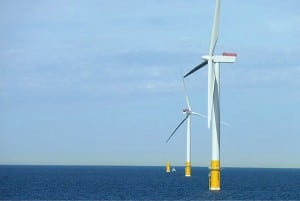
WindEuropean Offshore Wind Turbine Capacity Grows 51% in 2010
Europe installed 308 new offshore wind turbines in 2010—a 51% increase in installed offshore capacity over the previous year, the European Wind Energy Association (EWEA) said in new figures released this January. The 883 MW of new capacity—worth some €2.6 billion—were installed at nine wind farms in five countries, bringing the continent’s total offshore installed wind capacity to 2,964 MW.
-
 Gas
GasE.ON Starts 417-MW Cogeneration Plant in Slovakia
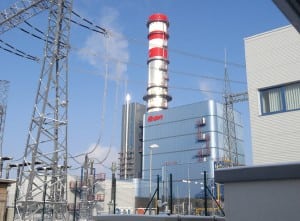
At the beginning of 2011, German firm E.ON began operation of its new 417-MW Malzenice gas and steam turbine power station in Slovakia’s Trnava region, near the country’s capital, Bratislava (Figure 5). The facility, which is expected to generate more than 300 billion kWh annually, boasts an efficiency of 58%—which E.ON claims is among the “highest in Europe.”
-
 Gas
GasUsing Flue Gas to Mitigate Ocean Acidification
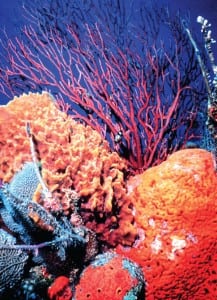
Lab-scale experiments have shown that seawater and calcium could effectively remove most of the carbon dioxide (CO2) from a natural gas power plant’s flue gas stream. A large fraction of the captured gas could then be converted into dissolved calcium bicarbonate—which, pumped into the sea, could be beneficial to the ocean’s marine life, says a researcher representing both the Lawrence Livermore National Laboratory’s (LLNL’s) Carbon Management Program and the University of California, Santa Cruz.
-
Business
POWER Digest (March 2011)
GDF SUEZ, RWE, and Iberdrola Pull out of Cernavoda Nuclear Expansion. French power company GDF SUEZ, Germany’s RWE, and Spain’s Iberdrola on Jan. 20 said they would no longer participate in a project to build Units 3 and 4 of the Cernavoda nuclear project in Romania. The companies cited “economic and market uncertainties surrounding the […]
-
 News
NewsBusting Myths
The popular television show Mythbusters uses pseudo-scientific means to examine and often expose as fiction familiar urban myths. After made-for-television lab tests, the myth is then classified as either a fabrication (“busted”), entirely possible (“confirmed”), or somewhere in between (“plausible”).