
Latest
-
 O&M
O&MThe Heat Is On at Arctic Air Base
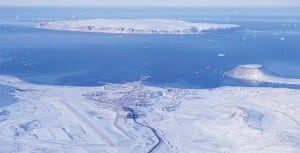
Thule (“Two Lee”) Air Base is a 254–square mile base located in a coastal valley in the northwestern corner of Greenland, within the Arctic Circle. The base, the U.S.’s northernmost military installation, is nestled between mountains and surrounded by icebergs and glaciers as far as the eye can see.
-
 O&M
O&MImprove ACC Performance with Automated Pressure Washing
Beginning each spring and continuing through the fall, backpressure readings at Rosebud Operating Services Inc. indicated substantial drops in the condenser’s efficiency. Increased backpressure results in higher net plant heat rate and a corresponding measurable decrease in power generation.
-
 O&M
O&MPlant Safety: Learn from the Mistakes of Others
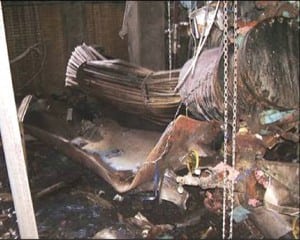
On January 27, the U.S. Chemical Safety Board (CSB) released a case study examining the causes of a heat exchanger rupture and ammonia release at the Goodyear Tire and Rubber Plant in Houston in 2008. Use these lessons learned to check your employee tracking system and to determine whether your plant has installed valves that […]
-
Legal & Regulatory
Proposed Combustible Dust Rule Sparks Debate
A high-stakes dustup is shaping up in connection with the U.S. Occupational Safety & Health Administration’s (OSHA’s) proposed new standard to regulate combustible dust. When and if enacted, this new OSHA regulation will definitely affect the way personnel handle coal at power plants that use it for fuel.
-
 O&M
O&MTECO’s San José Plant Models Safe and Sustainable Practices
In operation since 2000, TECO Energy Inc.’s 132-MW San José Power Station was the first coal-fired power plant built in Central America and is still the largest one. Used as a baseload plant, the facility successfully combines high availability with a business model that promotes sustainable environmental practices and a safe workplace.
-
 Coal
CoalCanada’s “Clean” Image Extends to Clean Power
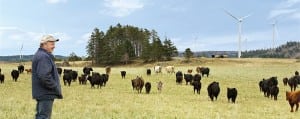
Canada’s extensive natural resources are the driver of its powerful economy, and energy is Canada’s single most important export. Yet policy makers across the nation are currently dealing with the consequences of a generation of under-investment in the electricity system and deciding what the new grid and supply mix should look like. Several provinces are competing to lead the charge in renewable energy and grid intelligence. Policy makers hope that such efforts will not only provide for Canada’s electricity needs but also create the green economy jobs that will drive the nation’s next generation of economic development.
-
 Hydro
HydroTransmission and Distribution in Canada
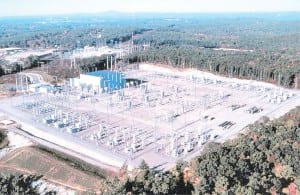
Like its neighbor to the south, Canada faces enormous costs to upgrade and expand its transmission and distribution system. The desire to integrate more renewable power into the grid, build a smarter grid, and export more power are providing the rationale for action, but capital and political will lag behind.
-
 Coal
CoalCanada’s Provincial Power Strategies
In Canada, as in the U.S., where you live determines the type of generation technology that provides your power. Here’s how the four most energy-intensive provinces in Canada are responding to the challenge of providing reliable and cheap power in a sustainable way.
-
 Gas
GasRAM Process Optimizes IGCC Design
New methods of reliability, availability, and maintainability (RAM) evaluation help facilitate more-accurate plant output and revenue predictions, identify strengths and weaknesses of possible plant configurations, and determine potential improvements and enhancements for integrated gasification combined cycle plants.
-
 Business
Who Needs an Owner’s Engineer?
In the past, members of a utility’s engineering staff spent their career designing and building new power plants. Today, many utility engineers find that opportunity comes around only once in a career. To fill the experience gap, an “owner’s engineer” company can add to a utility’s team a cadre of highly qualified power engineers who focus on avoiding design errors and keeping the project on schedule.