
Latest
-
News
Environmentalists Protest NRC Approval of 20-Year License Renewal for Salem Station
On June 30, the Nuclear Regulatory Commission (NRC) approved PSEG Nuclear’s request to extend the operating licenses of Salem Generating Station Units 1 and 2 an additional 20 years. The decision was met by protests from environmentalists, who say that PSEG Nuclear has done too little to address leaks at the plant.
-
Business
A Level Playing Field No More
FERC has surrendered jurisdiction over station power in California, putting merchant generators nationwide at risk of disadvantage to utility generators.
-
News
Bad Gas Policy
The late Dr. Carl Sagan once observed, “We live in a society exquisitely dependent on science and technology, in which hardly anyone knows anything about science and technology (S&T).†I would add that those who know the least about S&T are often the ones responsible for determining policy and funding priorities. One good example of this problem is the piecemeal approach taken to developing carbon capture and sequestration (CCS) technologies.
-
 Gas
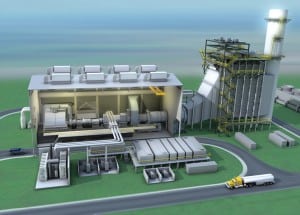
GasPushing the 60% Efficiency Gas Turbine Barrier
Gas turbine makers GE, Siemens, and Mitsubishi Heavy Industries (MHI) in the last week of May separately profiled unprecedented results from development or testing of three innovative combined-cycle gas turbine (CCGT) technologies.
-
Nuclear
Germany to Shut Down All Nuclear Reactors
Germany’s Chancellor Angela Merkel at the end of May officially endorsed a plan to shut down all 17 of the nation’s nuclear power plants by 2022. The decision, which gives the power-intensive nation just over a decade to find new sources of power for 23% of its energy needs, has had reverberations all over the world, though the future of nuclear—through growth in developing nations—continues to look sturdy.
-
 Nuclear
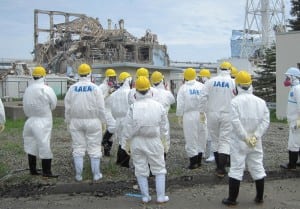
TEPCO: Most Fuel at Daiichi 1 Melted
Tokyo Electric Power Co. (TEPCO) in May discovered—after calibrating water gauges—that the water level in the reactor pressure vessel of Unit 1 at the quake- and tsunami-ravaged Fukushima Daiichi nuclear plant may have dropped to such low levels that the fuel was completely uncovered. This caused almost all the fuel pellets to melt and fall to the bottom of the vessel at a relatively early stage in the accident—roughly 15 hours after the March 11 earthquake that killed an estimated 28,000.
-
 Nuclear
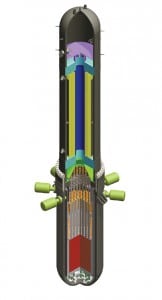
Holtec, Westinghouse Roll Out Small Modular Reactor Designs
As the Daiichi nuclear crisis has governments around the world reconsidering their nuclear-heavy energy plans and scrutinizing the safety of existing reactors and third-generation designs, several developers are touting the merits of small modular reactors (SMRs).
-
 Hydro
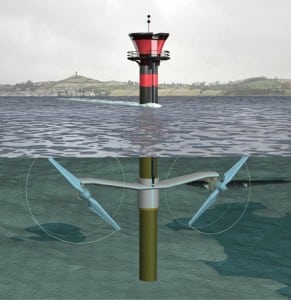
HydroCarbon Trust: Marine Energy Has High Potential but Faces Several Challenges
In a an analysis released this May, nonprofit UK group Carbon Trust admits that there is “still considerable uncertainty as to whether wave and tidal systems will play a meaningful role in meeting global energy needs,” but it suggests, based on high and low scenarios, that up to 240 GW of marine capacity could be deployed globally by 2050. Roughly 75% of this capacity will come from wave and the remainder from tidal energy.
-
Business
POWER Digest (July 2011)
Indonesia Sees Surge in Contracts for New Power Plants. Indonesia is Southeast Asia’s largest economy, but because it is stricken by chronic power shortages that limit economic growth, the nation’s government is pushing for massive infrastructure improvements. A consortium of Japan’s Electric Power Development (J-Power), Itochu Corp., and Adaro Energy, an Indonesian coal miner, on […]
-
Legal & Regulatory
California’s New RPS: Opportunity Squandered
In April, California Governor Jerry Brown (D) signed Senate Bill 2 (SB2) into law. When it becomes effective later this year, SB2 will be the primary legislation governing implementation of the California Renewables Portfolio Standard (RPS) program.