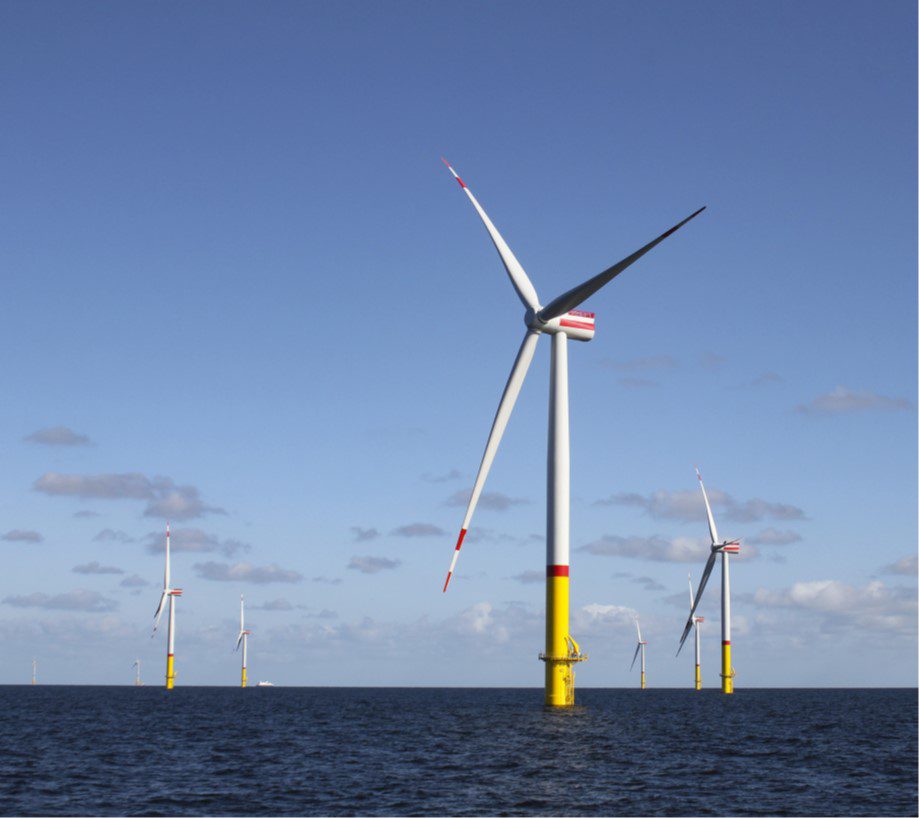

On Dec. 8, 2025, U.S. District Court Judge Patti B. Saris of the District of Massachusetts granted summary judgment against the Trump administration declaring that the Jan. 20, 2025, executive memorandum directing federal agencies to halt wind energy development (and all related agency actions to implement the memorandum) were unlawful.
Wind Energy in the U.S.
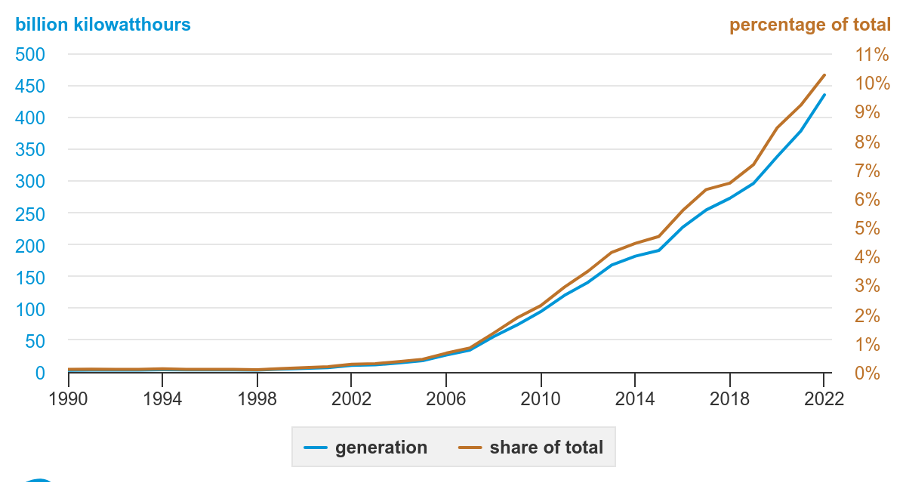
In the U.S., wind power is the nation’s largest source of renewable energy. Wind turbines are installed in all 50 states and supply more than 10% of total U.S. electricity (Figure 1).
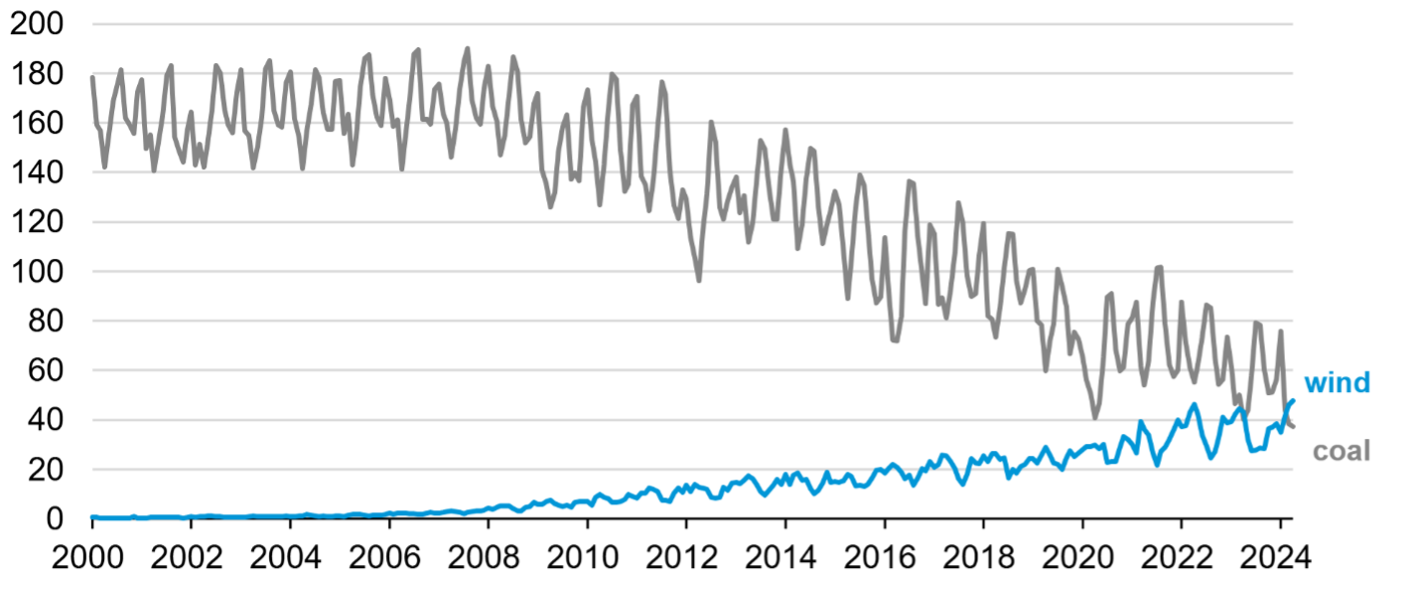
And in 2024, for the first time, electricity generated by wind power in the U.S. exceeded the amount of electricity generated by coal.
The Trump Administration’s Wind Energy Memorandum
On his first day back in office, President Trump issued an executive memorandum, “Temporary Withdrawal of All Areas on the Outer Continental Shelf from Offshore Wind Leasing and Review of the Federal Government’s Leasing and Permitting Practices for Wind Projects” (herein the “Wind Memo,” the “Wind Order,” or the “Wind Directive”). Among other things, the Wind Memo directed federal agencies to suspend issuing all new permits, leases, and other authorizations related to the development and operation of both onshore and offshore wind energy projects. In compliance with the Wind Memo, several federal agencies ordered an immediate pause in the issuance of all wind energy authorizations.
Federal agencies wasted no time implementing the Wind Memo to indefinitely halt wind-energy approvals. For example, on Jan. 20, 2025, the same day the Wind Memo was issued, Acting Secretary of the Interior Walter Cruickshank issued an order that suspended delegations of authority to “Department Bureaus and Offices” to “issue any onshore or offshore renewable energy authorization, including but not limited to a lease, amendment to a lease, right of way, amendment to a right of way, contract, or any other agreement required to allow for renewable energy development.”
Other agencies issued a variety of orders to implement the Wind Memo including:
- A representative of the National Oceanic and Atmospheric Administration informed an offshore-wind developer that its Marine Mammal Protection Act incidental-take authorization was subject to the Wind Directive’s pause.
- The U.S. Fish and Wildlife Service temporarily ceasing issuance of permits to wind facilities until further notice.
- The Bureau of Ocean Energy Management (BOEM) postponed virtual public meetings on its draft Programmatic Environmental Impact Statement for Potential Mitigation of Future Development of Wind Lease Areas Offshore California.
- The U.S. Department of the Interior (DOI) and BOEM acted to temporarily halt offshore wind leasing on the Outer Continental Shelf. The agencies’ memorandum paused new or renewed approvals, rights of way, permits, leases, or loans for offshore wind projects pending a review of federal wind leasing and permitting practices. As a result, the February virtual public meetings on BOEM’s Notice of Intent to prepare an Environmental Impact Statement (EIS) for the proposed Vineyard MidAtlantic Project were cancelled.
- On Feb. 5, the U.S. Army Corps of Engineers paused permitting for 168 renewable energy projects. The Corps lifted the halt a few days later, but not for wind projects.
- On Feb. 28, the Environmental Protection Agency (EPA) Region 2 filed a motion requesting that the Environmental Appeals Board remand the Clean Air Act permit for Atlantic Shores Offshore-Wind Project 1 back to the Region for reevaluation. The motion cited the Wind Directive as its basis.
- On April 16, the Interior Secretary issued a memorandum instructing BOEM to order that the Empire Wind project off the coast of New York indefinitely “cease all construction activities.”
Lawsuit to Overturn the Wind Memo
On May 5, 2025, 17 states and the District of Columbia, sued under the Administrative Procedure Act (APA), challenging the Wind Memo. Later, an industry group, the Alliance for Clean Energy New York, intervened. The complaint asked the court to declare that each of the agencies’ actions to adopt and implement the Wind Memo are arbitrary and capricious in violation of the APA; that the actions are not in accordance with law or are in excess of statutory right in violation of the APA; and that the actions are otherwise ultra vires.
The plaintiffs sought vacutur of the Wind Memo and asked the court to preliminarily and permanently “enjoin the agencies from implementing or otherwise giving effect to any action that halts or otherwise impedes wind-energy development.”
After concluding that both the state and industry plaintiffs had “standing” to pursue their claims, and that the agencies’ actions were “final” for purposes of appeal under the APA, the district court readily embraced one of the fundamental challenges by plaintiffs that focused on (1) the failure of the agencies to offer any explanation for the delays and disruptions to wind-energy permitting and development, other than referencing the Wind Memo, and (2) that the agencies failed to provide a reasoned explanation for the “sharp reversal of federal policy or decisions regarding wind-energy development.”
In ruling against the administration, the court stated:
Here, the administrative record consists of only two documents: the Wind Memo and the Interior Department’s written order suspending the issuance of renewable energy authorizations pursuant to the Wind Memo. … The Agency Defendants have certified that these two documents constitute the entirety of the “evidence considered, directly or indirectly, by [the Agency] Defendants for the alleged decision” to “temporarily cease issuing new approvals and other authorizations” pursuant to the Wind Memo. …
Although the Interior Department’s written order stated that it would expire in 60 days and purported only to bind divisions of the Interior Department, all Agency Defendants acknowledge that they will continue to carry out the Wind Order at least until the completion of the Comprehensive Assessment.
And further:
This scant administrative record makes clear, and the Agency Defendants do not meaningfully dispute, that the Agency Defendants have not “reasonably considered the relevant issues and reasonably explained the[ir] decision” to implement the Wind Order. …
Indeed, the Agency Defendants candidly concede that the sole factor they considered in deciding to stop issuing permits was the President’s direction to do so.
State Energy Policies Rely on the Development of Wind Energy Projects
Count V of the plaintiffs’ complaint makes claims for violations of the Outer Continental Shelf Lands Act (OCSLA) and alleges that:
Paragraph 432. The Wind Directive and Defendants DOI, Burgum, BOEM, and Cruickshank’s (the DOI defendants) adoption of its categorical and indefinite halt on permitting of wind-energy projects is immediately adversely affecting the States’ legal interest in the “expeditious and orderly development,” 43 U.S.C. § 1332(3), of wind energy on the Outer Continental Shelf;
Paragraph 433. The states have invested hundreds of millions of dollars in wind-energy development and even more in transmission upgrades needed to bring wind-energy resources onto the electricity grid. This investment has spurred the wind-energy industry to spend billions on infrastructure, jobs training programs, and supply-chain development;
Paragraph 434. The states have relied on wind energy as a reliable, affordable source of electricity that helps meet rising demand; and
Paragraph 435. The states also rely on wind energy to help meet their goals, often required by state law, to decarbonize their electricity grids and mitigate greenhouse-gas emissions. These decarbonization efforts are designed to mitigate the impacts of climate change, which are harming and will continue to harm the wellbeing and stability of the States’ communities and economies.
The court agreed and stated:
Agency defendants were obligated, at minimum, to “assess whether there were reliance interests, determine whether they were significant, and weigh any such interests against competing policy concerns.” … They did not do so, let alone provide the “more detailed justification” required upon determining that serious reliance interests exist.
…
Accordingly, the Court finds that the Wind Order is arbitrary and capricious. The Wind Order therefore must be set aside.
And finally:
For the foregoing reasons, plaintiffs’ motions for summary judgment … are ALLOWED and the agency defendants’ motion for summary judgment … is DENIED. The Wind Order is declared unlawful, see 5 U.S.C. § 706(2), and is VACATED in its entirety.
—John L. Watson is an attorney in the Spencer Fane, Denver, Colorado, office. For more information, visit spencerfane.com.