
Supply Chains
-
 Legal & Regulatory
FERC Commissioners, Other Experts Testify on Carbon Rule Reliability and Financial Impacts
The past week saw a flurry of Congressional hearings probing how the Environmental Protection Agency’s (EPA’s) proposed carbon pollution rules will affect grid reliability and the economy. On Reliability The U.S. House Energy and Commerce Committee on Tuesday summoned the Federal Energy Regulatory Commission’s (FERC’s) four sitting commissioners and future chair Norman Bay to testify on […]
-
 Coal
CoalHouse Energy and Commerce Chair Outlines Energy Policy Needs for Emerging U.S. Energy Abundance
Rep. Fred Upton (R-Mich.), chairman of the House Energy and Commerce Committee, on Tuesday unveiled five pillars on which U.S. energy policy should be built and discussed how the nation should tackle climate risks and grid threats. The lawmaker told attendees at the Energy Information Administration (EIA) 2014 Energy Conference that the nation’s new era […]
-
 Legal & Regulatory
WTO Members Begin Talks to Eliminate Wind, Solar Trade Tariffs
Fourteen members of the World Trade Organization (WTO)—including the U.S., China, the European Union (EU), and Japan—on Tuesday launched negotiations to eliminate tariffs or custom duties on wind turbines, solar products, and other environmental goods. The first phase of negotiations between the 14 WTO members, which make up 86% of the global environmental goods trade, […]
-
 Gas
GasU.S. House Votes to Speed Up LNG Exports
The U.S. House of Representatives on Wednesday voted 266–150 to pass a bill that cuts federal red tape and accelerates liquefied natural gas (LNG) exports to Europe and other allies. The Domestic Prosperity and Global Freedom Act (H.R. 6) authored by Rep. Cory Gardner (R-Colo.) now moves to the Senate. Experts suggest it has a […]
-
 Nuclear
Delays and More Costs for Plant Vogtle Nuclear Expansion
In-service dates for two nuclear units under construction at Plant Vogtle in Georgia have been moved out to December 2017 and December 2018, and the total project cost is now estimated at $6.76 billion—$650 million more than the certified cost—staff from Georgia Public Service Commission (PSC) reported this week. Steven Roetger and GDS Associates consultant […]
-
 Renewables
Study: Resource Adequacy Concerns Mostly Stem From Restructured Electric Markets
Most issues concerning resource adequacy have arisen in the context of restructured wholesale and retail electric markets, rather than from traditionally regulated electric markets, a new study from the Electric Markets Research Foundation (EMRF) suggests. The nonprofit EMRF, established in 2012 by “academics and other experts” to fund studies on electric market issues, notes in […]
-
 Renewables
Carbon Rules Proposed for Existing Power Plants
Existing fossil fuel–fired U.S. power plants must comply with state-specific goals to lower carbon pollution by 2030 under rules proposed by the Environmental Protection Agency (EPA) today. The so-called “Clean Power Plan,” which applies to existing power plants, seeks to cut carbon emissions from the power sector by 30% from 2005 levels by 2030. It […]
-
Coal
FERC Takes First Steps in Harmonizing Gas and Electricity Markets
After two years of work, about a dozen conferences and meetings, and multiple rounds of comments, the Federal Energy Regulatory Commission (FERC) announced on Mar. 20 that it was ready to begin the process of
-
 Gas
GasRecent Innovations from Gas Turbine and HRSG OEMs
There is no hotter market in power generation than gas. According to the Energy Information Administration (EIA), the U.S. is projected to add just under 60 GW of new generating capacity between 2013 and 2017
-
 Wind
WindCommerce Backs Distributed Wind Growth
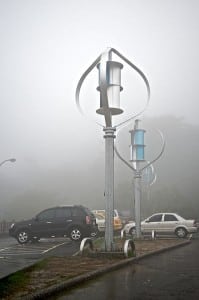
The U.S. Department of Commerce on May 13 awarded the Distribution Wind Energy Association (DWEA) a two-year grant to develop a roadmap to identify common manufacturing gaps for distributed wind equipment. The $488,634 grant from the National Institute of Science and Technology (NIST) calls on DWEA to form the “Strategies for Manufacturers Advancing Research and […]
-
 Renewables
Japan’s Cabinet Formally Drops Zero-Nuclear Ambitions, Adopts New Basic Energy Plan
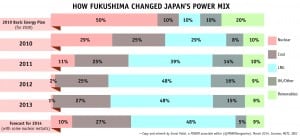
In a stark departure from the zero-nuclear future proposed by a previous administration, the cabinet of Japan’s Prime Minister Shinzo Abe Friday endorsed restarting the country’s idled nuclear reactors as it develops more renewables. The cabinet on Friday officially adopted the first Basic Energy Plan since the Fukushima disaster, a 78-page document (in Japanese) that […]
-
Legal & Regulatory
Industry Leaders, Experts Testify on How to Keep the Lights On
Ten witnesses from federal and state regulatory agencies, a public power entity, environmental groups, and power companies today outlined a number of threats to the bulk power system’s reliability in a Senate hearing to assess whether enough was being done to keep the lights on. General measures to address day-to-day issues affecting reliability—such as tree […]
-
 Gas
GasAbout That Gas-Fired Power Boom…
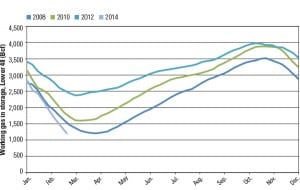
If you were thinking the shale gas boom had permanently changed the natural gas business in the U.S., gas market fundamentals have some news for you. Natural gas prices have traditionally risen during the
-
Nuclear
Worldwide Nuclear Commerce: Good News and Bad News
It’s a hoary setup for a joke, but it’s no joke in talking about nuclear power. When it comes to worldwide prospects for nuclear expansion, there is good news and there is bad news. The bad news is found
-
Supply Chains
3D-Printed Turbine Replacement Parts Could Cut Repair Times by 90%
3D metal printing is still an experimental process in nearly all industries, used primarily for prototypes and test products. But if Siemens and GE have their way, it will soon become a standard means of
-
 Nuclear
UK Uses “Lead and Learn” Strategy for Magnox Reactor Fleet Decommissioning
Many American readers may not realize that, although the first major nuclear fission successes were achieved in the U.S., after World War II, when nations expanded their nuclear research to include power
-
 Renewables
FERC Staff Highlight Changing Power Mix as Demand Falls for Third Straight Year
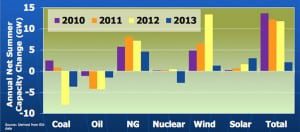
The changing generation mix and recent extreme weather throughout the U.S. have led the power sector to evaluate and begin making changes to address their increased dependence on natural gas and the integration of renewables, staff at the Federal Energy Regulatory Commission (FERC) said in the 2013 State of the Markets report. Gas Price Hikes […]
-
 Nuclear
S.C.: DOE’s Hold of MOX Facility Construction Is Illegal
In a lawsuit filed on Tuesday, South Carolina has charged the Department of Energy (DOE) with “flouting” the law when it indefinitely suspended the mixed oxide (MOX) fuel fabrication facility under construction at the Savannah River Site (SRS) in Aiken County, S.C. The complaint stems from recent recommendations in the Obama administration’s fiscal year 2015 […]
-
 Renewables
GAO Report: Power Sector Is Clearly Exposed to Climate Change Risks
U.S. energy infrastructure is increasingly vulnerable to acute weather events and long-term changes in the climate, the Government Accountability Office (GAO) says in a new report. Options to help reduce those risks include measures to improve its durability and resiliency. The Mar. 4–released report titled “Energy Infrastructure Risks and Adaption Efforts,” cites data from the National Research […]
-
 Supply Chains
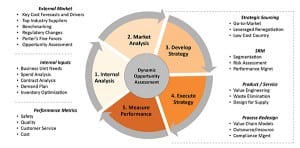
The Future of Utility Supply Chain Management
There may be few things about power plant management less exciting than its supply chains. But few things can gum up a plant’s operations more completely than mismanaging supplier relationships, parts
-
 Energy Storage
What is the Future of Electric Utilities?
What’s the utility of the future going to look like within two or three decades? That was a question put to former Duke Energy CEO Jim Rogers, Great Plains CEO Mike Chesser, and former chairman of the Colorado Public Utilities Commission Ron Binz by the head of the Brookings Institute’s Energy Security Initiative (ESI) last […]
-
Commentary
Global Change Agents
Now more than ever, the power generation business is a global business. Supply chains are more international than in the last century. Thanks to more easily retrievable reserves of shale gas, the prospect of
-
 Environmental
Black & Veatch Foresees U.S. and Global Opportunities
Black & Veatch expects sustained growth across global energy markets in 2014 with several ongoing themes continuing. Key market drivers supporting power infrastructure spend remain the same, centering on
-
 Commentary
How U.S. Power Generators Are Preparing for 2014
The business environment for generating companies worldwide continues to become increasingly complex, and not just as a result of regulations. Even in the U.S., the concerns and constraints faced by generators
-
 O&M
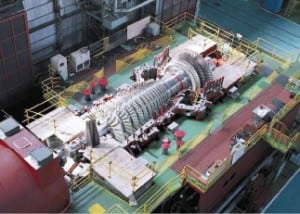
O&MDay & Zimmermann Focuses on Flexibility
Now more than ever, we see the U.S. power market sharply focused on maximizing return on investment. We see power producers responding to economic uncertainty, high costs for new emission controls, and a
-
 Commentary
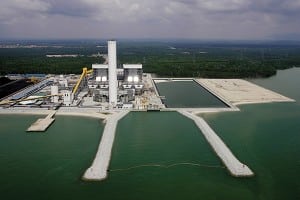
Burns & McDonnell Sees U.S. Market in Transition While Asian Market Grows
The U.S. power generation market is experiencing a unique set of transitional drivers, the biggest being the current economics within the energy market. U.S. Market Drivers A significant portion of the U.S
-
 Legal & Regulatory
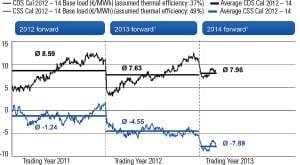
Europe Faces Capacity and Cost Challenges in 2014
This is expected to be the year when modest economic growth at last returns to a recession-hit Europe. Recent depressed power demand from industry has already allowed the 27 countries of the European Union
-
 Gas
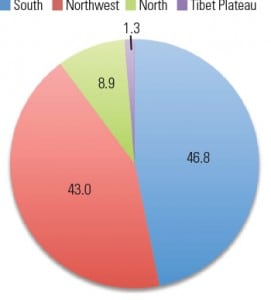
GasChina’s Shale Gas Development Outlook and Challenges
Thanks to sustained and rapid development of China’s economy, demand for natural gas has been increasing. From 2000 to 2010, China’s demand for natural gas increased from 24.7 billion cubic meters (bcm) to
-
Commentary
The When, Where, and Why of Energy Patents
New research conducted by Massachusetts Institute of Technology and Santa Fe Institute researchers finds that the number of energy patents is increasing faster than patents overall. However, the trend lines
-
Supply Chains
TREND: Rare Earth Minerals and Free Markets
Far from precipitating a crisis in high-tech manufacturing, the Chinese attempt to corner the market on rare earth minerals has instead inspired some healthy competition and adaptation.