
Wind
-
 Wind
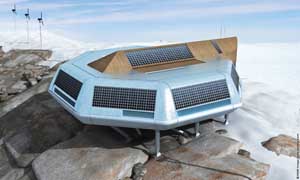
WindTurbines Spinning at Antarctica’s First "Zero-Emissions" Station
About 110 years after the Belgica expedition — a polar voyage organized by the Geographical Royal Society to establish the world’s first Antarctic scientific research program — a new, unique research station sponsored by the Belgian Federal Government has been commissioned. Inaugurated on Feb. 15 after two years of construction, the Princess Elizabeth Station (Figure 4) is the only polar base to run entirely on renewable energies.
-
Hydro
International Organization to Push Renewable Energy
Seventy-five countries from around the world joined a new political agency dedicated to the acceleration of green energy this January, but several notable nations — including the U.S., Canada, Australia, UK, Japan, and China — were not among them.
-
Solar
President Obama Signs Orders Aimed at Energy Independence and Economic Recovery
Following a press briefing this morning, President Barack Obama signed new executive orders intended to spur “swift action” on both U.S. economic recovery and American energy independence.
-
 Gas
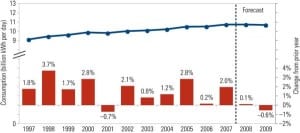
Gas2009 Industry Forecast: New Power Politics Will Determine Generation’s Path
The U.S. power industry’s story in 2009 will be all about change, to borrow a now-familiar theme. Though the new administration’s policy specifics hadn’t been revealed as POWER editors prepared this report, it appears that flat load growth in 2009 will give the new administration a unique opportunity to formulate new energy policy without risking that the lights will go out.
-
 Wind
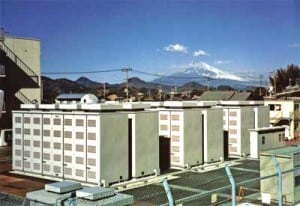
WindBanking Wind
This spring, Xcel Energy, along with state and technology partners, is set to test what the utility says is the first battery capable of storing wind energy. The ability to store energy from renewable generation sources with variable output is key to maximizing the value of renewable power in general and to Xcel’s “smart grid” plans in particular.
-
 Wind
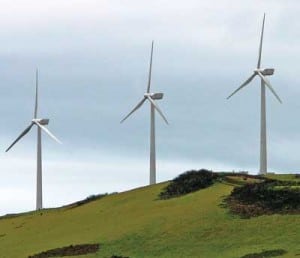
WindTop Plants: La Collada Wind Farm, Tarragona Province, Spain
Ironically, the Spanish province of Tarragona — well known for its many Roman and Medieval ruins, archeological digs, and multiple World Heritage Sites — now has one of the most cutting-edge wind farms in the world. This wind farm recently added an innovative 3-MW wind turbine, which stands 140 meters (459 feet) high and is the largest nationally manufactured wind turbine installed in Spain to date.
-
 Wind
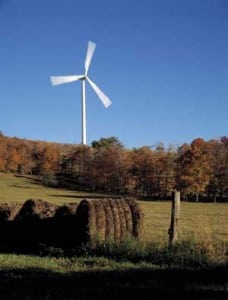
WindTop Plants: San Cristobal Wind Project, Galapagos Islands, Ecuador
The Galapagos Islands, home of the unusual flora and fauna that inspired naturalist Charles Darwin’s groundbreaking work on evolution, are striving to promote clean energy that protects the area’s unique biodiversity. Part of that effort is the 2.4-MW San Cristobal Wind Project, which displaces diesel-powered electricity generation. This new energy source will cut greenhouse gas emissions and reduce the risk of devastating diesel-fuel tanker spills in a highly protected environment.
-
 Wind
WindPrevailing winds: Trends in U.S. wind energy
Wind power is becoming a mainstream energy source that U.S. utilities are tapping into nationwide as a means of adding clean, domestically sourced energy to balance their generating portfolios. To identify where wind will take us,POWER’s senior editor talked to experts from diverse industry stakeholders about current and future developments.
-
 Wind
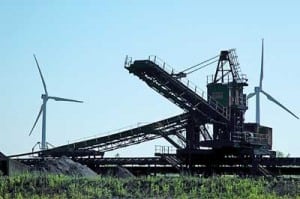
WindThe return of the Clipper Liberty wind turbine
The Steel Winds project in Lackawanna, New York, was selected as a POWER 2007 Top Plant because of its unusual location (a former steel mill and Superfund site) and because it was the first commercial deployment of the Clipper Windpower 2.5-MW turbine. That report was written just as the project entered commercial service but before a major gearbox problem was identified. For many new designs, it isn’t a question of if problems will occur but of how the manufacturer responds when problems inevitably do occur. For its handling of Liberty’s problem, Clipper Windpower gets an "A."
-
Commentary
Commentary: Renewable energy lessons from Europe
Europe has seen tremendous activity in the development of renewable energy as a response to climate change. As a result, some of the most important renewable energy firms operating in the U.S. are based in Denmark, Germany, and Spain. Stable, high-level policy is one reason Europe dominates this sector.