
Nuclear
-
Nuclear
NRC Staff Signals Approval of San Onofre Restart
In a preliminary finding released on Wednesday, staff at the Nuclear Regulatory Commission (NRC) found that Southern California Edison’s (SCE’s) request for a license amendment that would allow limited operations at San Onofre Nuclear Generating Station (SONGS) this summer, does “not involve an increased risk of an accident or create the possibility of a new or different accident from those previously evaluated for its license.”
-
Nuclear
One Dead, Eight Hurt in Accident at Arkansas Nuclear One
An accident at Entergy’s Arkansas Nuclear One station near Russelville, Ark., left one worker dead and eight injured Sunday morning. The accident involved the 836-MW Unit 1, which was in a refueling and maintenance outage at the time. The 987-MW Unit 2 was operating but tripped offline and was reported to be in a stable mode. No nuclear material was released.
-
Nuclear
SCE Seeks License Amendment to Hasten San Onofre Restart
Apparently, deciding that half a loaf is better than none, Southern California Edison (SCE) on Monday submitted a draft proposal for a voluntary license amendment to the Nuclear Regulatory Commission (NRC) for the troubled San Onofre Nuclear Generating Station (SONGS), in hopes of salvaging its plan for a five-month limited-power restart test. The move appeared to be in response to pressure from local groups seeking to keep the reactor shut down.
-
O&M
Arc Flash Injures Three at Callaway Energy Center
Three workers were injured by an arc flash while working in the switchyard at the Callaway Energy Center in Missouri on April 2. Ameren Missouri said the accident, which happened outside the nuclear plant’s protected area, did not affect power generation.
-
Coal
Shifting Sands
The United Arab Emirates (UAE) is made up of seven emirates, yet two dominate the demographic, economic, and geopolitical landscape. Download the report.
-
Nuclear
Too Dumb to Meter, Part 10
As the book title Too Dumb to Meter: Follies, Fiascoes, Dead Ends, and Duds on the U.S. Road to Atomic Energy implies, nuclear power has traveled a rough road. In this POWER exclusive, we present the 18th and 19th chapters, “The Great Uranium Conspiracy” and “Breeding at the Turkey Farm,” the final two chapters of the “False Scarcity and Fools for Fuels” section.
-
 Nuclear
Nuclear Waste Disposal Sites Still Rare After All These Years
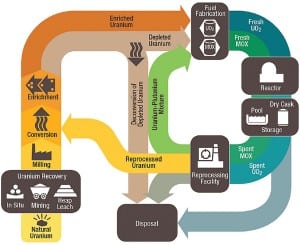
Nuclear power generation is well established, but efforts worldwide to develop permanent disposal sites for highly radioactive waste remain nascent at best. If this were a horse race, you’d have to say the smaller horses are winning.
-
Nuclear
NuScale to Seek Federal Funding for Small Modular Reactor
NuScale on Wednesday announced it would seek federal funding to accelerate deployment of the company’s small modular reactor technology, saying it would submit a letter of intent in response to a funding opportunity announcement (FOA) announced by the Department of Energy (DOE) earlier this month.
-
Nuclear
ASLB Upholds Environmental Impact for Proposed Levy County Reactors
The Nuclear Regulatory Commission’s (NRC’s) Atomic Safety and Licensing Board (ASLB) on Tuesday rejected challenges by environmental groups to Progress Energy’s application to license two new nuclear plants in Levy County, Fla.
-
Nuclear
New SONGS Evaluation Concludes Unit 2 Can Be Operated at 100% Power
Southern California Edison (SCE) on Friday released a new technical evaluation that concludes steam generators at its San Onofre Nuclear Generating Station (SONGS) Unit 2 can safely be operated at 100% power. The evaluation reinforces a more conservative plan proposed by the company to federal regulators to operate the unit, which has been shut down since January 2012, at 70% for five months.
-
Nuclear
NRC Delays Action on Vent Plan, Directs Staff to Study Options
The Nuclear Regulatory Commission (NRC) on Tuesday delayed approving a recommendation made by technical staff that calls for upgrades or replacements of "hardened" venting systems at the nation’s 31 Mark I and Mark II boiling water reactors (BWRs), giving staff a year instead to assess other options and produce a "technical evaluation" on the proposal.
-
Nuclear
Entergy Responds to NRC Claim that Palisades Nuclear Plant at Risk of Pressurized Thermal Shock
Responding to a recent claim by the Nuclear Regulatory Commission (NRC) that the Entergy’s Palisades nuclear power plant is at risk of pressurized thermal shock., the Louisiana-based company said the plant "is a safe and secure facility [and has a] license to operate … through 2031."
-
Gas
The Second Anniversary of Fukushima: Daiichi, Japan, and the World’s Nuclear Sector
On the second anniversary of the 9.0-magnitude Great Tohuku Earthquake that killed more than 25,000 people and set off the worst nuclear disaster in 25 years, Tokyo Electric Power Co.’s (TEPCO’s) devastated Fukushima Daiichi Units 1 through 4 were in cold shutdown and set to be abolished. All Japan’s nuclear reactors remain shuttered for safety inspections, and the rattled nation has yet to finalize a future energy roadmap. Meanwhile, as panelists at the IHS CERAWeek noted, the world’s global nuclear sector seems to have made a slow but determined recovery.
-
Nuclear
DOE Announces New Funding Opportunity for Small Modular Reactors
On Monday, the Department of Energy issued a new funding opportunity announcement designed to help U.S. industry design and certify innovative small modular nuclear reactors (SMRs). This follow-on solicitation to the cost-share agreement with Babcock & Wilcox for its mPower SMR technology, announced in November 2012, is open to other companies and manufacturers and is focused on furthering SMR efficiency, operations, and design.
-
Coal
Four Major EPA Air and Water Rules Forthcoming Through May, Agency Schedule Shows
The Environmental Protection Agency (EPA) estimates final regulations curbing greenhouse gas (GHG), mercury, and air toxics emissions from new sources could appear in the Federal Register over the next six weeks. Also forthcoming are final cooling water intake rules and proposed effluent guidelines. The coal ash rule, which has no target date for a final rule, may not be issued this year, the agency said.
-
Nuclear
NRC Denies UniStar’s Petition for Review of Foreign-Ownership Issue, Barring Calvert Cliffs 3 COL
The Nuclear Regulatory Commission (NRC) on Monday denied a petition from Unistar Nuclear Operating Services to review an August 2012 decision by the NRC’s Atomic Safety and Licensing Board (ASLB) that found the company was ineligible to obtain a construction and operation license (COL) for its proposed—and then abandoned—Calvert Cliffs 3 EPR because it was completely foreign-owned.
-
Coal
Gates Calls for Increased Spending on Energy Research, Renewed Focus on Nuclear
Bill Gates didn’t mince words last night when sharing with the IHS CERAWeek crowd his thoughts about public support for basic scientific research in the United States.
-
Coal
China Looks to Curb Carbon Emissions by Diversifying Power Portfolio
China will reduce the nation’s carbon emissions and energy use per unit of gross domestic product (GDP) by at least 3.7% this year and perform trials for a carbon-trading program, China’s National Development and Reform Commission (NDRC), said in a report on Tuesday. The country would also make "greater efforts to conserve energy" and "reduce the discharge of major pollutants," it’s top economic planner said.
-
Nuclear
Federal Court Reopens Case Disputing Nuclear Waste Fund Fees
The U.S. Court of Appeals for the D.C. Circuit last week reopened and set a relatively expedited briefing schedule for a case in which several states and nuclear utilities have claimed collection of a nuclear waste fee by the Department of Energy (DOE) is unlawful.
-
Nuclear
Global Laser Enrichment Formally Proposes Uranium Facility for Paducah
GE–Hitachi division Global Laser Enrichment (GLE) has reportedly submitted a nonbinding proposal to establish an additional uranium enrichment facility at the Department of Energy’s (DOE’s) Paducah enrichment site in Kentucky.
-
 Nuclear
Hungary Inaugurates Subsurface Repository for Nuclear Plant Waste
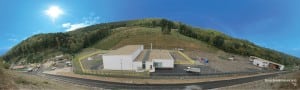
Construction of a $310 million repository about 250 meters below Earth’s surface for low- and intermediate-level radioactive waste from the operation and future decommissioning of Hungary’s power plants reached a significant milestone at Bataapati.
-
Gas
Japan Banks on LNG
Japan’s scramble to replace generation lost from nuclear power plants that were shuttered after the March 2011 Fukushima Daiichi nuclear accident has forced it to rely on pricey imports of fossil fuels—and soaring energy costs are hammering the world’s third-largest economy.
-
Nuclear
Too Dumb to Meter, Part 9
As the book title Too Dumb to Meter: Follies, Fiascoes, Dead Ends, and Duds on the U.S. Road to Atomic Energy implies, nuclear power has traveled a rough road. In this POWER exclusive, we present the 16th and 17th chapters, “Uranium Rush and the New ’49ers” and “Naked Shorts at Westinghouse,” the first two chapters of the “False Scarcity and Fools for Fuels” section.
-
Nuclear
SoCal Edison Expects SONGS Decision by May
Southern California Edison now expects the Nuclear Regulatory Commission to decide in late April or May whether or not the 2,300-MW San Onofre Nuclear Generating Station (SONGS) Units 2 and 3 may restart in time for this summer’s demand season.
-
Nuclear
Dominion’s Farrell: Low Gas Prices, Lack of Policy Pose Setbacks for Nuclear Expansion
Nuclear power will play a significant role in the nation’s energy future, though a nuclear expansion will be hindered by several factors—foremost among them low natural gas prices and a lack of a comprehensive national energy policy, Dominion Chair, President, and CEO Thomas Farrell II told attendees at the Platts Nuclear Energy Conference in Washington, D.C., on Wednesday.
-
Nuclear
Latest Olkiluoto EPR Delay Puts Project 8 Years Behind Original Schedule
An EPR reactor under construction by an AREVA-Siemens consortium in Finland may not start operating until 2016, two years later than its revised start date in 2014, Finnish utility Teollisuuden Voima (TVO) said on Monday. Construction of the Olkiluoto 3 (OL3) unit began in May 2005, and the new possible start date could put it eight years behind its initial schedule.
-
Nuclear
Progress Energy to Scrap Crystal River Nuclear Plant
The beleaguered Crystal River Nuclear Plant in Citrus County, Fla.—which has been in shutdown and offline since late 2009 due to damage to its containment building—is to be retired, Progress Energy Florida announced on Tuesday.
-
Nuclear
States, Utilities Ask Fed. Court for Expedited Suspension of Nuclear Waste Fees
In a filing with the U.S. Court of Appeals, D.C. Circuit, state utility regulators and nuclear utilities rejected claims in a recent Department of Energy (DOE) filing that Nuclear Waste Fund fees were necessary, and they called on the court to temporarily suspend the fees.
-
Nuclear
Too Dumb to Meter, Part 8
As the book title Too Dumb to Meter: Follies, Fiascoes, Dead Ends, and Duds on the U.S. Road to Atomic Energy implies, nuclear power has traveled a rough road. In this POWER exclusive, we present the 14th and 15th chapters, “A Man, a Plan, a Canal” and “The End of the Exploding Game,” the final two chapters of “Eddie Teller’s Exploding Ambitions” section.
-
 Nuclear
THE BIG PICTURE: Nuclear I&C
Progress in electronics and information technology has created incentives to replace traditional analog instrumentation and control (I&C) systems in nuclear power plants with digital I&C systems, or systems based on computers and microprocessors. About 40% of the world’s operating reactors have been modernized to include at least some digital I&C systems, according to the International […]