
Nuclear
-
 Nuclear
China Begins Construction of World’s First AP1000 Reactor
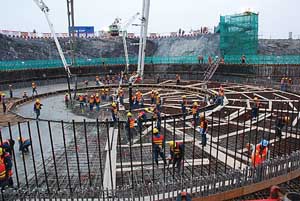
Construction of the world’s first nuclear power plant to use U.S.-based Westinghouse Electric’s AP1000 reactor technology commenced this April in China, with the pouring of 5,200 cubic meters of concrete at the nuclear island at Sanmen in Zhejiang province (Figure 3). The two-unit Sanmen plant will be built in three phases, with the first reactor […]
-
-
 O&M
O&MNuclear: Realistic Simulation Assists in Nuclear Power Plant Certification
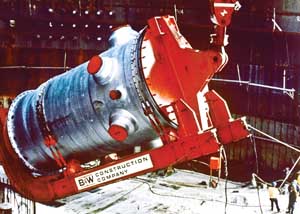
From the onset of the civilian nuclear era (marked by President Dwight Eisenhower’s "Atoms for Peace" speech to the United Nations in 1953), there has been a strong awareness of the importance of safety within the nuclear energy industry. Western experts have devoted much time and effort to ensuring the integrity of reactor cores and […]
-
 O&M
O&MSteam Turbines: San Onofre Nuclear Generating Station Gets Upgraded Generator Rotors
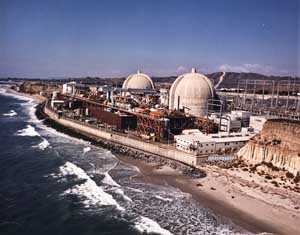
Southern California Edison’s (SCE) 2,250-MWe San Onofre Nuclear Generating Station (SONGS) recently took receipt of a new and upgraded generator rotor for one of its two Alstom steam turbine generator units (Figure 1). Following the successful installation and flawless start-up of this new rotor in the Unit 2 generator, the former Unit 2 rotor was […]
-
 Coal
CoalCanada Moves to Rebalance Its Energy Portfolio
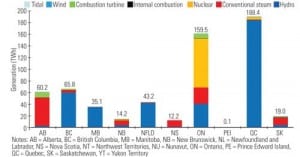
Though Canada is rich in fossil fuels, nuclear power may fuel a significant portion of the nation’s future electrical generation needs, especially in provinces that have traditionally relied on hydropower and fossil fuels.
-
 Coal
CoalPowering the People: India’s Capacity Expansion Plans
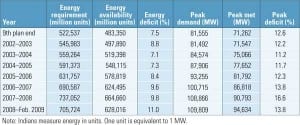
India has become a global business power even though hundreds of millions of its citizens still live in poverty. To sustain economic growth and lift its people out of poverty, India needs more — and more reliable — power. Details of government plans for achieving those goals demonstrate that pragmatism may be in shorter supply than ambition and political will.
-
 Nuclear
Nuclear Uprates Add Critical Capacity
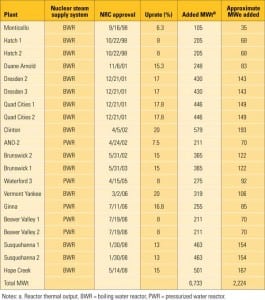
New-generation nuclear plants may be having trouble getting out of the gate, but that doesn’t mean that nuclear capacity additions are at a standstill. In fact, the 104 operating nuclear units in the U.S. have added substantial new capacity in the form of reactor and plant uprates over the past 20 years. Power uprates alone have added more than 5,600 MW since 1998 — the equivalent of five new nuclear plants.
-
 Nuclear
Birth Pangs of the Nuclear Renaissance
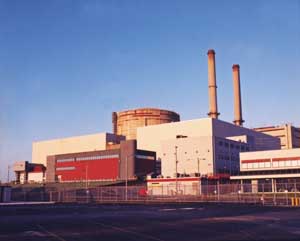
The much-ballyhooed U.S. nuclear renaissance, with a few exceptions, is running late, thanks to the usual Washington bureaucratic quagmire plus the added risk resulting from crumbling financial markets. The future doesn’t look much brighter. The poor outlook for Yucca Mountain and the new administration’s general indifference to nuclear power have made a rebirth of the nuclear industry an even higher-risk proposition than before.
-
 Coal
CoalCERAWeek 2009: Floundering Economy Eclipses Renewable, Carbon Plans
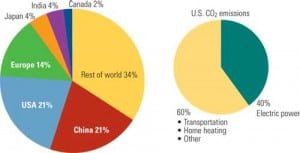
For the past 26 years, Cambridge Energy Research Associates (CERA) has hosted an annual conference in Houston that is world-renowned for its high-profile speakers and attendees’ willingness to exchange ideas and share industry forecasts. The consensus this year was that the power industry remains strong but market and political forces, often working at cross-purposes, make bringing any new power generation to market more problematic than ever.
-
 Nuclear
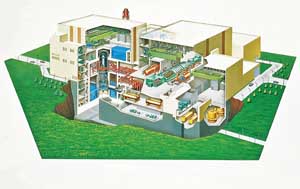
Toshiba Completes EPC Negotiations for STP
The pace at which next-generation nuclear power is developing in the U.S. accelerated this February as the U.S. arm of Toshiba inked an engineering, procurement, and construction (EPC) agreement with an advanced boiling water reactor (ABWR) nuclear development company jointly owned by NRG Energy and Japan’s Toshiba Corp. The agreement seeks to ensure that the two ABWRs planned to expand the South Texas Project (STP) in Bay City, Texas, will be constructed on time, on budget, and to exacting standards.