
Gas
-
 Renewables
GE’s Acquisition of Alstom’s Power and Grid Business Is Official
Following regulatory approval of a $10.6 billion transaction in over 20 countries and regions, GE’s acquisition of Alstom’s energy activities is now complete. GE and Alstom sealed the deal first proposed in early 2014 with the signing of a 1,500-page “master agreement.” GE had initially proposed buying Alstom’s lucrative business for €12.35 billion, but following […]
-
-
 Gas
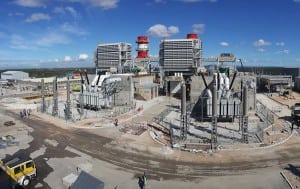
GasSouth Africa Puts First Large IPP Project Online
South Africa reached a milestone this September when it put online its first large-scale project owned by an independent power producer (IPP). The inauguration of the 335-MW Dedisa Peaking Power plant located
-
 Renewables
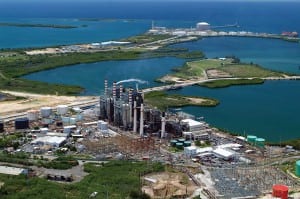
Marooned: How Island Power Systems Keep the Lights On
Largely dependent on imported fuel oil, many island systems must grapple with soaring electricity costs and reliability issues, in part because they are isolated and they don’t benefit from economies of scale. But some nations are seeking alternatives. It’s the same story all over the world. To fuel their economies and support growing populations, geographically […]
-
 Gas
GasCoal-Fired Sunbury Power Plant Gives Way to Gas
The 400-MW coal-fired Sunbury Power Plant in Snyder County, Penn., retired in 2014, will be replaced with a three-unit, 1.1-GW combined cycle plant, private equity firm Panda Power Funds announced on Oct. 28. The four-unit Sunbury facility, which began operations in 1949, was shuttered last year after 65 years of operation. Originally built for Pennsylvania […]
-
 Coal
CoalKemper IGCC Celebrates Key Milestone, Suffers New Cost Increases
Mississippi Power has revealed a new cost increase of $110 million for its Kemper County integrated gasification combined cycle (IGCC) facility. But, the company said that it has tested one of two gasification units—reaching what it says is the project's "most significant milestone yet"—and that it does not expect any new delays. Testing the gasifiers […]
-
 Legal & Regulatory
Seminole G&T Challenges Clean Power Plan in Federal Court
It took only minutes for opponents to the Obama administration’s Clean Power Plan to reduce carbon dioxide emissions from coal-fired power plants to head for the courts. The Environmental Protection Agency (EPA) plan became official, published in the Federal Register on Friday morning. The race to the courthouse was on. The first electric utility in […]
-
 Legal & Regulatory
DOE Finalizes $1B New Loan Guarantee Authority for Fossil Fuel, Renewables, and Energy Efficiency Projects
The Department of Energy’s (DOE’s) authority to issue loan guarantees officially received a $1 billion boost, which will be split between its Advanced Fossil Energy Projects solicitation and Renewable Energy and Efficient Energy Projects solicitation. The agency has finalized the additional loan guarantee authority that President Obama announced in August. It means that more loan […]
-
 Legal & Regulatory
New Wave of Coal Retirements Coming, ERCOT Warns
The Clean Power Plan could force the retirement of up to 4 GW of coal-fired capacity in the region served by the Electric Reliability Council of Texas (ERCOT) starting as soon as 2022, an updated analysis suggests. The independent system operator that manages about 90% of Texas’ electric load acknowledged that fewer coal units are […]
-
 Renewables
Five Power Plants to Change Hands in Four Separate Deals
Within the space of less than a week, four deals have been announced that will result in ownership changes at five power plants in the U.S. Northeast. Calpine Buys Another Gas Plant Calpine Corp. announced on Oct. 13 that it has agreed to acquire the Granite Ridge Energy Center, a 745-MW combined cycle gas-fired power […]
-
 Legal & Regulatory
Federal Court Stays WOTUS Rule
A federal court last week granted a motion barring the U.S. Army Corps of Engineers and Environmental Protection Agency (EPA) from enforcing the Clean Water Rule, which critics say is “exceptionally expansive.” A three-judge panel at the U.S. Court of Appeals for the Sixth Circuit on Oct. 9 granted the stay sought by 31 states […]
-
 Legal & Regulatory
Entergy to Permanently Close Troubled Pilgrim Nuclear Plant
Entergy Corp. will permanently close its 680-MW Pilgrim nuclear power plant in Plymouth, Mass., by June 2019, owing to poor market conditions, reduced revenues, and increased operational costs, the company said today. The New Orleans–based company said it has notified grid operator ISO-New England (ISO-NE) that the reactor that began operations in 1972 would not […]
-
 Coal
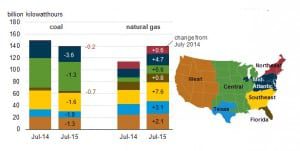
CoalU.S. Power Mix: Gas Replacing Coal Faster Than Expected
Coal has been the dominant source of electricity in the U.S. power mix for more than a century, but that may be coming to an end sooner than expected. For only the second time ever, but also the second time this year, gas generated more electricity in the U.S. than coal. According to statistics from […]
-
 Legal & Regulatory
Moeller To Step Down By October-End
Philip Moeller, a Bush-nominated commissioner at the Federal Energy Regulatory Commission (FERC) and outspoken critic of the Environmental Protection Agency’s (EPA’s) Clean Power Plan for its cost and reliability implications, will step down at the end of this month. Moeller, a Republican, joined FERC in 2006, nominated by President George W. Bush. Obama re-nominated him […]
-
Renewables
Kuwait to Inject $9.9B into Power Sector to Alleviate Electricity Shortages
Kuwait’s government in August approved the construction of several power plants and desalination facilities to boost its capacity by 3,580 MW. Like its oil- and gas-rich neighbors in the Gulf Cooperation Council region, Kuwait is seeing a power shortage owing to its growing population and economy. With only five power plants, the country has experienced […]
-
Gas
POWER Digest
Russia and Vietnam Ink Deal for First Ninh Thuan Nuclear Unit. Russia’s nuclear group Rosatom and Vietnam’s state-owned power company Electricity of Vietnam (EVN) on July 30 signed a general framework
-
 Gas
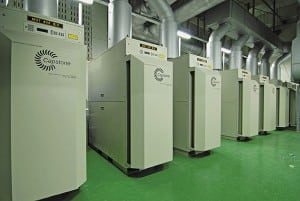
GasGas-Fired DG Showdown: Microturbines, Fuel Cells, or Reciprocating Engines?
If you’re looking to generate distributed power with gas, your options are broader than ever, with a range of efficient, clean-burning technologies to chose from. Knowing which option is the right one depends on a balance of site constraints, fuel supplies, and environmental oversight. When California State University San Marcos (CSUSM), a 14,000-student university north […]
-
 Legal & Regulatory
Senators Cite Conflicting Polls and Studies During Environmental Hearing
An old saying often attributed to Mark Twain is, “Figures don’t lie, but liars figure.” Listening to the conflicting information presented by a variety of senators during a hearing on Capitol Hill Sept. 29, one has to wonder if Twain was covering a Senate hearing when he penned the phrase. The only witness at the […]
-
 Gas
GasGE Announces Digital Power Plant as Component of the Industrial Internet
Before the official start of its Minds + Machines event in San Francisco this week, GE announced the launch of its “Digital Power Plant” during a briefing for the trade press. A formal announcement was to follow in the afternoon. Dick Ayres, general manager of software solutions, power generation services, explained that the company’s Predix […]
-
 O&M
O&MISOs, RTOs Outline Winterization Efforts
In presentations to the Federal Energy Regulatory Commission (FERC), the nation’s regional transmission organizations (RTOs) and independent system operators (ISOs) on Sept. 17 outlined measures they are taking to prevent issues if faced with extreme weather this winter. The measures are to prevent widespread generation outages as occurred during the Jan. 6–7, 2014, polar vortex. […]
-
 Gas
GasEntergy’s FitzPatrick Reactor May Be Next Nuclear Casualty
Entergy’s 850-MW James A. FitzPatrick nuclear plant located near Oswego, N.Y., may be the next reactor doomed to close on profitability woes. Entergy’s CEO Leo Denault told attendees at the Barclays CEO EnergyPower Conference on Sept. 10 that the company will need to decide by the end of this year whether to go forward with […]
-
 Renewables
GE Clears Final Hurdles for Acquisition of Alstom
European Union (EU) officials have approved General Electric’s (GE’s) $9.5 billion acquisition of Alstom’s power business, but conditions to which the two companies agreed to cement the deal will drastically reshape the world’s heavy-duty gas turbine market. The European Commission, the 28-country union’s executive body, granted its approval to the much-watched proposed merger, but only […]
-
 Renewables
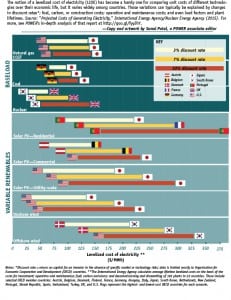
Nuclear Is Still the Lowest Cost Option, says IEA/NEA Report
Nuclear costs aren’t on the rise globally as has been widely thought, says a new report from the International Energy Agency (IEA) and Nuclear Energy Agency (NEA) surveying the levelized cost of generating electricity (LCOE). The eighth edition of the report, “Projected Costs of Generating Electricity” compiles data for 181 plants in 19 OECD and […]
-
 Legal & Regulatory
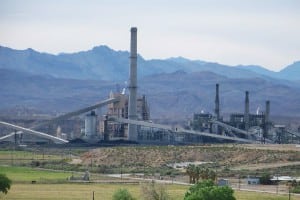
NV Energy: Warren Buffett’s Plan for a Structural Power Shift
Warren Buffett bought Nevada’s NV Energy two years ago, a move widely seen as a play for solar and renewable generation. That’s working out. But as the company transitions away from legacy coal and high-priced renewable contracts signed years ago, large customers are rebelling, and the company faces a challenge to keep its big dog […]
-
 Gas
GasTOP PLANTS: Panda Temple I and Panda Sherman Combined Cycle Plants, Texas
In the early 2010s, the Electric Reliability Council of Texas (ERCOT) was staring down the barrel of dangerously low reserve margins, a combination of growing demand and an energy-only wholesale market that
-
 Gas
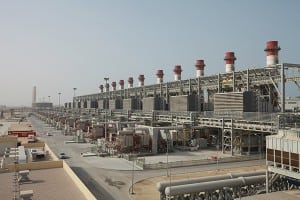
GasTOP PLANTS: Qurayyah Combined Cycle Power Plant, Qurayyah, Saudi Arabia
The Kingdom of Saudi Arabia is facing major population growth over the next several decades and, with it, rapidly growing electricity demand. In 2013, the country generated 292.2 TWh of electricity, which
-
 Gas
GasTOP PLANTS: Shepard Energy Centre, Calgary, Alberta
As with many areas in North America and Europe, electricity generation in the Canadian province of Alberta is in transition toward cleaner, more efficient, more water-wise power. According to statistics from
-
 O&M
O&MLeveraging Fuel Flexibility for Coal Power Plant Survival
While having lunch at a downtown café with my friend the biology professor, the subject of animal extinction arose. “When it comes down to it, we really don’t know exactly why most prehistoric species
-
 O&M
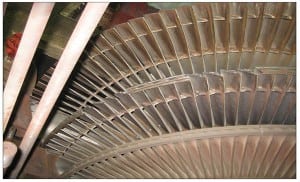
O&MOptimize Power Plant Operations with Industrial Data Management and Predictive Analytics
In today’s digital world, an optimally run power plant relies on valuable and accurate data in order to ensure assets are running reliably and with minimal downtime. Streaming in from control systems, SCADA