
Electric Vehicles
-
 Electric Vehicles
Bigelow Tea Enhances Sustainability with a Vehicle-to-Grid System
Sustainability is a buzzword that’s being bantered about up and down Wall Street, and corporate leaders have taken notice. Many companies have adopted environmental, social, and governance (ESG) initiatives, which are often tied to sustainability goals. In some cases, the pressure to do so has come from customers and/or investors, but in others, CEOs and […]
-
 Connected Plant
Transforming the Power Industry with DERMS Deployments and Beyond
The shift from energy consumers to prosumers is fundamentally changing the relationship between utilities and their customers. Behind-the-meter distributed energy resources (DERs) transform the ways households consume, generate, and store power. In the U.S., there are now about 15 million smart thermostats, 2 million solar installations, and 1.5 million electric vehicles (EVs) on the road. And […]
-
 Fuel
FuelGreen Power Enables Green Hydrogen and Zero-Emissions Mobility
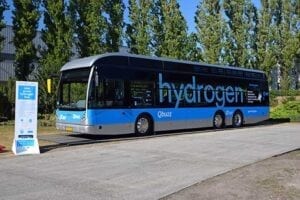
Wuppertal, in the German state of Nordrhein Westfahlen, is the home to the Schwebebahn. This suspended railway (Figure 1) is unique in Germany and passengers use the transportation system for 25 million journeys per year. Today, 120 years after Wuppertal’s Schwebebahn opened, the city is still innovating. Green hydrogen produced from power generated by incineration […]
-
 Press Releases
Siemens Energy and Porsche, with partners, advance climate-neutral e-fuel development
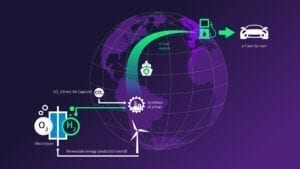
DEC. 2, 2020 — Siemens Energy, joined by sports car maker Porsche and a lineup of international companies, is developing and implementing a pilot project in Chile that is expected to yield the world’s first integrated, commercial, industrial-scale plant for making synthetic climate-neutral fuels (e-fuels). In the pilot phase, around 130,000 liters of e-fuels will […]
-
 Electric Vehicles
Is Vehicle-to-Grid Technology the Key to Accelerating the Clean Energy Revolution?
Neil Wright Vehicle-to-grid (V2G) technology is not new, but it is extremely nascent. To many, it is the natural progression from “smart charging,” whereby electric vehicles (EVs) are only recharged at the best time for the network, to a more holistic grid scheme. But V2G trials are unfolding slowly, as finding the right business model […]
-
 News
NewsHow Biden’s Presidency Could (Further) Transform the Power Sector
Joe Biden on Nov. 7 clinched the 270 electoral votes needed to win the presidency, barring Donald Trump’s prospects for a second-term. Almost immediately, reactions from various parts of the power sector streamed in, highlighting possibilities and pitfalls of Biden’s wide-ranging energy and environment agenda. Energy, and its implications on the environment, figured prominently as […]
-
Connected Plant
Virtual Peaker Partners with Fermata Energy to Bring V2G Bidirectional Vehicle Charging Technology to Utilities
Louisville, KY and Charlottesville, VA–Virtual Peaker and Fermata Energy have announced a partnership to integrate Fermata Energy’s vehicle-to-grid (V2G) technology with Virtual Peaker’s cloud-based residential energy demand response platform used by utilities across the country. The joint venture will make it easier for utilities and their customers to combat climate change by seamlessly managing two-way […]
-
 News
NewsSix Investing Trends Reshaping Power and Utilities Sector Despite COVID
Investors in the global power and utilities sector embraced agendas that created long-term value during the first half of this year, as the COVID-19 pandemic roiled the world. Recent activity points to several interesting trends that will likely persist in a post-crisis world and may even accelerate change in the sector, new analyses from global […]
-
 Electric Vehicles
Electric Vehicle Fleets and Load Demand: Are You Ready for the Surge?
Electric vehicle adoption is expected to continue growing, especially in delivery and service company fleets. That means load demand could surge, particularly around charging depots, and utilities must plan
-
 Distributed Energy
Technology for Managing Distributed Energy Resources
With the growth of distributed energy resources, including rooftop solar, wind turbines, battery energy storage systems, electric vehicles, and demand response technology, distributed energy resource management systems (DERMS) are becoming increasingly important for utilities. Brad Williams, vice president of Industry Strategy with Oracle Utilities was a guest on The POWER Podcast. He touched on a […]
-
 Distributed Energy
2020: A Moment of Truth for Utilities
The start of a new decade marks a critical moment for utilities. As the pace of change accelerates, industry leaders are facing choices that will determine which companies prosper in the new competitive landscape and which languish as slow-growth commodity businesses. West Monroe’s 2020 Energy and Utilities Outlook provides a guide to planning for a […]
-
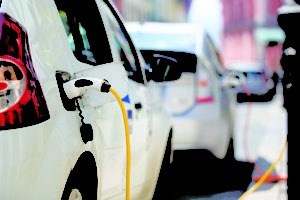 Electric Vehicles
The Compelling Economic Benefits of Electric Vehicles
Chris King and Tim Echols The expression “Show me the money” was made famous in a 1996 movie, but it certainly describes what electric vehicles need to do for U.S. consumers. With more than 1.3 million of them on U.S. roads, electric vehicles are no longer a fad and have established their place as a […]
-
T&D
Are Traditional Power Companies Being Disintermediated?
How will the electric grid change as the world transitions to a power system with more renewable energy resources? Some experts foresee a shift from today’s grid-type architecture to a system of systems—from the current centralized design to a distributed energy scheme. While it’s hard to know exactly what the future holds, it’s commonly believed […]
-
 Electric Vehicles
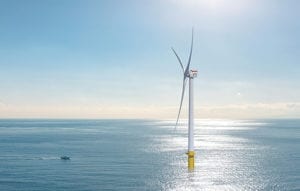
‘GREEN Act of 2019’ Extends Tax Credits for Renewables
The Ways and Means Committee of the U.S. House of Representatives on Nov. 19 released a draft tax package for clean energy projects that includes a five-year extension of the 30% solar Investment Tax Credit (ITC), along with new incentives for energy storage. The legislation also supports incentives for electric vehicles (EVs), offshore and onshore […]
-
 Distributed Power
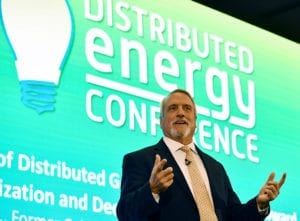
Ritter’s Message: Market Forces Drive Growth in Distributed Generation
Market forces are playing as much if not more of a role than regulatory policy in the transition from fossil-fueled power generation to renewables, as utilities in the U.S. and worldwide establish decarbonization goals. That was the message from Bill Ritter Jr., former governor of Colorado, during his keynote address at POWER’s Distributed Energy Conference […]
-
 Energy Storage
Top 5 Energy Storage Trends of 2019
Energy storage has been the hot topic in solar and e-mobility over the last couple years, and it’s only getting hotter. Last year, energy storage installations in the U.S. totaled 311 MW and 777 MWh, up from next to nothing six years prior, and this is just the beginning. Wood Mackenzie and Energy Storage Association […]
-
 Electric Vehicles
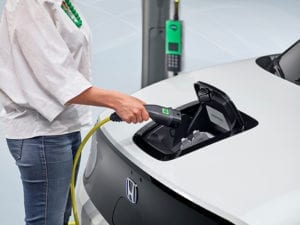
Vattenfall and Honda to develop a climate smart and cost effective charging solution
Vattenfall and technology company Honda have today signed a Letter of Intent to introduce convenient home charging solutions and flexible energy contracts specifically tailored for electric vehicle (EV) owners in Europe. This service will initially be rolled out in the UK and Germany in 2020. Vattenfall´s goal is to enable a fossil free life within […]
-
 Electric Vehicles
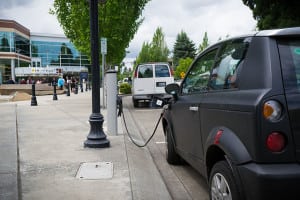
EV-Based Virtual Power Plants Shift Peak Load and Save Money
A recent study found that electric vehicle (EV) batteries used as a utility virtual power plant (VPP) could shift the entire residential peak load to nighttime hours with only 10% EV market saturation. The research was conducted by Jackson Associates, an Orlando, Florida-based firm that does energy forecasting, data development, and energy-related analysis. The study […]
-
Distributed Energy
Large Public Power Systems Are Evolving [PODCAST]
The power grid is changing across the U.S. More distributed energy resources are being added every day. That brings challenges for power utilities, but also opportunities. John Di Stasio, president of the Large Public Power Council (LPPC), which represents 27 of the largest locally governed and operated not-for-profit electric systems in the U.S., was a […]
-
Electric Vehicles
EVs Will Overload the Grid: 5 Ways the Industry Must Self-Correct
What is the impact of all electric vehicles (EVs) today and what will be the transformative effect on the grid and energy market? In recent data from the National Renewable Energy Laboratory (NREL) on plug-in electric vehicles (PEVs) and plug-in hybrid electric vehicles (PHEV), the U.S. had 764,666 light-duty vehicles sold (third in sales behind […]
-
 History
10 Takeaways from the IEA’s Newest World Energy Outlook
The International Energy Agency (IEA) deemed growth and disruptions of the world’s power sector so significant to the future of energy, it dedicated—for the first time—a four-chapter “special focus”
-
 News
NewsThe Power Industry Is Transforming, One Municipal Utility Offers a Case in Point
POWER-GEN International kicked off on December 4 with a keynote presentation focused on evolving power generation schemes and changing business models. Gregory Lee, commission president with Orlando Utilities Commission (OUC), the municipally owned public utility that provides water and electric service to Orlando, Florida, and portions of other nearby areas, opened the conference by providing […]
-
Commentary
Power Industry Should Wholeheartedly Support Electric Vehicles
Electric vehicles (EVs) have the potential to realign the transportation sector and present an opportunity for the power industry to transform and reinvent itself in fundamental ways. But whether this
-
Distributed Energy
EVs Offer Significant Growth Opportunity for Power Utilities
Do you drive an electric vehicle (EV)? If you answered yes and live in the U.S., you’re among the roughly 1% of drivers doing so in this country. If not, how soon do you think it will be before you become
-
 Commentary
Electric Vehicles—Subsidies for an Environmental Pretender
On May 22, the Edison Electric Institute (EEI), the American Public Power Association (APPA), and two groups representing U.S. and foreign automakers sent a letter to Environmental Protection Agency (EPA)