
Commentary
-
 Commentary
For the center to hold
As oil prices soar and power prices threaten to follow, our republic’s mix of diverse cultural and economic interests must cooperate to achieve our common goal of energy self-sufficiency. Those interests seem to fall into one of four main groups—policy, corporate, finance, and technical innovation—each seeking to control the direction of our nation on major […]
-
 Commentary
The EPA’s blueprint for disaster
Opponents of massive new energy taxes and regulations breathed a small sigh of relief in June when the Lieberman-Warner climate-tax bill went down in flames on the Senate floor. Even 10 Democrats broke with the party and voted against it, writing that they would have opposed the bill on final passage. Unfortunately, power-mad bureaucrats at […]
-
Commentary
Rules Designed to Be Broken
By Dr. Robert Peltier, PE
The fallout from the Supreme Court’s April 2, 2007, decision (Massachusetts v. Duke Energy) in which the high court ruled that the EPA does have the right to regulate CO2 emissions as a pollutant under the Clean Air Act (CAA) continues. The court also ruled that the EPA has the authority to regulate carbon emissions from automobiles and other vehicles—and, by extension, power plants (my words, not the court’s). -
 Commentary
EPA Staff’s GHG Proposal Will Paralyze the U.S. Economy
The Environmental Protection Agency (EPA) has announced that is it well on its way to regulating at least 85% of the energy used in America in the name of global warming (never mind the fact that temperatures have inexplicably not increased since at least 2001). If the proposal is enacted, any organization or person that emits more than miniscule amounts of CO2 will be required to obtain a permit, effectively bringing our economy to its knees in short order.
-
Commentary
Stymied on Coal, Jacksonville Goes Back to Gas
By Kennedy Maize
Stymied in its plans for new coal-fired generation, Florida’s Jacksonville Energy Authority is moving to natural gas. . . .
For several years, JEA was heavily involved in a multiple-utility plan for a $2.3 billion, 800-MW coal-fired plant to meet the region’s rapidly-growing electricity demand. But Florida Republican Gov. Charlie Crist (rumored to be on presumptive Republican presidential nominee John McCain’s vice presidential short list) clobbered the project and imposed a 20% renewable energy mandate on Florida utilities. “I worked on that for three years. In a flash of an eye, it got cancelled,” JEA project manager Mike Lawson told the Florida Times-Union. -
Commentary
The Madness of Gore
Is Al Gore out of his mind? Or is he simply issuing a difficult challenge that he knows can’t be met, but will stimulate the country toward a positive effort?
It’s hard to tell, given his speech in Washington last week, calling for the U.S. to replace all – that’s 100 percent, folks – of its electric generation with renewables in a decade. We’re talking 2018 here.
-
Commentary
Deadlock: Bush’s Air Policy
After almost eight years, the Bush administration’s approach to air pollution policy—including global warming—ends up with bupkus. That’s a wonderfully-useful Yiddish word meaning, literally, “nothing,” but implying less than nothing, or the meaningless result of lots of apparent, but futile, effort.
-
 Commentary
Kilowatt-hour tax is fairest approach
By Jim Rogers, Duke Energy Corp. The climate change debate has been dramatized in movies, on Hollywood’s red carpets, and in documentaries featuring melting ice caps. The collective effect is extraordinary, and positive. America now stands ready to address one of its toughest challenges since the industrial revolution—decarbonizing our energy supply and economy. Now the […]
-
 Commentary
Welcome to the New COAL POWER
Welcome to our new format for COAL POWER, brought to you by the editors of POWER magazine. This new web site and “webzine” contains in-depth information specifically for the coal-fired power generation market.
-
Commentary
Ups and Downs in Coal Markets
Earlier this month, blogger and Contributing Editor Kennedy Maize took a look at some significant developments on the coal front, including the fate of proposed new plants in Indiana and Kansas and the booming demand for coal mine workers.
-
Commentary
Wishful Thinking
By Editor-in-Chief Dr. Robert Peltier, PE
Zhou Dadi, director general (emeritus) of the Energy Research Institute at China’s National Development and Reform Commission, recently spoke at a panel discussion sponsored by the Carnegie Endowment for International Peace. Zhou boasted that China has set aggressive short-term goals for improved energy efficiency and that his country understands that it needs to make significant reductions of CO2 in the future. This is a remarkable statement considering that China installed over 100 GW of new coal-fired generation in 2006 and another 75 GW in 2007. -
Commentary
Obama: Big Oil’s Best Buddy
By Kennedy Maize
It’s counterintuitive. But it now appears that Democratic presidential (almost) nominee Barack Obama is Big Oil’s best friend in Washington. -
 Commentary
Growing a green economy
I believe there are three basic objectives for the energy industry in the modern era. First, to provide a reliable and ample supply. Second, to ensure that the supply is provided at the least cost to consumers. And third, to accomplish the first and second objectives with the least possible adverse effects on the environment. […]
-
 Commentary
Smart Grid requires clearing mental gridlock
In mid-2006, a Google search of the term “Smart Grid†generated around 2,000 responses. The same search this past month yielded more than 500,000 hits from a wide variety of sources. The explosiveness of the concept is especially interesting because there is no universal agreement on what constitutes a smart grid—much less agreement on what […]
-
 Commentary
Economies of connection
The advent of the Smart Grid will bring a new driver for value creation to the electric power industry: economies of connection. In the future, the Smart Grid may offer our industry improved returns more typical of Internet-based businesses like eBay, Amazon, and Google to replace the diminishing returns typical of traditional “steel in the […]
-
 Commentary
Markets, not government, must set energy prices
By J. Bennett Johnston It is fashionable these days for policymakers, particularly those running for office, to somberly suggest that America needs an energy policy—thus implying that America has no energy policy. As one of the prime architects of an energy policy that has served America well, I could not disagree more. The fact that […]
-
 Commentary
What Congress can learn from Google
Chances are good that legislation to “cap and auction” greenhouse gas (GHG) emissions will become law as early as 2009. While many environmentalists, utilities, and energy companies agree that cap and auction is the right framework, huge differences remain. Environmentalists want an 80% reduction of GHG emissions by 2050, or sooner. Energy companies want more […]
-
 Commentary
U.S. nuclear power’s time has come—again
In the U.S. today, there are continual discussions about energy independence, energy security, and ways to slow climate change. But meeting the nation’s projected 40% increase in electricity demand by 2030, while reducing overall power plant CO2 emissions, will require much more than talk. During the 1990s, American utilities increased their gas-fired generating capacity because […]
-
 Commentary
Storming the Gates
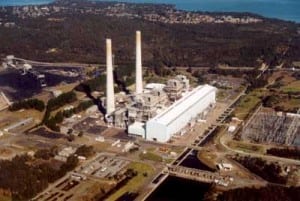
Visiting power plants is one of the perks of being a COAL POWER editor. Some plants are located in metropolitan areas; others are closer to east nowhere, especially those mine-mouth plants. Each is unique and worth the travel time to visit and meet plant staff.
-
Commentary
The mother of all energy crises
POWER readers today face severe problems in the electricity supply business. But a much bigger problem will soon burst on the scene: the peaking of world oil production. Experts have forecast peaking since shortly after the first U.S. well began production in 1859, and many subsequent forecasts of peaking have proven incorrect. Oil reserves dip […]
-
 Commentary
Centralized markets are failing consumers
During my 30-year career at the American Public Power Association (APPA), I’ve had a front-row seat for most of the major events in our industry’s recent history. So it disturbs me when my view of our history is 180 degrees out of phase with how others perceive it. Such was the case with the preamble […]
-
 Commentary
What is resource adequacy?
Under its Resource Adequacy (RA) program, the California Public Utilities Commission (CPUC) requires load-serving entities—both independently owned utilities and electric service providers—to demonstrate in both monthly and annual filings that they have purchased capacity commitments of no less than 115% of their peak loads. These purchase requirements are intended to secure sufficient commitments from […]
-
 Commentary
Competition policy: The best path
Winston Churchill once said, "Democracy is the worst form of government—except for all the others." The same could be said for competition policy in wholesale power markets. Competition policy has its flaws. It is not perfect, but it is better than the alternatives. One alternative is to rely completely on vertical integration and […]
-
 Commentary
It’s time to rebalance America’s electricity strategy
Not long ago, most utility investors considered California’s electricity policies too iconoclastic to support. Driven by far-left environmentalists and overzealous regulators, those policies have made it nearly impossible to build new power plants in the state, despite the urgent need for them. Now, however, with growing proof that global warming is real and with Americans […]
-
 Commentary
Global warming "consensus" continues to melt away
We are witnessing an international awakening of scientists who are speaking out in opposition to former Vice President Al Gore, the United Nations, and the media-driven "consensus" on man-made global warming. In May, I released a report detailing scientists who were former believers in catastrophic man-made climate change but who have recently reversed themselves and […]
-
 Commentary
Third time the charm for unbiased open access?
The Federal Energy Regulatory Commission (FERC) recently issued major rules that address for the third time "discrimination" issues remaining after FERC’s 1996 landmark Order 888, which ushered in mandatory open access to transmission. The order was intended to give all power sellers equal access to power lines and thus increase wholesale price competition. Earlier […]
-
 Commentary
The electricity challenge of the 21st century
When tackling a problem, engineers bring both skepticism and optimism to the task. As the nation’s electric power engineers look to fill America’s looming capacity gap, they will need to apply healthy doses of both. The U.S. Department of Energy’s Energy Information Administration (EIA) projects a 50% increase in electricity demand over the next 25 […]
-
 Commentary
Keep grid modernization a national priority
As the possibility of national climate change legislation increases on Capitol Hill and captures the attention of the electric power community, I am concerned that regulators, legislators, and utility executives will forget the urgency of modernizing the U.S. electricity delivery infrastructure. On the surface, the issues of reducing greenhouse gas emissions and upgrading and […]
-
 Commentary
Full-service utilities prove their value
During the past year, the debate over the structure of the nation’s electricity systems has continued at a steady clip. It seems that almost every month a new study or report is issued that proclaims the advantages or disadvantages of one market structure over another. Although a report or study may have value, the Community […]
-
 Commentary
A vision for speeding up science and technology developments
As David Wojick explains in his article, "Mapping technology chaos," on page 36, power engineers are under the gun to innovate. The president and Congress are calling for dramatic new advances in power technology. They are even considering legislating progress in areas such as efficiency and emissions control. Turning data into information Power engineers know […]