
Commentary
-
Commentary
How Shale Gas Has Helped Pennsylvania’s Economy
The Marcellus shale formation—the second-largest natural-gas field in the world—has been a blessing for Pennsylvania’s workers and our economy. Almost a quarter-million people in Pennsylvania work to produce natural gas from the Marcellus shale or in related industries. Thanks to the growth of hydraulic fracturing, commonly known as fracking, the Marcellus has been responsible for […]
-
Commentary
Gasland Part II: Same Misleading Images, New Conspiracy Theory
Director and provocateur Josh Fox is confident, “There is no safe drilling” and has made two of what the New York Times called “muckraking documentaries” crusading against the practice of hydraulic fracturing or “fracking.” His movies are powerful propaganda rife with misleading or inaccurate claims and leave little to no room for the other side. […]
-
Commentary
The Extraordinary Life and Accomplishments of George Mitchell
Most Americans have never heard of Texas oilman George Mitchell, who died in July at the age of 94 at his home in Galveston, Texas. But Mitchell, the son of a Greek immigrant goat herder, was arguably the most important individual in America’s energy history since Thomas Edison and John D. Rockefeller. Mitchell truly was […]
-
 Commentary
Renewable Intermittency Is Real
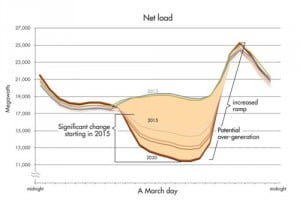
If you’ve been paying attention to energy issues in the media lately, you may have encountered a curious narrative that’s starting to gain traction among supporters of renewable energy. Namely, that the core problem with wind and solar photovoltaic (PV) generation, which is matching moment-to-moment demand with the intermittency wind and sunlight, isn’t really a […]
-
Commentary
How Anti-Fracking Activists Deny Science on Air Emissions
A common talking point among critics of hydraulic fracturing is that they somehow “own the science” on shale development. The industry is merely raising doubt about scientific studies, they claim—just enough to confuse the public and make them think there’s a legitimate debate. As the Washington Post recently characterized Gasland Part II director Josh Fox’s opinion: Fox frets […]
-
Commentary
Change and Continuity
Even if you missed Bob Peltier’s retirement signoff in last month’s column, you will have noticed that something has changed. POWER has a new editor at the top of the masthead (its 10th in 131 years
-
Commentary
Soul of the Universe
The theologian John Wesley, so taken with electricity, reverently called it the soul of the universe. Less impressed, perhaps, are state regulatory commissions that nonetheless set service territory boundaries to avoid the added expense in duplicative facilities. Becoming the sole source of the good stuff also invited regulation of rates, service standards, and whatever else […]
-
Commentary
Power Industry Wish Granted: Greater Regulatory Certainty
Power industry leaders have been saying for years that what they need is greater regulatory certainty to guide investment and operational decisions. Finally, Washington is providing that certainty, but industry leaders still may not be happy. -
Commentary
American Energy Security and Innovation: The Role of Regulators and Grid Operators in Meeting Natural Gas and Electric Coordination Challenges.
Without some serious progress on improving its infrastructure and market structure, New England is facingchallenges to reliability with its increased reliance on natural gas, says the head of ISO-NE.
-
Commentary
How the Wind Production Tax Credit is Anti-Nuclear
The PTC has led to unprecedented growth in wind capacity. But the distortions it creates in the energy market are damaging future prospects for nuclear power.
-
Commentary
Time to Pull the Plug on MOX
Despite good intentions, the program to turn Cold War-era plutonium into mixed-oxide reactor fuel has been an expensive failure. It’s time to consider other options.
-
Commentary
Risk and Feedback in Leading People
Tempting as it may be to put off tough conversations with subordinates, doing so almost always leads to bigger and bigger problems down the line.
-
-
Commentary
Bridging the Gap Between Company and Community
In communities all across North America, environmental justice (EJ), which calls for the fair treatment of all people, including those of color and the economically deprived, remains a serious concern.
-
Commentary
EU’s Green Policies in Retreat
EU leaders are beginning to comprehend that there is a practical limit to their dogged pursuit of reducing carbon emissions: their customers’ ability to pay their energy bills each month.
-
Commentary
The New Permit for Old Power Plants
Beware the letter from the Environmental Protection Agency asking seemingly innocuous questions about your plant.
-
Commentary
Two Polar Bear Decisions in Two Weeks
Protecting polar bears was the subject of two recent legal rulings. The courts ensured the bears remain protected but also closed to door to those wanting to use the Endangered Species laws to effect new greenhouse gas rules.
-
Commentary
EPA to Limit Startup, Shutdown, and Malfunction Defense
On Feb. 22, 2013, the U.S. Environmental Protection Agency (EPA) proposed a rule, 78 Fed. Reg. 12459, that will require 36 states to eliminate an exemption to Clean Air Act (CAA) emission requirements for exceedances that occur during periods of startup, shutdown, or malfunction (SSM).
-
Commentary
A Safety Milestone at NV Energy
“Safety is as Safety Does” and “Ignoring a Warning Can Cause Much Mourning” are two of the more creative safety slogans I’ve heard. Such inventive catch phrases and workplace safety posters are just part of what helps us achieve our ultimate goal, which is to ensure our employees return to their homes and loved ones in the same condition they left.
-
Commentary
Utility Mergers: Who Has a Vision?
Is bigger better for the energy business? Says a veteran energy lawyer, it depends more on why and how a utility choose to grow. Unfortunately, few regulators are thinking much about it.
-
Commentary
Partnering With the Right People
Finding the right people to work with is critical to success, but getting there is no accident.
-
Commentary
Workplace Drama: Courageous Course Correction
It’s never fun to realize you’re wrong. But effective leaders know when to admit it and take their lumps.
-
Commentary
Let’s Dump the ‘Tipping Point’ Metaphor into the Waste Tip
Climate rhetoric has become increasing obsessed with "tipping points." But this sloppy metaphor risks taking good science over the cliff.
-
Commentary
The Pacific Northwest’s Wind Fleet Integration Struggles
Mae West said, “Too much of a good thing can be taxing.” The Pacific Northwest has a good thing—plentiful, carbon-free power from its huge wind and hydroelectric fleets. But wind’s huge variability can be taxing. The Northwest’s scramble to integrate growing wind generation, and the resulting litigation melee, underscore the importance of quickly solving the variable resource integration puzzle.
-
Commentary
Germany’s Expensive Experiment
Germany’s race away from nuclear and coal to a system heavy with renewables has not followed the expected course. Nuclear and coal plants were supposed to close. Instead, gas plants are closing and coal is making a comeback.
-
 Commentary
Mayor Bloomberg Is Wrong on Coal
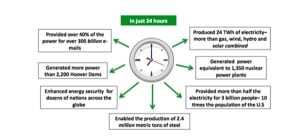
New York Mayor Michael Bloomberg recently gave a presentation in Washington, where he stated: “Coal is dead.” Fortunately, both for the prosperity of the United States and the goal to alleviate poverty for billions of people across the world, Bloomberg’s projection is much different from what is actually happening.
-
Commentary
Bad Policy Built on Bogus Study
Wind industry’s “inflated numbers” and “erroneous conclusions” misled Washington lawmakers to extend the production tax credit.
-
Commentary
Yes, Virginia, There is A Nuclear Renaissance
The news for nuclear the past few years has not been good. But forces lurking in the background are moving to rekindle the nuclear renaissance, as the long-term cost advantages seem certain to beat out much of the competition from renewables.
-
Commentary
Minerals Make the World Go Around
The increasingly advanced American economy is increasingly in need of a wide variety of minerals—many of which must currently be imported. But regulatory reform and a better understanding of their importance could lead to a renaissance in domestic mineral production.
-
Commentary
“All of the Above” Is Not a National Energy Policy
It’s all well and good to suggest the U.S. needs to be open to all solutions in the pursuit of its energy future, but at some point "try everything" needs to give way to a well-thought plan implementing the best, most cost-effective options.