
Commentary
-
 Commentary
Gas Power Generation Thrives, Turbine Manufacturers Struggle
The amount of electricity produced by gas-fired power generation has been increasing steadily in the U.S. for more than 25 years. The Energy Information Administration (EIA) reports that in 1990 about 372.8
-
 Commentary
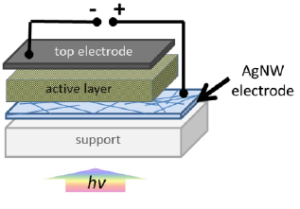
Alternative Materials for Alternative Energy
Moving toward sustainable manufacture of photovoltaics, Dr. Manuela Schiek’s research group in Oldenburg, Germany, has discovered how the latest technology in confocal laser scanning microscopy is enhancing both accuracy and efficiency of their research into organic semiconductors and transparent electrodes. Harvesting energy directly from the sun in order to generate electricity, solar cells appear to […]
-
 Commentary
Power Plant Tragedies Bring Safety to the Forefront
Power plants are inherently dangerous. Although safety is taken very seriously at most facilities, every year workers around the world are killed on the job by electrocution, falls, explosions, fires, and
-
 Commentary
Rescinding Clean Power Plan a Positive Step Toward Free Market for Electricity
The Environmental Protection Agency (EPA) in early October announced it would rescind yet another signature Obama administration policy: the electricity regulation known as the Clean Power Plan (CPP). As with
-
 Commentary
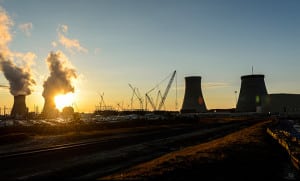
Nuclear Plant Construction: A Trial of Patience
Constructing a nuclear power plant is not for the faint of heart. The process is lengthy, even when there aren’t delays. To understand some of the hurdles, it’s worth reviewing the Plant Vogtle expansion
-
 Commentary
Why CrashOverride Is a Red Flag for U.S. Power Companies
Organizations across every industry today face a wide range of cyber threats and serious security challenges from various vectors. A top concern among these is the persistence cybersecurity experts are seeing
-
 Commentary
Keeping the Lights On: Power Professionals’ Noble Cause
Recently, two epic hurricanes—Harvey and Irma—struck North America with extremely destructive force. Harvey first made landfall in the U.S. near Rockport, Texas, about 30 miles northeast of Corpus Christi
-
 Commentary
Why Recurrent Problems Persist: Getting to the Root Cause
If recurrent problems are occurring at your plant, it could be an organizational issue rather than an equipment design deficiency. There are a number of reasons that root causes are overlooked. Understanding
-
 Commentary
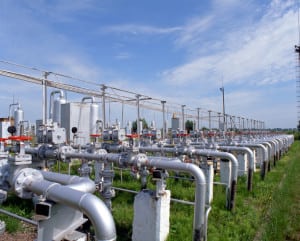
Natural Gas Infrastructure Is Much More Concerning Than a Solar Eclipse
Recently, many articles in a variety of publications speculated on how the August 21, 2017, solar eclipse would impact the electric grid. Most utility people expected no serious outages or disruptions, and
-
 Commentary
Power Market Deregulation Transforms Mexico
Mexico’s energy reform, which began in 2013, has opened up key parts of the country’s electricity sector to new market participants, foreign investors, and innovative technology. Prior to the reform
-
Commentary
Fuel Cells: Key to Our Electric Energy Future
For more than 20 years, I have been championing the use of fuel cell powered cars to connect the natural gas distribution network of this country with the electric distribution network, making them partners in
-
 Commentary
Is Natural Gas Threatening Grid Reliability?
If you’ve been paying attention to the power markets in recent years, you know that merchant coal and nuclear power plants are struggling to compete against natural gas-fired generation and renewable
-
Commentary
Baseload Regulation in a Post-Clean Power Plan World
The relationship between affordable and reliable electric power and the economy, standard of living, and physical well being of Americans is beyond doubt. In the past several years, the burden of environmental
-
Commentary
The Impact of Alternative Energy on Electricity Pricing
The rise of some sources of alternative energy such as renewables, storage, energy efficiency, and demand response, and decline in others—specifically nuclear—will continue to impact regional gas and
-
 Commentary
FERC: And Then There Was One
Behold, the Federal Energy Regulatory Commission (FERC): Cheryl LaFleur, chairman and sole commissioner. Thanks to a largely feckless Trump administration, the five-member FERC now consists of only one member, leaving the commission, an important energy infrastructure agency, continued partially crippled for lack of a quorum. FERC has been hobbled since early February, when Trump demoted […]
-
 Commentary
The Future Looks Bright for Natural Gas-Fired Power Generation but Price Volatility Is a Wild Card
The U.S. Energy Information Administration (EIA) earlier this year reported that the power sector was poised to add 11.2 GW of new natural gas–fired capacity in 2017. If that forecast proves accurate, it
-
Commentary
FERC Civil Penalty Order Underscores Need for Companies to Invest in Compliance Training
The Federal Energy Regulatory Commission (FERC) approved a settlement with GDF SUEZ Energy Marketing NA Inc. (GSEMNA) in February 2017, in which GSEMNA agreed to pay civil penalties of $41 million and disgorge
-
 Commentary
Coal: The Next Chapter
The new administration in Washington, D.C., has a sharply different vision for the development and use of our nation’s abundant energy resources, including coal. These riches are seen as a strength, not
-
 Commentary
Warming Skeptic Challenges Climate Science Education
Veteran global warming gadfly David Wojick is mounting a challenge to the way climate science is being taught in our schools, and raising money online for his venture. At the same time, Environmental Protection Agency chief Scott Pruitt says he wants to mount teams to debate climate science, according to the Washington Post. Full disclosure: […]
-
 Commentary
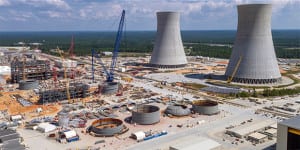
Can the U.S. Nuclear Power Industry Survive?
The recent announcement by Westinghouse Electric Co. that it had filed for bankruptcy sent a shockwave through the nuclear power industry. It wasn’t a secret that the company was struggling financially as a
-
 Commentary
Reports of the Electric Grid’s Death Have Been Greatly Exaggerated
There have been numerous pronouncements recently about the upcoming demise of the bulk power grid as consumers are projected to move toward decentralized green energy sources. We don’t believe that the end
-
Commentary
ABB delivers first urban battery storage solution in Denmark to support renewables
Zurich, Switzerland, March 1, 2017 – Battery Energy Storage System connected to main grid capable of supplying electricity to 60 households for 24 hours ABB today announced the successful commissioning of Denmark’s first urban energy storage system. The Lithion-ion based battery energy storage system (BESS) will be integrated with the local electricity grid in the […]
-
Commentary
The Changing of the Guard
There’s a new sheriff in town—Washington, D.C., that is. President Donald Trump has taken the reins from Barack Obama, and he’s come out with guns blazing. It’s true—the new administration has wasted little time shaking things up since taking office. While hundreds, if not thousands, of pages have been written by the media about President […]
-
Commentary
Progress on GHG Emissions Reduction in Canada’s Electricity Sector
Reducing emissions from the electricity sector continues as a primary transformational goal of government policy-makers, and the private and public companies managing electricity generation in Canada. Impressive progress has been made. National Overview Emissions from electricity generation made up just 11% of Canada’s total in 2014. Over 79% of generation is non-emitting: hydropower (63%), nuclear […]
-
Commentary
Energy R&D Is Essential to Any Great Country
Bill Gates is taking on another global challenge: “Reliable, affordable energy for the world.” On December 11, the richest man in the world announced yet another commitment to effecting radical change. It’s called Breakthrough Energy Ventures (BEV). Together with fellow investors, Gates is betting that private money can help create “a carbonless future” by spurring […]
-
Commentary
Yesterday’s Retail Tariff and a Transforming Grid
Yesterday’s retail tariff is prohibiting the optimal dispatch of cogeneration resources as our grid is transforming with high levels of solar generation and potential overgeneration issues. An Unintended Consequence of Policy California has some of the most ambitious energy efficiency and renewable energy goals in the world. Investments in renewable energy and other clean energy […]
-
Commentary
“Fitness for Purpose” Obligations for the Offshore Wind Sector
The United States has just joined the offshore wind community with the commissioning of the Block Island Wind Farm in Rhode Island. As this community continues to grow, any decision of a common law court that provides guidance on the interpretation of contractual terms, or of the application of established common law to this new […]
-
Commentary
Designing an Electric Power System from Scratch
The Smart Electric Power Alliance (SEPA) launched its 51st State Initiative in 2014 with a simple question: What if there were no predefined electricity market? No rules. No market designs. No policies. No subsidies for any type of energy resource. Just a grid to deliver electric power from a variety of sources. And customers. Plenty […]
-
 Commentary
The Power Industry’s Moving Pieces in 2017
As our January 2017 cover image of a dynamic Rubik’s Cube suggests, the power industry, especially in the U.S., is dealing with something akin to solving a 3-D puzzle whose pieces are being added and subtracted as the game is being played. Although shares of traditional, regulated electric utilities remain some of the most predictable […]
-
Commentary
Regulators’ Roles Increase in Scope and Complexity
Public utility commissioners matter. A lot. Now more than ever, these state regulators are charged with looking out for the best interests of utility customers in states that have regulated electric and other utilities. As we’ve seen from countless recent news stories, public utility commissions (PUCs) play a significant role in determining what power system […]