
Business
-
Legal & Regulatory
Utility Managers Ponder Rules, Money, People
What’s on the agenda for the utility industry today and into the future? Platts and Capgemini asked the industry leadership in their latest survey. The answers revolve around regulation, finance, and human resources.
-
Legal & Regulatory
WTO China Ruling Could Impact Rare Earths
Uncertainty about China’s role in world trade and its current monopoly over critical rare earth minerals continues to roil supply chains in energy technology markets. Will the World Trade Organization bring China into the fold, or will China ignore the international forum that it lobbied hard to join several years ago?
-
HR
How to Screw Up an Employee Complaint Investigation
The process of handling employee complaints of workplace discrimination or harassment is filled with potentially disastrous pitfalls. Here are some things to avoid.
-
HR
Getting Employees to Apply Training on the Job: How to Turn Hope into Reality
Employee training is one of the most important human resource functions, and one of the most difficult to manage. But there are some proven ideas to help guide training programs in the work environment.
-
Business
How to Break Down the Barriers Between Information and Operations Data
"Asset health" offers a conceptual path to integrating information technology with operations technology, thereby overcoming the common management problem of "siloed data," according to a recent study by The McDonnell Group.
-
 Coal
CoalTHE BIG PICTURE: Lights Out
Heat waves, droughts, and other weather and climate phenomena; economic woes; aging or inadequate infrastructure; fuel shortages. These are some of the most obvious causes that have led to record peaks in power demand or sudden drops in available capacity. The results have been sometimes debilitating load-shedding, brownouts, and blackouts around the globe this summer (and, in some cases, for much longer). Here’s an overview of which countries are affected by which difficulties. For a more detailed look at the extent of shortages and what’s causing them, visit Web Exclusives at https://www.powermag.com
-
Coal
POWER Digest (September 2011)
Australia Pursues Carbon Tax. Australia’s Prime Minister Julia Gillard on July 10 laid out an ambitious plan to cut national greenhouse gas emissions by 5% of 2000 levels by 2020 by imposing a A$23 (US$23.4) per metric ton carbon tax, starting next year. If parliament approves the plan before year-end, the carbon tax will increase […]
-
 Gas
GasGlobal Gas Glut
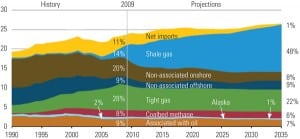
Marcellus Shale gas has increased recoverable natural gas reserves in the U.S. by about a third over estimates prepared a few years ago. Europe is also exploring shale gas as an alternative to problematic Russian gas supplies and low proven natural gas reserves. POWER contributors in the U.S. and UK examine the comparative economic value, public acceptance, and political implications of these massive shale gas reserves.
-
 O&M
O&MThe New Water Lab
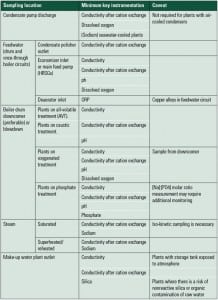
Recent advances in water laboratory instrumentation—from improved sample conditioning to advanced online instruments—have reached the market. Here’s a look at the equipment you’ll find in the best-equipped power plant laboratory this year.
-
Business
POWER Digest (August 2011)
The Tide Turns for Marine Energy Devices. Siemens Energy recently secured a 10% stake in Marine Current Turbines, the UK company that owns SeaGen, a 1.2-MW tidal power plant, which was commissioned in 2008 on the Irish Sea. Marine Current Turbines is planning to build a larger, 8-MW plant off the coast of Scotland by […]
-
 O&M
O&MMarmaduke Award: CFE Extends CTG Universidad Unit 2’s Life with Conversion to Synchronous Condenser
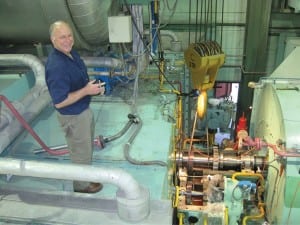
CTG Universidad is a two-unit combustion turbine plant commissioned in late 1970 by the Comisión Federal de Electricidad (CFE) on the north side of Monterrey, Mexico’s third-largest city and an important industrial center. By the 1990s, the two 14-MW turbines were obsolete, used sparingly, and slated for demolition in 2010. However, by 2002, portions of Monterrey began experiencing power restrictions caused by a lack of sufficient reactive power production, and that situation presented an opportunity for the plant. By repurposing an old combustion turbine for use as a synchronous condenser to provide local reactive power, CFE significantly reduced local power supply limitations. For that savvy plant repurposing, CFE’s CTG Universidad Unit 2 is the winner of POWER’s 2011 Marmaduke Award for excellence in power plant problem-solving. The award is named for Marmaduke Surfaceblow, the fictional marine engineer and plant troubleshooter par excellence.
-
 O&M
O&MMake Your Plant Ready for Cycling Operations
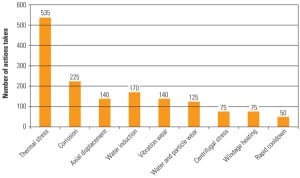
Cycling your steam power plant is inevitable, so now is the time to learn how to minimize equipment damage and assess the true costs of cycling. Whether cycling is required by the grid operator because of renewable integration or other factors, you must be proactive about updating operating processes and upgrade equipment so the transition to cycling operation goes smoothly.
-
 O&M
O&MMitigating the Effects of Flexible Operation on Coal-Fired Power Plants
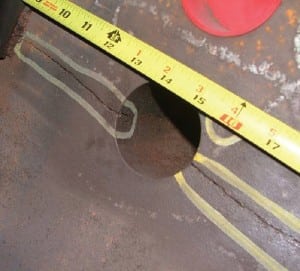
As coal-fired power plants increasingly operate in cycling modes, many plants are confronting the potential for higher levels of component damage and degraded performance of environmental control equipment. Generators and EPRI are working together to find ways to mitigate the effects of cycling operation and to manage the transition of formerly baseload plants to flexible operation.
-
 Smart Grid
Accelerating the Pace of EV Deployment
A number of automotive manufacturers, electric utilities, electric power associations, and research groups are working to develop and evaluate technical approaches to integrating plug-in electric vehicles (PEVs) into the U.S. electrical grid system. This is a key requirement of facilitating widespread, near-term adoption of PEVs by the American public.
-
Business
A Level Playing Field No More
FERC has surrendered jurisdiction over station power in California, putting merchant generators nationwide at risk of disadvantage to utility generators.
-
 Supply Chains
IFS Study: ERP Too Complicated and Inflexible for the Electric Power Industry
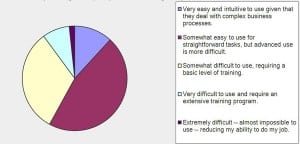
Enterprise resource planning software has swept the power industry, promising to improve coordination and management. Has it lived up to the hype? One ERP vendor says the programs often underperform.
-
Business
POWER Digest (July 2011)
Indonesia Sees Surge in Contracts for New Power Plants. Indonesia is Southeast Asia’s largest economy, but because it is stricken by chronic power shortages that limit economic growth, the nation’s government is pushing for massive infrastructure improvements. A consortium of Japan’s Electric Power Development (J-Power), Itochu Corp., and Adaro Energy, an Indonesian coal miner, on […]
-
O&M
Texas Competitive Model Spreads to Pennsylvania and Illinois
A record 400 attendees participated in KEMA’s 22nd annual Executive Forum in San Antonio, Texas, in late April to debate and discuss the “retail resurgence” of competitive electricity sweeping America.
-
Business
New Opportunities Abound for Retail Electric Suppliers
Following the conclusion of the KEMA conference (see previous story), Mark Axford had the opportunity to talk with Phillip Tonge, recently appointed president of Spark Energy LP. Spark Energy is a retail energy provider (REP) of electricity and natural gas in 16 states that have opened their markets to competition for industrial, commercial, or residential customers.
-
Smart Grid
Modernizing the Grid, Modernizing Our Industry
David K. Owens, executive vice president, Business Operations Group for the Edison Electric Institute, comments on the progress U.S. utilities are making toward a smarter electrical power grid.
-
Business
FERC Surrenders Jurisdiction over Station Power in California
In a surprising decision, a federal agency surrendered some of its regulatory authority—and parts of the industry don’t approve. The Federal Energy Regulatory Commission declined to defend its jurisdiction over station power in the California power market, potentially giving an economic advantage to utility generators nationwide and putting merchant generators at a disadvantage.
-
 Coal
CoalConsolidation, Market Distortions Underlie Remarks by Industry Executives
If you needed additional proof that the power industry is changing, the ELECTRIC POWER keynote and panel discussions over the past few years have provided it—top-of-mind issues have been significantly different each year. For the 2011 keynote speaker and panelists, the challenges of reliability, regulatory compliance, financing, and getting the fuel mix right took center stage. In the wake of Japan’s nuclear crisis, safety also featured prominently.
-
Legal & Regulatory
TREND: Nuclear Power in the Shadow of Fukushima
Both the 1979 Three Mile Island accident and the Chernobyl catastrophe prompted worldwide retreats away from nuclear electric generating technologies. Despite brave rhetoric from nuclear supporters around the world, a number of countries with a large number of nuclear plants are having second thoughts about the future of nuclear power.
-
Legal & Regulatory
The Power of the Stealth Hacker
How easy is it to hack a generator’s SCADA system? It’s so easy it scares the heck out of the guy who used to run network security for the Bonneville Power Administration. It’s so easy he can’t tell us any details, for security reasons. That’s why we should all be scared.
-
Legal & Regulatory
FERC Offers Guidance on NERC Penalty Notices
The Federal Energy Regulatory Commission is starting to sort out the often mysterious and vexing issues surrounding reliability penalties as the federal agency and the North American Electric Reliability Corp. work through their evolving relationship. The case involves an outage at the Turlock Irrigation District in California.
-
HR
Suits, Not Suites, Determine Firm Performance
It’s the middle managers, not the charismatic strategists in the executive suite or the creative propeller-heads in R&D, who really make organizations run, according to a new study from the University of Pennsylvania’s Wharton School.
-
HR
Writing an Employee Handbook Your Employees Will Read, and Heed, Part 2
In the last issue of MANAGING POWER we looked at some of the important points to keep in mind when writing an employee handbook to ensure that employees will actually will read it and adhere to its policies. This concluding article covers 10 of the most important policies that should be included.
-
Business
POWER Digest (June 2011)
Italian Firm Wins Contract to Build Massive African Hydropower Plant. Italian construction firm Salini Costruttori said on March 31 it has signed a €3.35 billion contract with Ethiopia state-owned Ethiopia Electric Power Corp. to build a 5,250-MW hydropower plant on the Blue Nile, a tributary of the Nile River. The project, slated to be completed […]
-
Business
NERC CIP Update
The North American Electric Reliability Corp. (NERC) Reliability Standards are under constant revision even while new requirements are under active development. Three important regulatory definitions are currently being contested.
-
 Coal
CoalSpain: A Renewable Kingdom
Spain has served as both exemplar and scapegoat when it comes to renewable energy policy. Though power policy must necessarily accommodate specific national resources and goals, Spain’s experience as an early and eager adopter of renewable energy technologies and subsidies is a cautionary tale of how the best intentions can have unintended consequences.