
Business
-
 Coal
CoalChina’s 12th Five-Year Plan Pushes Power Industry in New Directions
The Five-Year Plan is the expression of the centralized planning goals for China’s economy. The 12th Five-Year Plan, approved by the Chinese Government on March 14, 2011, established many social and economic goals, including significant expansion of the country’s power generation industry in many new directions.
-
Business
Social Media and Disaster Management
As demonstrated by last fall’s unexpected snowfall in New England and the Mid-Atlantic states, and the ensuing lengthy outages and public outrage, crisis communications is a hot topic for power utilities. And in addressing that topic, the role of social media is getting attention as a tool for disaster management.
-
HR
Workplace Drama: How to Define It and Identify It
Welcome to "Workplace Drama," a new, regular MANAGING POWER column by noted communications and human resources expert Marlene Chism. Her column will appear in each issue, and as the column progresses, we hope to hear from you with real-world situations and questions, to which Marlene will respond.
-
Commentary
Keys to Improving Customer Communication
Utility organizations are struggling to find a way to more effectively and efficiently communicate with their customers about basic information, including their amount due, ways to lower energy usage, and promotions.
-
Coal
Editors Select Top Five Stories of 2011
The POWER editorial staff’s picks for the most significant stories of 2011.
-
Coal
Australia Levies Landmark Carbon Tax
After more than a decade debating whether to pass a carbon-limiting law, Australia’s Senate in November voted in a landmark bill that will impose a price on carbon emissions. The country, which accounts for just 1.5% of global carbon emissions, but which is the world’s highest emitter per capita because 80% of its power comes […]
-
 Gas
GasGE Uses Steel Mill Gases to Power Turbine
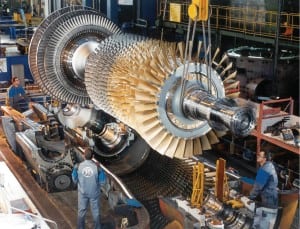
The world’s steel industry is power-hungry. Using energy both to supply heat and power for plant operations and as a raw material for the production of blast furnace coke, the sector uses a major fraction of the world’s total energy consumption. China’s steel and iron sectors have been mushrooming on the back of skyrocketing demand, […]
-
HR
TREND: The Cutting Edges of Human Resource Management
There is a fine line between personnel management and intruding into the personal lives of employees. Staying on the right side of that line is challenging, particularly when prior legal decision are mixed.
-
 Business
PJM Completes Unique Dual-Primary Control Centers
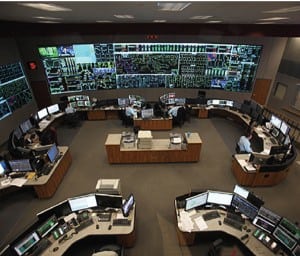
Swift technology developments in the power sector and increasingly sophisticated security threats have prompted regional transmission organization PJM Interconnection to switch from its aging centrally dispatched legacy system to two “state-of-the-art” primary control centers as part of its $200 million Advanced Control Center (AC2) program. The grid operator that serves parts of the Eastern Interconnection […]
-
Supply Chains
Bulls Beating Bears in Shale Gas Inquiry
As the resource gets increased and more sophisticated scrutiny, natural gas from shale looks increasingly like a revolutionary force in energy markets. Most recently, the Washington-based environmental and energy think tank Resources for the Future rolled out a serious analysis of the new method of developing gas, and the issues it presents. The preliminary results look very positive for gas.
-
Business
POWER Digest (January 2012)
South Korea, China Poised to Make Colossal Investments in Wind Power. South Korea, a nation that recently announced it would spend 1 trillion won ($884 million) on feed-in tariffs for wind and solar projects, on Nov. 10 said it planned to invest 10.2 trillion won ($9 billion) in a 2.5-GW offshore wind farm that could […]
-
Smart Grid
New Technology Enhances Grid Stability
For power providers, grid stabilization has been a rising concern in recent years, especially because of the increasing use of intermittent energy sources such as wind turbines. Maintaining a stable electricity grid is difficult because of the unpredictability of intermittent energy sources. If wind turbines, for example, are supplying 5% of the overall power for the grid and the turbines stop moving because the air grows still, the grid has to find a way to kick into overdrive to compensate for this sudden decrease in energy. It’s not as easy as it sounds.
-
Business
POWER Digest (December 2011)
Fluor Enters Small Modular Reactor Market, Backs NuScale. Fluor Corp. on Oct. 13 announced it planned to invest more than $30 million in NuScale Power, an Oregon-based small modular reactor (SMR) technology company. As part of its investment, Fluor has purchased the company’s shares that had previously been in U.S. Securities & Exchange Commission receivership […]
-
 Gas
GasNorthWestern Energy Builds a Regulating Reserve Plant
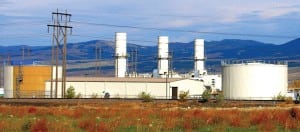
Stable grid operation is challenging, especially when intermittent and unpredictable renewable generation is added to the generation mix. For NorthWestern Energy, the best solution was adding fast-acting gas-fired generation to its Montana electricity grid to meet required reliability standards while replacing expensive third-party contracts for ancillary services.
-
 Coal
CoalRestructuring the South African Power Industry
South Africa is at a critical turning point. An uncertain environment for private investment, escalating electricity prices, and a lack of available power threaten South Africa’s position as an attractive investment destination for many of the country’s most important industries. Power has been placed at the forefront of the government’s agenda, but South Africa needs a collaborative effort to meet the country’s energy demands and diversify its generation portfolio in order to drive economic growth.
-
 Gas
GasBlackout Leaves Southwest in the Dark
A large swath of Southern California, parts of Arizona, and Northern Baja Mexico was blacked out on Sept. 8—leaving seven million people in the dark—after an Arizona utility worker fixing faulty equipment near Yuma reportedly tripped the 500-kV North Gila–Imperial Valley transmission line, causing the outage. The blackout prompted two units at the San Onofre Nuclear Generating Station to go offline, stranded many people in elevators and trains, shut down airports, cut air conditioning on a day well above 90F, and caused damages of $97 million to $118 million, according to early estimates from the National University System’s Institute for Policy Research.
-
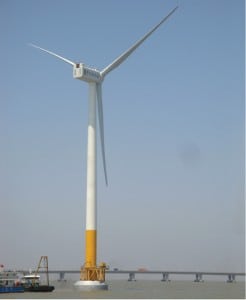 Wind
WindAMSC Former Employee Convicted in Sinovel Intellectual Property Case
An intellectual property battle between Massachusetts-based American Superconductor Corp. (AMSC) and China’s giant wind turbine maker Sinovel in late September culminated with an Austrian court conviction of a former AMSC employee, who was arrested in Austria and who pled guilty to corporate espionage charges. The court charged Dejan Karabasevic, a 38-year-old Serbian engineer, with stealing AMSC’s software, modifying it, and secretly selling it to Sinovel.
-
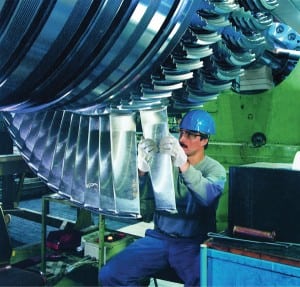 Nuclear
Siemens Joins Trend to Quit Nuclear
The number of companies pulling out of the nuclear business continues to grow. Just weeks after Louisiana-based engineering firm The Shaw Group announced it would sell its 20% stake in the nuclear company Westinghouse back to partner Toshiba, German engineering conglomerate Siemens said that, prompted by the German government’s decision to phase out nuclear power by 2022, it would quit the nuclear business.
-
Nuclear
German Court Questions Legality of Nuclear Tax
A German finance court in September questioned the constitutionality of a controversial tax on fuel used in nuclear power plants, a decision that could influence rulings in various finance courts around the country that are reviewing complaints by nuclear operators regarding the levy.
-
Business
POWER Digest (November 2011)
Wärtsilä to Provide Rwanda with Engines for Lake Methane Power. Wärtsilä on Sept. 30 said it was awarded a contract by KivuWatt, a subsidiary of the New York–based international power company ContourGlobal, to supply a power plant to the Republic of Rwanda. The turnkey project is of particular significance because the power plant will utilize […]
-
 Gas
GasNordic Nations Provide Clean Energy Leadership
In the past few years, nuclear concerns, rising oil prices, and a growing understanding of our environmental impact has given energy issues a higher profile worldwide. In this report on the Continental Nordic countries, we look at the efforts being made in much of the Nordic region to secure a sustainable energy supply for the future and at the extent to which the innovative solutions of these countries can be exported around the globe.
-
Legal & Regulatory
TREND: Aches and Pains of Aging Nukes
As less is heard about the promise of new nuclear reactors in the U.S., more is being heard about the problems of the geriatric atomic set.
-
Finance
Public Power Challenges Moody’s Proposed New Metrics
Public power utilities depend upon access to capital at favorable rates. So the munis pay special attention when Wall Street rating agencies talk about tinkering with how they establish bond ratings for municipal utility projects. Thus, recent moves by Moody’s Investors Service has drawn some fire from public power.
-
Finance
Solar Power’s Elephant in the Living Room
Understanding the reliability and failure mechanisms of photovoltaic modules is crucial to understanding how well they will perform over time. But today there are no test standards in place to judge this crucial issue.
-
Business
Legal Issues That Float in the Cloud
Cloud computing is a growing phenomenon for many businesses, large and small, promising significant efficiencies and cost savings. But, as with anything new, computing in the cloud poses some unforeseen legal issues.
-
HR
Navigating the World of Social Media and the Job
Social media are transforming the world around us, and not just the world of our family and friends. Understanding how the new tools of social interaction impact the job is part of the role of today’s effective manager.
-
HR
Why Meetings Fail and How to Make Them Work
Have you seen too many eyes-glazed-over expressions betraying a lack of interest at your employee meetings? Getting folks to pay attention at meetings is important, and there are ways to make it happen.
-
Solar
Epic Fail
Over the past 18 months, four solar energy equipment companies have closed their doors. Each one blamed poor market conditions for its economic woes, even though each had fundamental weaknesses that went unaddressed. It now appears that the Department of Energy (DOE) did insufficient due diligence before backstopping one of those four companies, Solyndra, with a $535 million loan guarantee.
-
O&M
BIG PICTURE: Lights Out (Web Supplement)
A web supplement to the September issue with details of global power shortages.
-
Finance
TREND: Geothermal Heats up after Fukushima
While the vast power of one form of energy below Earth’s crust (tectonic plate shifts) doomed the Fukushima nuclear power plant in Japan last March, using another form—heat and steam—is getting renewed attention in the wake of the Japanese meltdown.