
Business
-
Business
FERC Surrenders Jurisdiction over Station Power in California
In a surprising decision, a federal agency surrendered some of its regulatory authority—and parts of the industry don’t approve. The Federal Energy Regulatory Commission declined to defend its jurisdiction over station power in the California power market, potentially giving an economic advantage to utility generators nationwide and putting merchant generators at a disadvantage.
-
 Coal
CoalConsolidation, Market Distortions Underlie Remarks by Industry Executives
If you needed additional proof that the power industry is changing, the ELECTRIC POWER keynote and panel discussions over the past few years have provided it—top-of-mind issues have been significantly different each year. For the 2011 keynote speaker and panelists, the challenges of reliability, regulatory compliance, financing, and getting the fuel mix right took center stage. In the wake of Japan’s nuclear crisis, safety also featured prominently.
-
Legal & Regulatory
TREND: Nuclear Power in the Shadow of Fukushima
Both the 1979 Three Mile Island accident and the Chernobyl catastrophe prompted worldwide retreats away from nuclear electric generating technologies. Despite brave rhetoric from nuclear supporters around the world, a number of countries with a large number of nuclear plants are having second thoughts about the future of nuclear power.
-
Legal & Regulatory
The Power of the Stealth Hacker
How easy is it to hack a generator’s SCADA system? It’s so easy it scares the heck out of the guy who used to run network security for the Bonneville Power Administration. It’s so easy he can’t tell us any details, for security reasons. That’s why we should all be scared.
-
Legal & Regulatory
FERC Offers Guidance on NERC Penalty Notices
The Federal Energy Regulatory Commission is starting to sort out the often mysterious and vexing issues surrounding reliability penalties as the federal agency and the North American Electric Reliability Corp. work through their evolving relationship. The case involves an outage at the Turlock Irrigation District in California.
-
HR
Suits, Not Suites, Determine Firm Performance
It’s the middle managers, not the charismatic strategists in the executive suite or the creative propeller-heads in R&D, who really make organizations run, according to a new study from the University of Pennsylvania’s Wharton School.
-
HR
Writing an Employee Handbook Your Employees Will Read, and Heed, Part 2
In the last issue of MANAGING POWER we looked at some of the important points to keep in mind when writing an employee handbook to ensure that employees will actually will read it and adhere to its policies. This concluding article covers 10 of the most important policies that should be included.
-
Business
POWER Digest (June 2011)
Italian Firm Wins Contract to Build Massive African Hydropower Plant. Italian construction firm Salini Costruttori said on March 31 it has signed a €3.35 billion contract with Ethiopia state-owned Ethiopia Electric Power Corp. to build a 5,250-MW hydropower plant on the Blue Nile, a tributary of the Nile River. The project, slated to be completed […]
-
Business
NERC CIP Update
The North American Electric Reliability Corp. (NERC) Reliability Standards are under constant revision even while new requirements are under active development. Three important regulatory definitions are currently being contested.
-
 Coal
CoalSpain: A Renewable Kingdom
Spain has served as both exemplar and scapegoat when it comes to renewable energy policy. Though power policy must necessarily accommodate specific national resources and goals, Spain’s experience as an early and eager adopter of renewable energy technologies and subsidies is a cautionary tale of how the best intentions can have unintended consequences.
-
Business
The Urge to Merge
Utility mergers and acquisitions are on the upswing again. When faced with flat load growth, pervasive regulatory uncertainty, and the rising cost of doing business, larger companies are better able to afford expensive new plants while maintaining shareholder dividends.
-
 Gas
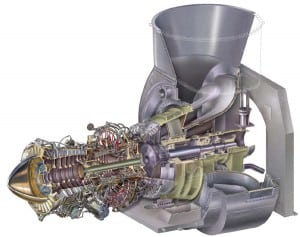
GasSelecting Your Next Combustion Turbine
With natural gas serving as the fuel de jour, many utilities and merchant generators will be considering the purchase of new combustion turbines in the near future. If you are in the market for a gas turbine, here are some key design features you should discuss with turbine vendors prior to your next purchase.
-
 Business
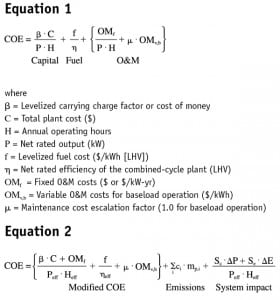
A More Accurate Way to Calculate the Cost of Electricity
Life-cycle cost of ownership is a common metric used to compare power plant system alternatives. However, the familiar formula for calculating the cost of generating electricity omits factors that are becoming increasingly important to business decisions. A new formula addresses those blind spots by estimating the value of the part-load performance of cycling combined-cycle plants.
-
Supply Chains
TREND: Markets and Critical Materials
While China seems determined to exploit its current control over the market for rare earths and other minerals critical to high-tech and green energy technologies, and while governments engage in conventional hand-wringing and head-scratching, markets appear to be reacting in the ways that markets are supposed to react.
-
Legal & Regulatory
The Energy Efficiency Conundrum
For many energy analysts and policy makers, efficiency is the Holy Grail, the universal solvent, the way to effortlessly reconcile supply and demand while simultaneously serving the needs of the environment. Don’t build new power plants, says policy guru Amory Lovins; gather "negawatts" instead. President Obama says that Americans "can save as much as 30% of our current energy usage without changing our quality of life."
-
Business
POWER Digest (May 2011)
ABB, BHEL to Deliver $1.1B Multi-Terminal UHVDC Line in India. Zurich-based ABB and Indian state-owned company Bharat Heavy Electricals Ltd. (BHEL) said on March 23 that they had been selected by Power Grid Corp. of India Ltd. (PGCIL) to deliver an ultrahigh-voltage direct current (UHVDC) transmission system to convey hydropower from northeastern India to the […]
-
Legal & Regulatory
Supreme Court Expands Employee Rights
U.S. Supreme Court rulings in two recent cases further advance the rights of employees in disputes with employers, continuing a long-term trend in federal law on employment discrimination.
-
Business
HAZCOM Is Essential for Avoiding Explosive Situations
In 1983, OSHA published its Hazard Communication (HAZCOM) Standard, which requires that the hazards of all chemicals used in the workplace be communicated to employees so that responsible protective measures can be taken. Today, HAZCOM remains near the top of the list of most frequently violated OSHA standards that result in a citation. The 1917 Halifax Explosion, one of the world’s largest nonnuclear explosions, testifies to what can happen when you don’t have—or don’t follow—an effective HAZCOM program.
-
Legal & Regulatory
Japan, Critical Materials, and Weak Links in Supply Chains
The devastation in Japan has focused new attention on supply chain issues and the impact of the partial collapse of that country’s manufacturing infrastructure on both Japanese imports and exports.
-
 Coal
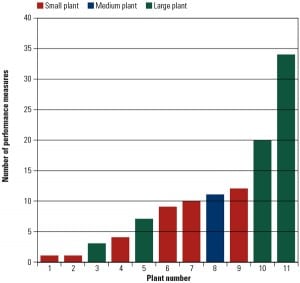
CoalBenchmarking Fossil Plant Performance Measures, Part III: Metrics Used for Compensation
In Part III of this three-part report, we look at plant- and fleet-level metrics used to determine compensation. As expected from this EUCG-sponsored benchmarking survey, there is broad use of quantifiable metrics to set portions of compensation, but the metrics selected vary substantially across the surveyed utilities. More surprising was the number of utilities that used no performance metrics as part of their employee compensation packages.
-
Legal & Regulatory
John Hanger, Pa.’s Former Environmental Chief, Talks About Challenges of Keeping Gas Drilling Safe
John Hanger, who led Pennsylvania’s Department of Environmental Protection until January, talked with ProPublica earlier this year about the challenges of trying to regulate the expanding drilling industry.
-
HR
Writing an Employee Handbook Your Employees Will Read, and Heed, Part 1
Not complying with current law can be expensive in today’s legal climate. Employers should review their employee handbooks and employment-related policies to make sure they are up to date. More importantly, employers should draft their handbooks so that employees actually read them and follow their policies.
-
 Business
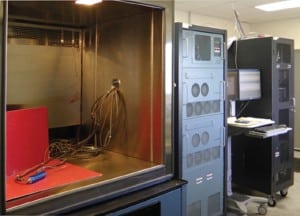
KEMA Opens Lab to Test Energy Storage Performance
Dutch energy consulting firm KEMA in February opened a new laboratory in Chalfont, Pa., to test and verify emerging utility-scale energy storage systems.
-
Business
POWER Digest (April 2011)
China Inaugurates 660-kV DC Line. The China Power Grid Co. on Feb. 28 began transmitting power through a 660-kV direct current power transmission link that runs from northwest China’s Ningxia Hui Autonomous Region. Part of China’s west-east power transmission program, the 10.4 billion yuan (US$1.58 billion) project runs 1,333 kilometers through five provinces and regions […]
-
 Solar
SolarEnergy Storage Enables Just-in-Time Generation
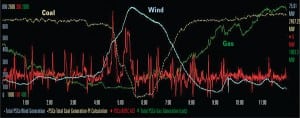
One of the main criticisms of renewable energy facilities is that they are unable to dispatch electricity when it’s needed. The great game-changer is low-cost energy storage, which would enable renewable energy production to be stored and rapidly released when needed. Here are seven promising distributed energy storage technologies that could be commercialized in the near future.
-
 Coal
CoalBenchmarking Fossil Plant Performance Measures, Part II: Fleet-Level Metrics
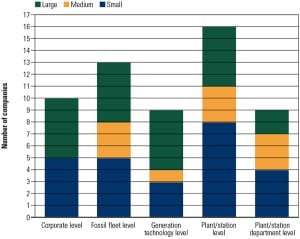
Part II of this three-part series moves up the typical utility organization to consider important fleet-level fossil plant operating metrics. This portion of the EUCG-sponsored benchmarking survey found that utilities favor fleet-level metrics that are similar to plant-level metrics but assign them different priority. Utilities generally agreed on what were important metrics in the eight categories examined, although none were favored by a majority of the surveyed utilities.
-
 Business
Who Needs an Owner’s Engineer?
In the past, members of a utility’s engineering staff spent their career designing and building new power plants. Today, many utility engineers find that opportunity comes around only once in a career. To fill the experience gap, an “owner’s engineer” company can add to a utility’s team a cadre of highly qualified power engineers who focus on avoiding design errors and keeping the project on schedule.
-
Legal & Regulatory
Renewables Face Chills and Thrills in Project Financing
The winter of 2010-2011 has been a cold one for financing renewable energy projects. That’s the weather report from a recent project financing meeting in New Orleans, a survey of developers and builders done by a large Minnesota construction company, and accounts from those in the financial trenches.
-
 Coal
CoalBenchmarking Fossil Plant Performance Measures, Part I: Station-Level Metrics
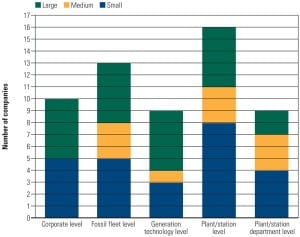
How does your company prepare and share fossil plant performance data? What data are important, and how much effort is required to collect and report the data? What are the most important statistics for reporting key fossil plant operations? The latest EUCG benchmarking survey reveals the favored fossil performance metrics at several of the largest utilities in eight key categories.
-
Legal & Regulatory
Can a Stew of Power Generation Regulations Clear the Air?
Don’t get fixated on the Environmental Protection Agency’s moves against carbon dioxide. The real action is in the area of conventional air pollutants.