
Articles By

-
 News
NewsNew Products (July 2013)
Robotic Torches for Single Arc, Tandem Applications ESAB Welding & Cutting Products launched the new Aristo RT line of robotic torches, designed for single arc or tandem applications. The Aristo RT range of robotic torches work with three different product setups: Standard (external cable), Hollow Wrist Helix (rotation +/–220o), and Hollow Wrist Infiniturn (endless rotation). […]
-
Legal & Regulatory
Exporting Natural Gas
The transformative increases in current and expected future domestic natural gas production have spawned yet another energy debate: Should the U.S. should export natural gas?
-
Commentary
Bridging the Gap Between Company and Community
In communities all across North America, environmental justice (EJ), which calls for the fair treatment of all people, including those of color and the economically deprived, remains a serious concern.
-
 Coal
CoalWater Issues Challenge Power Generators
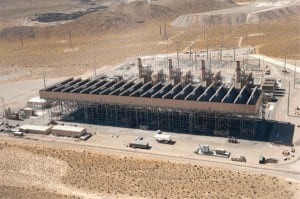
Drought and competing uses for water continue to challenge power plant operators worldwide. In response, innovative approaches for reducing water use are being explored from South Africa to China.
-
 Coal
CoalIndonesia: Energy Rich and Electricity Poor
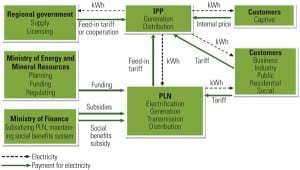
Even though it enjoys sizeable coal and natural gas reserves, Indonesia struggles to provide electricity to its growing economy. Geography is its most obvious challenge. Others include evolving international markets and an energy sector that remains highly politicized.
-
 O&M
O&MORP as a Predictor of WFGD Chemistry and Wastewater Treatment
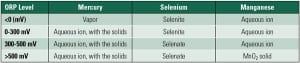
Recent studies have shown that system oxidation-reduction potential (ORP) is not only an important factor for predicting wet flue gas desulfurization (WFGD) absorber chemistry but also may be a predictor of process equipment corrosion and wastewater treatment requirements.
-
 O&M
O&MThe Case for Utility Boiler Fuel Delivery System Upgrades
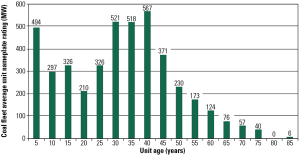
A vital part of any coal-fired unit is its fuel delivery system (FDS). A newly formed subcommittee of the ASME Research Committee on Energy, Environment, and Waste has investigated potential FDS upgrades on three typical 500-MW wall-, tangential-, and cyclone-fired boilers. The subcommittee has produced a series of suggested upgrades that have a simple payback of no more than two years.
-
 Smart Grid
EMP: The Biggest Unaddressed Threat to the Grid
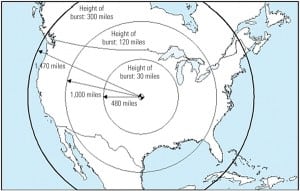
The electricity grid has been characterized as the world’s largest and most complicated machine. The grid, like all machines, requires periodic upgrades and maintenance to prevent outages during the normal course of business, and it can be brought down by various outside forces. Solar flares and cyber attacks have temporarily crippled the machine, but an electromagnetic pulse event would be the “ultimate cyber security catastrophe.”
-
 Smart Grid
Beacon Power Makes a Comeback
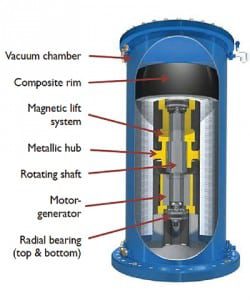
Beacon Power Corp. was founded in 1997 to develop flywheel-based energy storage technology. By 2007, the 100-kW/25-kWh Gen 4 flywheel system was commercialized and deployed in several projects. However, market conditions pushed the company into bankruptcy in late 2011. The company has since emerged, reinvigorated with new investment and a new name: Beacon Power LLC.
-
Coal
Supreme Court Agrees to Review Vacated Cross-State Pollution Rule
The Supreme Court today granted a petition by health and environmental groups, 15 states, and the Environmental Protection Agency (EPA) and agreed to review the Cross-State Air Pollution Rule (CSAPR), a Bush-era rule that a federal appeals court had previously vacated.
-
Coal
Your Guide to the White House Climate Action Plan
President Obama’s highly anticipated Climate Action Plan (CAP) released today outlines a wide variety of executive actions founded on three pillars: slashing U.S. carbon pollution through stringent rules for new and existing power plants while doubling renewables deployment and promoting fuel switching from coal to natural gas; preparing the U.S. for impacts of climate change; and leading international efforts to combat global climate change.
-
Coal
Obama: Climate Strategy to Be Driven by Natural Gas, Renewables
President Barack Obama’s landmark speech on Tuesday outlining executive actions to combat and prepare for climate change backed the growth of natural gas and renewable power in lieu of carbon-heavy coal power, but he mentioned nuclear power only once—and only in the context of energy security.
-
Coal
Reactions to Obama’s Climate Action Plan Swift and Varied
Amid the deluge of reactions to President Obama’s June 25 speech announcing wide-ranging executive actions to curb carbon emissions and prepare for climate change effects were some unexpected statements.
-
Nuclear
NRC’s Update to Indian Point EIS Says Aquatic Impacts Are “Small”
An update to the Final Supplemental Environmental Impact Statement (FSEIS) issued by the Nuclear Regulatory Commission (NRC) on Tuesday finds that possible impacts on aquatic life from the Indian Point nuclear power plant in New York still do not bar it from receiving a license renewal.
-
Gas
IEA: Renewable Generation Could Surpass Global Natural Gas Share, Double Nuclear by 2016
Driven by the booming growth of generation from hydro, wind, and solar photovoltaics (PV), generation from renewables on a terawatt-hour basis is set to surpass that from natural gas and double nuclear’s share by 2016, becoming the world’s second-most important global electricity source after coal, according to a new report from the International Energy Agency (IEA).
-
Coal
USGS: U.S. Has Massive Carbon Storage Capacity in Geologic Basins
The U.S. has least 3,000 metric gigatons (Gt) of subsurface carbon dioxide storage capacity that is technically accessible below onshore areas and state waters—500 times more than previously estimated—the U.S. Geological Survey (USGS) suggests in a new assessment released on Wednesday.
-
General
Obama’s Climate Action Plan: A View from the West
By Gail Reitenbach Santa Fe, N.M., June 26, 2013 — If you’re looking for an example of just how complex—and critical—the challenge of reducing greenhouse gas (GHG) emissions and mitigating the effects of climate change can be, look west. Those involved in the power generation industry are understandably focused on a single element of President […]
-
General
What’s NOT in Obama’s Climate Plan
By Kennedy Maize Washington, D.C., June 25, 2013 – In many ways, what is not in the plan that President Obama rolled out at his (not open to the public) speech at Georgetown University today is as interesting as what is in it. Many have noted the absence of references to the pending decision on […]
-
Wind
Cape Wind Gets $200M Boost to Make Investment Decision This Year
Cape Wind, North America’s first offshore wind farm, got $200 million in conditional funding from a Danish pension fund on Tuesday to help it reach financial closure this year.
-
Gas
DOE-Sponsored Gas Turbine Airfoil Manufacturing Technology Goes Commercial
An airfoil manufacturing technology that could improve the performance of a wide range of next-generation natural gas turbines has been commercialized through research sponsored by the Department of Energy.
-
Environmental
States Stall on GHG Rule Suit in Anticipation of Major Climate Change Action
States Stall on GHG Rule Suit on Anticipation of Major Climate Change Action
Litigation to force the Environmental Protection Agency (EPA) to issue final greenhouse gas (GHG) rules has been stalled on reports that the White House could soon announce major action on climate change. -
Nuclear
TVA Indefinitely Delays Bellefonte Nuclear Project
The Tennessee Valley Authority (TVA) last week indefinitely delayed new construction on its Bellefonte Nuclear Plant in Alabama, saying it had slashed the project’s budget by 64% and would reduce staff by 75%.
-
Nuclear
Japan Adopts Nuclear Safety Standards, Readies to Screen Reactors for Restart
In a marked energy policy shift away from a complete nuclear phase-out, Japan’s Nuclear Regulatory Authority (NRA) on Wednesday adopted new safety standards that Japan’s 48 shuttered nuclear reactors must meet before they can restart.
-
Coal
Energy and Water Spending Bill Proceeds with Deep Cuts for Renewables, ARPA-E
The fiscal year 2014 Energy and Water Appropriations Bill released by the U.S. House Appropriations Committee this week slashes $1.4 billion in funding to Department of Energy renewable energy and scientific research programs, including an 80% spending cut on the Advanced Research Projects Agency-Energy (ARPA-E) program.
-
Coal
House Energy Committee Advances Coal Ash Bill, Hears Moniz Testimony
The House Energy and Commerce Committee on Wednesday advanced a set of four bills that it said would "improve" environmental regulations and increase state authority, including legislation that would task states—not the Environmental Protection Agency (EPA)—with the responsibility to set up coal ash disposal rules.
-
Instrumentation & Controls
Quantum Cryptography Promises Un-Hackable Industrial Communications
What if you could send a control message between two points on the electricity grid—say between a control room operator and a turbine or between a system operator and a generating plant—and know that there’s no way that message can be intercepted, altered, or spoofed to effect malicious ends? That possibility may be only a couple of years away.
-
Coal
CRS Report: U.S. Energy Policy Debate Centers on Energy Security, Costs, and Environment
A report recently released by the Congressional Research Service (CRS) identifies policy goals—and their fundamental differences—identified in the 2012 presidential election and as highlighted in recent energy-related legislation. Among the nation’s energy priorities are to stabilize oil and gas markets, create natural gas pipeline infrastructure, dispose of nuclear radioactive waste, and replace conventional energy resources with renewables.
-
Nuclear
It’s Official: SCE to Retire San Onofre Nuclear Generating Station
Southern California Edison (SCE) announced on Friday that it has decided to permanently retire Units 2 and 3 of its San Onofre Nuclear Generating Station (SONGS), which have been shut down since January last year.
-
Coal
Edwardsport IGCC Project Start Marks Delayed, Costly Milestone for Coal Generation
Duke Energy’s long-awaited but controversial and cost-overrun-plagued integrated gasification combined cycle (IGCC) coal plant began commercial operation on June 7 in Knox County, Ind.
-
Solar
EU Imposes Antidumping Solar Duties on China as Trade Dispute Escalates
The European Commission (EC) last week imposed a provisional antidumping duty of 11.8% on imports of solar cells, wafers, and panels from China. Manufacturers have welcomed the controversial move, but installers and developers have decried it, saying it escalates a trade war that could drive up the cost of many solar technologies and undermine investment in the sector.