
commentary
-
 Legal & Regulatory
Watt’s Up with Cyber and AI? Navigating Legal Currents in Power Generation and Smart Grids
In the rapidly evolving landscape of power generation, companies are increasingly integrating smart grids and artificial intelligence (AI) into their operations. This transition, while promising enhanced efficiency and reliability, also brings forth a myriad of challenges, particularly in the realms of cybersecurity and legal compliance. This commentary delves into three legal issues around emerging cybersecurity […]
-
 Commentary
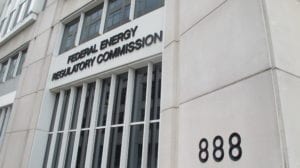
Hotly Contested Dispute Over Co-Located Loads Is Primed for FERC Action
Federal regulation of customer loads located next to existing power generating facilities, referred to as “co-located loads,” have become a significant area of interest for the electric industry. Large industrial loads have taken an interest in this configuration because it promises a faster, streamlined pathway to interconnecting to the grid and meeting their power supply […]
-
 Data Centers
Is a Modular Data Center the Answer to Tech Industry’s Land and Energy Crisis?
The digital age is fundamentally dependent on data centers, which serve as the backbone of our technological infrastructure. Without them, the digital world as we know it would not exist. However, the rapid expansion of data centers has put unprecedented stress on the electric grid, leading to increased energy consumption and heightened demand for power. […]
-
 Commentary
Navigating Rising Power Demand and Avoiding Vendor Limitations
Utility companies are going headfirst into a whirlwind of challenges from increasing electricity demands and new sustainability initiatives, to meeting evolving customer expectations. Power demand in the U.S. is on a sharp upward trajectory, with the U.S. Energy Information Administration (EIA) having forecast a new peak of 4.099 trillion kWh in 2024, climbing further to […]
-
 Commentary
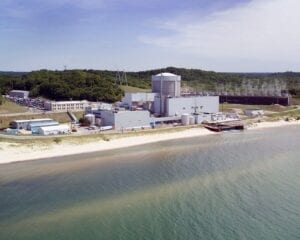
Nuclear ‘Renaissance’ Recalls Past Boondoggles, Legacy of Failures
Yet another nuclear power “renaissance”? Again? The industry and its friends in high places would like us all to believe so. But, besides the fact that “relapse” would be a better word choice, we’ve also seen this bad horror flick before. Anyone recall the George W. Bush administration’s attempted nuclear power relapse? Of some three-dozen […]
-
 Research and Development
Digital Transformation: Fueling Solutions for Today’s Energy and Utilities’ Challenges
Energy and utilities companies are grappling with unprecedented challenges. With the cost of electricity surging by 28.5% in just five years, the average American now spends nearly $300 a month on utilities, leading to a rise in customer defaults and mounting bad debt. Global energy demand is only set to grow in the coming years […]
-
 Commentary
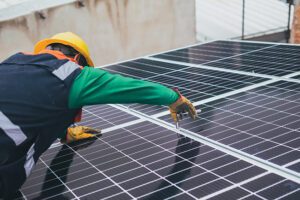
The Do’s and Don’ts of Cleantech 3.0
I’m no Thomas Edison, but he sure was on to something with direct current (DC). Edison was a prolific inventor and extraordinary entrepreneur with many of his innovations still in operation today. How exactly did he do that? Well, he wasn’t just someone who invented stuff. He had another aspect of his character that’s underappreciated—his […]
-
 Commentary
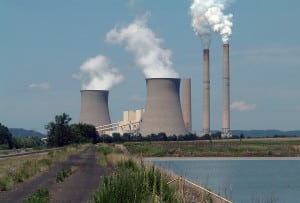
Questions Arise About Private Equity Involvement in Purchase of Gavin Coal-Fired Plant
Dennis Wamsted and Seth Feaster at the Institute for Energy Economics and Financial Analysis recently wrote a commentary looking at Energy Capital Partners’ (ECP) deal to take over ownership of the General James M. Gavin coal-fired power plant in Ohio. The 2,709-MW Gavin plant is ranked as the fifth-largest carbon dioxide-emitting power plant in the […]
-
 Legal & Regulatory
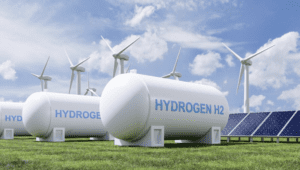
Unlocking America’s Clean Hydrogen Potential: Navigating Policy, Challenges, and Market Opportunities
The U.S. clean hydrogen sector is poised for significant growth, driven in part by its potential to reduce carbon dioxide emissions in hard-to-abate industries such as transportation and chemical production. The Inflation Reduction Act (IRA) and the Bipartisan Infrastructure Law (BIL) have catalyzed this momentum, providing production tax credits (PTCs) and billions in funding to […]
-
 Energy Storage
Turning Energy Storage From an Idle Backup Into a Money-Making Asset
Battery energy storage systems (BESS) can be the key to tackling any number of issues your grid or business may be facing, such as a need to support more renewables, ensuring a resilient backup, or cutting energy costs. You may believe that a BESS will resolve your issues, but do you have full buy-in from […]
-
 Renewables
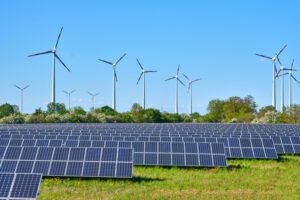
Impact of the IRA on U.S. Renewable Energy Manufacturing and Supply Chains
The Inflation Reduction Act was designed to enhance domestic manufacturing and secure domestic supply chains. The act, signed by President Biden in 2022, was sponsored by Sens. Chuck Shumer (D-NY) and Joe Manchin (D-WV), with the legislation also drawing from House Bill HR5376 sponsored by Rep. John A. Yarmuth (D-KY 3). According to a White […]
-
 Commentary
Connecting Infrastructure’s Dots to Solve Today’s Urban Management Issues
Connected infrastructure offers a holistic approach to creating a smarter, greener, and more livable world. More people are moving to urban areas than ever before, even as the impacts of climate change are
-
 Connected Plant
Logical Data Management for the Energy and Utility Industries
By now, with the most devastating effects of the pandemic behind us, it’s important to remember the key takeaway—there’s no such thing as “business as usual.” As a result, companies have learned that to be able to thrive are those that quickly adapt to sudden, unforeseen changes is essential. This is especially true for energy and […]
-
 Commentary
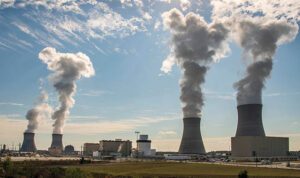
The World Wants Nuclear Power Again—America Can Lead
After a decades-long slowdown marked by fits and starts, the U.S. is once again building and innovating in nuclear power. In April, the second of two new nuclear units went into service at Georgia Power’s
-
 Commentary
EPA’s No-Win Rule for the Electricity Grid
Recently, the Environmental Protection Agency (EPA) issued a 1,020-page rule to control carbon dioxide emissions from existing coal-fired power plants and new natural gas-fired power plants. The rule is part of the administration’s plan to shut down coal-fired power plants in the U.S. and impose its will on the nation’s electricity system. This is the […]
-
 Commentary
Real-Life Lessons for Thriving in the Energy Transition
The U.S. is assembling a new power grid infrastructure—and not a moment too soon. The need for dynamic new approaches in the power and utility sector has never been more urgent. New kinds of distributed
-
Renewables
Renewable Energy for All Seasons
When talking about renewable energy generation, the seasonal nature of these energy sources often raises questions. Will a solar array provide enough power during periods of cloudy weather or during shorter winter days? Can a wind turbine be effective on days with little to no wind? COMMENTARY We know that renewable energy relies on environmental […]
-
 Solar
SolarThin-Film Photovoltaic Market: A Burgeoning Arena of Innumerable Opportunities
It was 1839 when prominent French physicist Edmond Becquerel observed that some materials have the ability to create electrical charges. Now, 185 years later, solar has come a long way and will continue to hit new milestones. The International Energy Agency has projected that the growth of renewable energy capacity will be raised by almost […]
-
 Legal & Regulatory
Navigating Change: Impact of California’s Advanced Clean Fleets Regulation on Businesses
The California Advanced Clean Fleets (ACF) regulation, which began being implemented on Jan. 1, 2024, is designed to complement the Advanced Clean Trucks (ACT) rule, which mandates a significant increase in the number of medium- and heavy-duty zero-emission vehicles (ZEVs) on California roads. There’s much to understand about the regulation and how it will impact […]
-
 News
NewsDigital Solutions Provide Great Benefits for Cooperative Utilities
Although cooperatives may not have the financial resources of large investor-owned utilities, valuable digital solutions are still within their grasp. Because they have fewer resources to employ, co-ops may
-
 Commentary
Solutions to Empower Global Energy Workforce and Boost Operational Effectiveness
Ubiquitous and secure access to business applications is critical to the energy industry. Compatibility with existing infrastructures and enabling remote workers with strong access management and control has made virtual desktop infrastructure (VDI) a trusted, reliable tool for many businesses. However, as energy companies deploy applications to tens of thousands of employees across the globe, […]
-
 Commentary
Deep Geothermal Can Solve the Need for Baseload Power
The Earth is a tremendous source of power. We’re sitting on a dynamic ball of fire, from which only a few regions have been able to extract energy since the 15th century. In recent decades, geothermal has been heralded as the most promising clean energy option and also a disappointment for the lack of implementation. […]
-
 Legal & Regulatory
Get Ready For California’s Three Sweeping New Climate Disclosure Laws
Can a requirement to simply disclose information truly be a big deal? Can a requirement that only applies to big companies, or companies that do business in California, actually impact your small business or your business in another state? Can a requirement that doesn’t take effect until next year or later really require thought and […]
-
 Electrification
The Need for Consumer Engagement in the Transition to Clean Energy
To state it simply, current decarbonization goals cannot happen without deeper engagement between utilities and their customers, and utilities are not yet truly harnessing the potential that their customers bring. In order to begin to realize this wholesale shift from customers as “load” to customers as “resource,” utilities must facilitate customer participation in energy-saving initiatives […]
-
Sustainability
Responsive Economic Dispatch: Meeting a New Goal for Power
Customization is what we expect from our coffee order, not something we associate with an electricity plan. But like other industries influenced and motivated by the Internet of Things (IoT) age, the energy industry is having a renaissance that is changing customers’ relationship with power. Customers want their electricity to do more than keep the […]
-
 Commentary
Streamlining Clean Energy Approvals and Organic Waste Legislation for a Sustainable Future
In the face of escalating climate concerns, the U.S. is grappling with the dual challenges of advancing clean energy initiatives and establishing effective organic waste management strategies. A year since Congress injected substantial investments into the clean energy transition, progress has been made, but hurdles persist. Private sector interest in clean energy initiatives has surged, […]
-
 Cybersecurity
Powering Through Requires Securing the Grid
The U.S. energy sector has a bullseye on its back. Whether it’s nation-state hackers or domestic terrorists, the level of malicious activity directed against the sector has reached an all-time high, and we would do well to heed the threat. As the threat grows, some federal cybersecurity officials and others are sounding alarms about potentially […]
-
 Electrification
Is America’s Electric Grid Equipped for the Electrification of Everything?
The U.S. Department of Energy (DOE) introduced a proposal in July to increase the adoption of more efficient water heaters. Water heaters are major energy-consuming appliances, second only to heating
-
Commentary
FERC’s Queue Reform an Improvement, but Devil Is in the Details
The Federal Energy Regulatory Commission (FERC) on July 28 issued a landmark order that reforms the generator interconnection process. The order is in response to a clear need for nationwide improvements due to a rapidly changing resource mix, market forces, and emerging technologies for power generation. Order No. 2023, Improvements to Generator Interconnection Procedures and Agreements, […]
-
 Electrification
The Impact of EV Charging on the Grid
Tesla owners pulling up to plug in at specific Supercharger locations in the U.S. will soon be met with an unfamiliar sight: electric vehicles (EVs) from other car companies, parked in and charging at spots previously compatible just for a Tesla. COMMENTARY General Motors, Rivian, and Ford have all recently announced partnerships with Tesla to […]