
Latest
-
 Legal & Regulatory
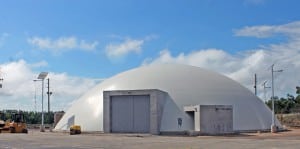
Vogtle Nuclear Plant Unveils Its New FLEX Dome
Southern Co. announced on June 16 that construction has been completed on a new FLEX dome—a structure built to house emergency equipment needed to respond to an extreme external event—at its Vogtle nuclear plant. The Nuclear Regulatory Commission (NRC) is requiring U.S. nuclear plants to build protected structures like the FLEX dome in response to […]
-
 Legal & Regulatory
House Subjects EPA Ozone Rule to Twofold Probe
The Environmental Protection Agency’s (EPA’s) proposed ozone rule came under scrutiny in two U.S. House of Representatives hearings held during the past week. The House Committee on Energy and Commerce’s subcommittee on energy and power on June 12 heard testimony on the rule from Janet McCabe, the EPA’s acting assistant administrator for the Office of […]
-
 Partner Content
The Reliable Piping Solution for the Power Generation Industry
In the power generation industry, there are often fewer choices when it comes to specifying the product or material being used in the plant’s processes. Selecting the correct piping solution will help increase operational efficiency while minimizing downtime and improving bottom-line performance.
-
 Renewables
PacifiCorp Axing Coal as It Joins CAISO
Oregon-based utility and Berkshire Hathaway subsidiary PacifiCorp filed plans this month to shut down nearly 3 GW of its coal generation by 2033 as it moves toward greater integration with the California energy market. PacifiCorp’s 2015 Integrated Resource Plan (IRP), which it has filed with regulators in Oregon, Washington, California, Utah, Wyoming and Idaho, contains […]
-
 Nuclear
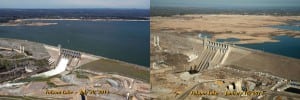
California Drought and Power Potential
California’s grid gurus say they can make it through this summer, but the future may pose real problems for a hydro-heavy regional system. As the grip of California’s four-year drought tightens, will the long-running event crimp electricity generation in the state? So far, according to the California Independent System Operator (CAISO), which dispatches much of […]
-
 Legal & Regulatory
EPA Finds “No Widespread, Systematic Impacts” on Water Quality from Fracking, but Data Limited
The U.S. Environmental Protection Agency (EPA) on June 4 released a draft assessment of the potential impacts of hydraulic fracturing on the nation’s water supplies, concluding that there was no evidence of widespread impacts but conceding that data on the subject is limited. The assessment, conducted at the request of Congress, follows water used for […]
-
 Renewables
IEA Executive Director Praises Energy Price Coupling in Western Europe
At the annual Power-Gen Europe Conference held in Amsterdam, in the Netherlands, International Energy Agency (IEA) Executive Director Maria van der Hoeven called for greater leadership as Europe tackles de-carbonization, distributed energy, and market integration. She began her presentation by highlighting one of the biggest changes to Europe’s power markets: The May 20 decision to […]
-
 Commentary
Public Power and IOUs Mostly on the Same Page
What separates investor-owned utilities (IOUs) and public power companies these days? Less than you might imagine. In early June, while the Edison Electric Institute (EEI), the trade association for IOUs, was holding its annual meeting in New Orleans, I was in Minneapolis at the annual conference of the American Public Power Association (APPA), which represents […]
-
 Legal & Regulatory
Federal Court Strikes Challenge to Proposed EPA Carbon Rule as Premature
The D.C. Circuit rejected challenges to the Environmental Protection Agency’s (EPA’s) proposed carbon rules for existing power plants, ruling that it has no authority to review rules that aren’t yet final. “Petitioners are champing at the bit to challenge EPA’s anticipated rule restricting carbon dioxide emissions from existing power plants. But EPA has not yet […]
-
 Coal
CoalTen Advanced Combustion Systems That Are Getting the Government’s Backing
Ten projects selected on June 8 to receive funding through the National Energy Technology Laboratory’s (NETL’s) Advanced Combustion Systems Program could lower costs and improve the performance of combustion systems that generate power with near-zero emissions, the Department of Energy (DOE) said. The projects, which are mostly based on oxycombustion and chemical looping, include the […]