
Latest
-
 Partner Content
Global Energy Quiz
Content loading…
Please enable javascript!<br />
The global power system is in the early days of a massive transformation, and coal is at the center of the change. How much do you know about the future of coal? Here’s a chance to gauge your understanding and learn more. Plus, by completing the quiz you will receive a FREE copy of POWER’s Clean Coal Guidebook – valued at $209! -
 Legal & Regulatory
State-Level Nuclear Policy Elicits Strong Opinions at Regulators’ Meeting
RESOLVED: Retaining nuclear capacity is necessary to secure a reliable, cost-effective, low-emissions supply of electric power in the United States. That was the proposition for a debate between two high-profile opponents in “A Square-Off on Nuclear Policy” on November 16, the last day of the National Association of Regulatory Commissioners (NARUC) annual meeting in La Quinta, […]
-
 Legal & Regulatory
Utility Regulators Take EVs for a Spin
A new feature at the annual meeting of the National Association of Regulatory Utility Commissioners (NARUC) this year is an opportunity to test drive a variety of electric vehicles (EVs). State regulators and others attending the event could sign up to test drive electric models from Tesla, BMW, Nissan, and GM. Between noon and 2:30 […]
-
 Renewables
COP22: Countries Challenge the World to Advance Clean Energy
Meeting in Marrakesh, Morocco, during the most recent United Nations climate change conference (COP22), Mission Innovation countries—a group of nations whose stated mission is to accelerate the pace of clean energy innovation—launched seven innovation challenges, designed as a global call to action for the research community, industry, and investors. The challenges are: Smart Grids Off-Grid […]
-
 Legal & Regulatory
Regulators’ Meeting Opens with Focus on Infrastructure Conundrum
“We’re at a very challenging time,” said former Federal Energy Regulatory Commission (FERC) Commissioner Tony Clark at the annual meeting of the National Association of Regulatory Utility Commissioners (NARUC) on November 14. We have a “need for infrastructure, but it’s more difficult to get it sited and built than ever before.” Clark’s comment, which he […]
-
 News
NewsBellefonte Nuclear Plant Sold for $111 Million; Buyer Wants to Finish It
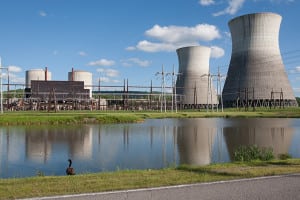
The Tennessee Valley Authority (TVA) said on November 14 that it has sold the unfinished Bellefonte Nuclear Power Plant at auction to a private holding company for $111 million. The two-unit Bellefonte plant sits on approximately 1,600 acres on a peninsula in the Tennessee River near Hollywood, Alabama. TVA began construction in 1974, but it halted the […]
-
 Nuclear
Paducah Laser Nuclear Enrichment Facility Gets Fuel but Not Formal Construction Decision
While GE-Hitachi Global Laser Enrichment (GLE) confirmed it hasn’t made a formal decision to proceed with licensing or construction of a laser enrichment facility at Paducah, Ky., the Department of Energy (DOE) announced it has agreed to sell depleted uranium to the company over a 40-year period to help produce nuclear power plant fuel. The […]
-
 Nuclear
Vietnam Kills Nuclear Power Project Due to High Costs
The Vietnamese government has canceled the Ninh Thuan Nuclear Power Plant project, after cost estimates for the plant nearly doubled, according to the Hanoi-based news agency dtinews. Le Hong Tinh, vice chairman of the National Assembly Committee for Science, Technology, and Environment, in an interview conducted with dtinews on November 10, said costs for the […]
-
 Legal & Regulatory
FirstEnergy Wants Out of Competitive Power Markets
FirstEnergy Corp.—one of the nation’s largest investor-owned electric utilities, serving customers in Ohio, Pennsylvania, West Virginia, Maryland, New Jersey, and New York—has made the strategic decision to exit the competitive power business. “We have made our decision that over the next 12 to 18 months we’re going to exit competitive generation and become a fully […]
-
 Legal & Regulatory
Election Roundup: What Trump’s Win Means for Energy and Environment
Donald Trump’s stunning victory in the U.S. presidential election portends enormous changes in U.S. energy and environmental policy, and a nearly complete turnover of the men and women who will administer that policy for the next four years.