
Latest
-
 Nuclear
Global Monitor (July 2007)
Pistachio plant gives new meaning to green/Slightly sun-powered grill/Will lithium revolutionize hydrogen storage?/Calpine’s major Geysers geothermal upgrade/Rhone-Alps is French PV hot spot/Fuel cell–powered ice-resurfacing machine/Westinghouse proposes revised AP100 design/Sandia perfects solar alignment/SCE wants comprehensive coal study/POWER digest
-
 O&M
O&MFocus on O&M (July 2007)
Hydro-demolition speeds reactor dome entry;
Tips for keeping your unit stable;
Air makes heavy move a breeze -
 Legal & Regulatory
Cogeneration qualifying facilities warrant extended contracts
Congress’s enactment of the Public Utility Regulatory Policies Act of 1978 (PURPA) triggered a revolution in the development and construction of power plants. PURPA’s creation of an independent class of generators—qualifying facilities (QFs)—exposed a century-old economic myth that had justified restricting ownership of generating facilities to governmental and investor-owned utilities (IOUs). The success of QFs […]
-
 Coal
CoalWestar’s Lawrence Energy Center wins for not blinking on safety
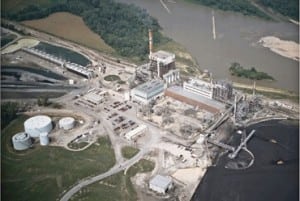
It took Westar Energy eight years to upgrade the Lawrence Energy Center to burn Powder River Basin coal. Its zero lost-time accident record during the million-man-hour project is a testament to Westar’s commitment to workplace safety. Here’s your backstage pass to meet the PRB Coal Users’ Group 2006 Plant of the Year.
-
 Instrumentation & Controls
Finding and fixing leakage within combined HP-IP steam turbines: Part I
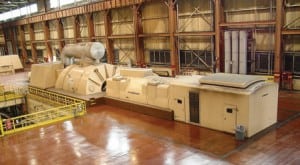
By design, combined HP-IP turbines have a small amount of internal leakage from the high-pressure turbine to the intermediate-pressure turbine. When turbines are new, the amount of this leakage is close to the design heat balance. But as turbines age, the leakage increases considerably, causing a heat rate penalty and possibly a reliability problem. In Part I, we explore the symptoms and causes of excessive leakage within GE steam turbines and how to correct the problem. Part II, in next month’s issue, will examine the same issues for Westinghouse and Allis-Chalmers turbines.
-
 Coal
CoalNavigating a carbon-constrained world
Scientific debate on the validity of global warming science continues, but the issue has yet had little impact on individuals. That impact is being negotiated in Washington, where a regulatory framework that would mandate reductions of greenhouse gases (GHGs) is taking shape. Legislative options under consideration would redefine what power plants must do-and not do-to […]
-
Environmental
The bumpy road to federal carbon dioxide caps
There are often five stages to enacting major legislative reforms: Initial enthusiasm, a sobering recognition of the complex issues to be solved, excruciating negotiations over those issues, hand-to-hand combat with supporters of the status quo, and resignation that the final product only deals with part of the problem. Congress has reached Stage 2 as it considers a cap-and-trade system for reducing carbon emissions. Now the real work begins.
-
 O&M
O&MSafety, compliance, and then production maximizes bottom line
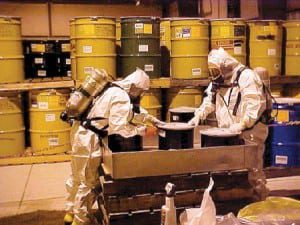
When injuries or accidents occur, the employer ultimately loses on two counts: increased medical costs and employee absences. A policy of "safety, compliance, and then production" is more than just good business; it’s also good stewardship of the health and safety of employees who deserve no less.
-
 Coal
CoalDynamic classifiers improve pulverizer performance and more
Keeping coal-fired steam plants running efficiently and cleanly is a daily struggle. An article in the February 2007 issue of POWER explained that one way to improve the combustion and emissions performance of a plant is to optimize the performance of its coal pulverizers. By adding a dynamic classifier to the pulverizers, you can better control coal particle sizing and fineness—and increase pulverizer capacity to boot.
-
 Coal
CoalWhat’s that scrubber going to cost?
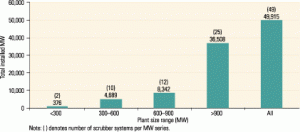
The latest benchmarking study by the EUCG examines the technology and costs of 49 flue gas desulfurization systems currently under design or construction by 12 of the nation’s largest utilities. Although the study’s detailed results are proprietary to EUCG members that participated in it, POWER was given access to the top-level findings. To get details at the plant/unit level, you’ll have to join the EUCG and participate in the study, which is ongoing.