
Latest
-
 O&M
O&MImproved Filler Metal Enables Higher-Temperature Dissimilar Metal Welds
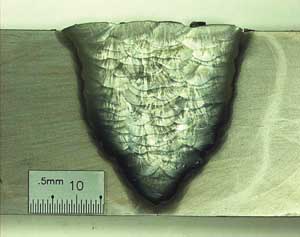
The welding of dissimilar metal joints in new and retrofit power plant boiler tubing has long proved challenging. New plants designed to operate at higher temperatures and pressures require advanced alloys and a filler metal that produces reliable welds. EPRI recently developed and sponsored the commercialization of a new filler metal. Its first application is the fabrication of boiler tubes for American Electric Power’s ultrasupercritical John J. Turk, Jr. Power Plant.
-
 Solar
SolarThe Odd Couple: Renewables and Transmission
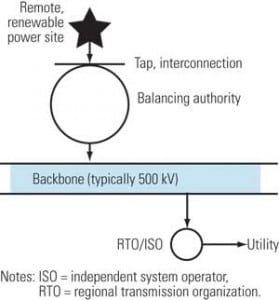
The tension between the growing number of renewable energy projects and limited transmission capacity is reflected in Washington’s legislative agenda of establishing a national renewable portfolio standard and new transmission lines dedicated to moving renewable energy coast-to-coast. Even if those ideas become law, hurdles to the happy marriage of renewables and transmission remain.
-
 Coal
CoalBiomass Cofiring: Another Way to Clean Your Coal
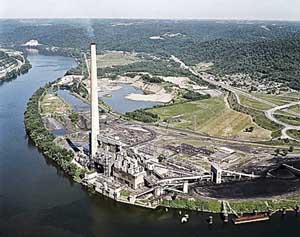
Demand for renewable power is burgeoning as state governments (and maybe soon the U.S. federal government) impose increasingly rigorous environmental and procurement standards on the energy industry. Surprisingly, biomass cofiring has yet to attract much attention, even though it could help many utilities meet their renewable portfolio requirements, reduce carbon emissions, and solve other regional environmental problems. U.S. developers, investors, and regulators should consider including cofiring as part of the energy mix going forward.
-
Commentary
Managing Solar’s Revenue Impact on Utilities
Since 1882, when Thomas Edison installed the world’s first central generating plant in New York City, utility business models have varied little from the basic one: cover costs and generate profit by selling more electricity. But today, unprecedented challenges are sweeping through the industry. Soon utilities will face yet another new challenge: the large-scale implementation of distributed solar power, which can result in lower electricity sales. As solar implementation further challenges business-as-usual models, what’s a forward-thinking utility to do?
-
 Gas
GasMitsubishi Wraps Up Development of J-Class Mega Turbine
This March, Japan’s Mitsubishi Heavy Industries Ltd. (MHI) quietly completed development of the "J-series" gas turbine — a machine that has been extolled in the turbo-machinery world for its ability to produce one of the world’s largest power generation capacities and highest thermal efficiencies.
-
 Nuclear
Sweden Selects Site of First Permanent Spent Nuclear Fuel Repository
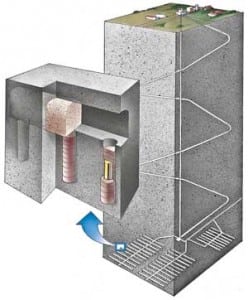
In early June, as U.S. Energy Secretary Steven Chu confirmed to a House Subcommittee that Yucca Mountain repository was, without doubt, "off the table" and that a blue ribbon panel would further advise the government on what it should do with its high-level nuclear waste, Sweden announced the site of what could be the world’s first permanent spent fuel repository.
-
 Hydro
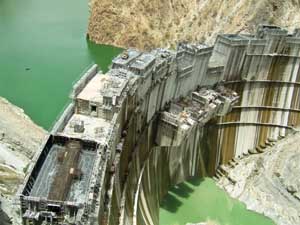
HydroEthiopia Completes Construction of Africa’s Tallest Dam
Ethiopia, the landlocked nation in East Africa from which key tributaries to the Nile River originate, completed construction of the continent’s highest dam, the 188-meter Tekezé Arch Dam (Figure 3) in February.
-
 Gas
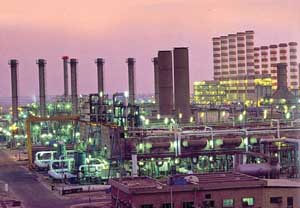
GasQatar Starts Construction on Middle East’s Largest Power and Water Plant
The gas-rich Persian Gulf state of Qatar in May commenced construction of the region’s largest power and water plant, a massive project comprising eight gas turbine generators, eight heat-recovery steam generators, four steam turbine generators, and 10 desalination units.
-
 Wind
Wind"Smart Turbine Blades" to Improve Wind Power
Engineers at Purdue University and Sandia National Laboratories have developed a technique that uses sensors and computational software to constantly monitor forces exerted on wind turbine blades. Their achievement could one day improve the efficiency of wind turbines by providing the blades’ "smart" structure with necessary data to adjust to rapidly changing wind conditions.
-
 Business
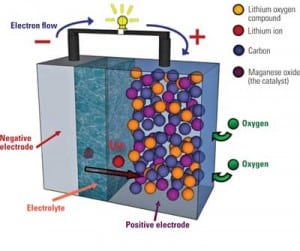
Energy Storage Efforts Making Progress
The intensifying spotlight on renewable energy seems to be casting a brighter light on the energy storage problem, with lawmakers, researchers, and investors scrambling to seek out the most feasible solution to bridge the intermittent nature of renewable power sources.