
Latest
-
 Gas
GasMHI Prepares to Test J-Series in Japan
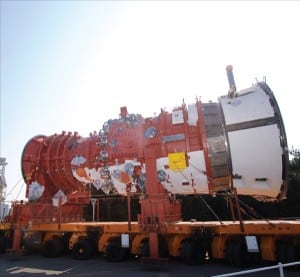
Mitsubishi Heavy Industries (MHI) has begun converting a combined-cycle plant in Japan to prepare for verification testing of its long-anticipated J-Series gas turbine in February 2011—a system that the company claims has the most power generation capacity and highest thermal efficiency in the 1,600C turbine inlet temperature class (Figure 3). The work being carried out at the Takasago Machinery Works facility in Hyogo Prefecture (where the company’s G-Series gas turbines were tested) includes installation of the J-Series turbine, and it marks another major milestone in the technology’s development.
-
 Gas
GasTransCanada Opens 683-MW Halton Hills Combined-Cycle Plant
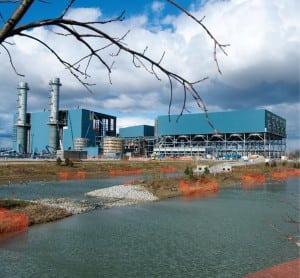
TransCanada Corp. on Oct. 28 officially opened its C$700 million Halton Hills Generating Station. The 683-MW 2 x 1 combined-cycle plant on a greenfield site in Ontario (Figure 5) will operate under a 20-year power purchase agreement with the Ontario Power Authority (OPA). Construction of the peaker plant started in December 2007 and was completed on time and on budget, TransCanada said.
-
 O&M
O&MExelon Enjoys Benefits of Online Transformer Monitoring
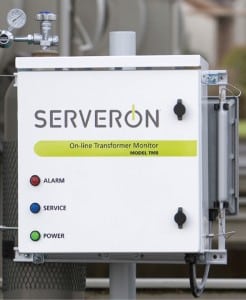
In all of these cases, frequent oil analysis monitoring and preestablished action plans were able to allow for transformer replacement before the occurrence of a catastrophic failure. Exelon’s experience, as well as that of other power utilities across the grid, has spawned a report by the Institute of Nuclear Power Operations (INPO) of Atlanta, Georgia, that recommends that performance monitoring and trending be applied to all large transformers in order to establish a baseline for transformer maintenance strategies.
-
 O&M
O&MSelecting a Specialty Accumulator
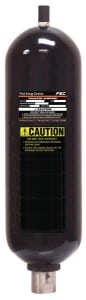
Sudden bumps and shocks are great fun when you are off-roading or are riding on a rollercoaster. But when you are operating a piece of equipment, you want it to be running as smoothly as a Cadillac rolling down the interstate. Sudden changes in pressure produce vibration, cavitation, and water hammer and generally lower the lifespan and reliability of fluid systems.
-
Legal & Regulatory
Solving the Renewable Integration Puzzle
In November, California voters overwhelmingly rejected an initiative that would have put the brakes on AB 32, the state’s ambitious greenhouse gas (GHG) emissions reduction law. Given the role that California has played in climate change policy, that such a vote took place only four years into the law’s implementation process and 10 years before the emissions reduction targets were to be met was a reality check on climate change policy for those on both sides of the issue.
-
 Coal
CoalThe U.S. Power Industry 2011: The Sequel
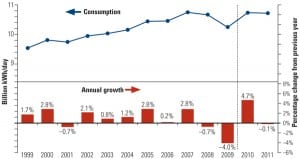
If Hollywood were scripting the power industry story for 2011, it would be a sequel to 2010—more of the same, but just not quite as good. Natural gas gets top billing and the accolades, wind power drops to a supporting role, and new nuclear answers the casting call but has yet to get a speaking part. Coal is like Mel Gibson—a talented Oscar winner unlikely to get another leading role. In this, our fifth annual industry forecast report, the story may be familiar, but the price of admission is going way up.
-
 Business
Strong Technology Portfolio Positions Alstom for a Strong 2011
Timothy Curran, head of power for Alstom Power, USA, recently shared his company’s view of 2011 and beyond with POWER’s editor-in-chief.
-
 O&M
O&MEPRI Identifies Four Breakthrough Technologies for 2011
The Electric Power Research Institute (EPRI) has identified four breakthrough technologies and funded them through its Strategic Research and Development Portfolio. EPRI expects to accelerate development of these innovations because they are likely to have significant effects on how electricity is generated and delivered.
-
 Business
GE Leverages Leading-Edge Technology and a Balanced Product Portfolio in 2011
Paul Browning, vice president, thermal products for GE Power & Water, sees the greatest short-term business opportunities beyond the U.S., in “high-speed” countries.
-
 Smart Grid
Which Side of the Meter Are You On?
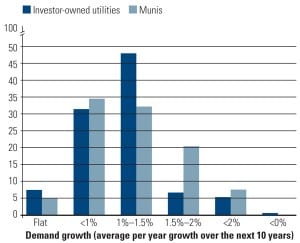
Utilities have achieved success by supplying electricity from central station plants (the supply side) to a grid that carries electricity to customers (the demand side). One way to improve the efficiency of this supply chain is by adopting smart grid technology. The weak link in that chain is convincing customers to use, and regulators to invest in, the smart grid.