
Latest
-
 Coal
CoalTurning Flue Gas Carbon into a Raw Material for Manufacturing
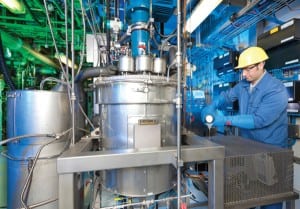
Bayer in February brought online a pilot plant at Chempark Leverkusen, Germany, to recycle carbon dioxide (CO2) scrubbed from the flue gas of a 1,000-MW RWE lignite-fired unit and convert it into a raw material and petroleum substitute for plastic manufacturing. The Bayer facility (Figure 4) essentially produces a chemical precursor into which CO2 is incorporated and then processed into polyurethanes that are used for many everyday items.
-
 Business
KEMA Opens Lab to Test Energy Storage Performance
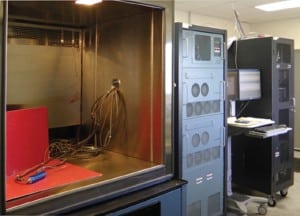
Dutch energy consulting firm KEMA in February opened a new laboratory in Chalfont, Pa., to test and verify emerging utility-scale energy storage systems.
-
Business
POWER Digest (April 2011)
China Inaugurates 660-kV DC Line. The China Power Grid Co. on Feb. 28 began transmitting power through a 660-kV direct current power transmission link that runs from northwest China’s Ningxia Hui Autonomous Region. Part of China’s west-east power transmission program, the 10.4 billion yuan (US$1.58 billion) project runs 1,333 kilometers through five provinces and regions […]
-
O&M
Predictive Maintenance That Works, Part I
This year’s series will focus on predictive maintenance (PdM), also known as condition-based maintenance.
-
O&M
Plan for the Worst: Insurance Insights
Imagine this scenario: Two separate power plants experience a bowing problem greater than 18 mils with a steam-turbine rotor. The turbines are from the same manufacturer and several repair options are reviewed. Management at both plants selects an innovative approach involving removal of a substantial amount of material, which is replaced with weld overlay and then machined to correct diameters and centerline of the balance piston area. One plant’s insurance company covers the repair, the other plant’s doesn’t. Why?
-
Legal & Regulatory
Flawed Rules May Sink Small Calif. Renewable Projects
In December 2010, the California Public Utilities Commission (CPUC) issued a decision with considerable fanfare that was intended to provide for the development of 1,000 MW of additional new renewable generation and provide California’s large investor-owned utilities (IOUs) with additional flexibility in complying with California’s Renewables Portfolio Standard (RPS) requirements. Unfortunately, it is likely to have the opposite effect.
-
 Gas
GasSendai Plant Boosts Efficiency and Cuts Emissions
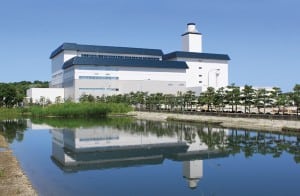
Located on the scenic Japanese coastline, Tohoku Electric Power Co., Inc.’s new 446-MW Sendai Thermal Power Station Unit 4 is a combined-cycle plant that replaces three 175-MW coal-fired units that had been in operation for more than 50 years. The new plant features the first application of MHI’s 50-Hz M701F4 gas turbine, which provides a thermal efficiency boost from the old plant’s 43% to more than 58%. This change substantially reduces CO2 emissions.
-
 Solar
SolarEnergy Storage Enables Just-in-Time Generation
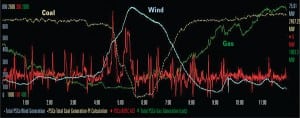
One of the main criticisms of renewable energy facilities is that they are unable to dispatch electricity when it’s needed. The great game-changer is low-cost energy storage, which would enable renewable energy production to be stored and rapidly released when needed. Here are seven promising distributed energy storage technologies that could be commercialized in the near future.
-
 Wind
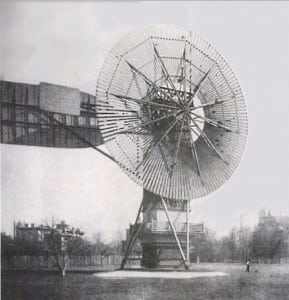
WindChanging Winds: The Evolving Wind Turbine
As early as the first century A.D., wind energy was harnessed for practical purposes. Since then, turbine designs have come a long way from the archetypal post-mounted four-bladed devices. Today’s ubiquitous three-bladed designs will soon be evolving in many unexpected directions.
-
 Solar
SolarThe Smart Grid and Distributed Generation: Better Together
Electricity grids are slowly getting smarter. Simultaneously, the use of distributed generation is increasing. Though smart grid advocates tout the ability of a smarter grid to enable greater deployment of distributed resources, the benefits could flow in both directions.