Solar
-
Solar
DOI Approves Three More Major Renewable Projects in Calif., Nev.
The Department of the Interior (DOI) on Wednesday approved three major renewable energy projects in California and Nevada that have a total nameplate capacity of 1,100 MW.
-
Coal
Gates Calls for Increased Spending on Energy Research, Renewed Focus on Nuclear
Bill Gates didn’t mince words last night when sharing with the IHS CERAWeek crowd his thoughts about public support for basic scientific research in the United States.
-
Coal
China Looks to Curb Carbon Emissions by Diversifying Power Portfolio
China will reduce the nation’s carbon emissions and energy use per unit of gross domestic product (GDP) by at least 3.7% this year and perform trials for a carbon-trading program, China’s National Development and Reform Commission (NDRC), said in a report on Tuesday. The country would also make "greater efforts to conserve energy" and "reduce the discharge of major pollutants," it’s top economic planner said.
-
Renewables
The Spotlight on a Mexican Success Story
Energy demand in Mexico, according to the Secretary of Energy (SENER), will increase by approximately 4% each year for the next ten years, and with it the potential for private sector growth in the industry. Download the report.
-
Coal
Senators Introduce “Carbon Fee” Bill, House Dems Call for Blue Ribbon Climate Panel
Boosted by President Obama’s inaugural address commitment to mitigate climate change, congressional Democrats have initiated several more climate measures. A legislative packet that seeks to mitigate climate change by enacting a carbon "fee" of $20 per ton of emitted carbon or methane equivalent was introduced last week by Sens. Bernie Sanders (I-Vt.) and Barbara Boxer (D-Calif.). In the House, as several Democratic amendments for climate change hearings were voted down, more than 40 lawmakers urged President Obama to create a panel that would help communities deal with climate change events.
-
Solar
U.S. Initiates WTO Proceedings in Indian Solar Dispute
The U.S. last week called for World Trade Organization (WTO) consultations to settle a dispute in which it alleges that India’s national solar program appears to discriminate against U.S. solar equipment by requiring solar energy producers in the South Asian country to use Indian-made solar cells and modules.
-
Solar
Environmental Groups Sue DOI for Narrow Focus on Public Lands as Solar Zones
A legal battle is brewing between the Department of the Interior (DOI) and three public-interest environmental groups that claim the government failed to consider degraded lands for the siting of "destructive" utility-scale solar plants, and that it focused instead on millions of acres of public land when it established solar energy zones in six southwestern states.
-
Coal
Murkowski’s Energy Blueprint Presses All Measures for OPEC Oil Independence
An energy blueprint released on Monday by Sen. Lisa Murkowski (R-Alaska), the ranking minority member of the Senate Energy and Natural Resources Committee, calls for complete independence from OPEC oil by 2020.
-
Hydro
FERC Proposes Reforms to Diminish Barriers to Small Generator Interconnection
The Federal Energy Regulatory Commission (FERC) on Thursday proposed four reforms intended to reduce the time and cost to process transmission interconnection requests from generating facilities of 20 MW or smaller. The reforms would boost reliability by increasing energy supply and remove hurdles in the development of new renewable power sources, FERC said.
-
Coal
Climate Change on Obama’s Second-Term Agenda
Among the surprises in President Barack Obama’s second Inaugural Address on Monday was his promise to address the challenges of climate change and sustainable energy. An independent draft report released about a week earlier on climate change and its impacts in the U.S. may have helped to fuel his renewed resolve on these intertwined issues.
-
Hydro
Report: U.S. Has Lost Edge in Global Renewables Race
Once a world leader in innovation and manufacturing of clean energy technologies, the U.S. now faces significant competitive challenges from Europe and Asia, and it lags behind other nations on measures that include renewables deployment, manufacturing, and innovation, a new report suggests.
-
Coal
Virginia Moves to Repeal Incentives for Renewable Power
An agreement reached between the Virginia Attorney General’s office, Dominion Virginia Power, and Appalachian Power proposes to reduce financial incentives associated with the utilities’ generation of renewables and construction of new fossil fuel–fired power plants.
-
 Coal
CoalWorld Energy Outlook Foresees Distinct Generation Shift
Global generating capacity is poised to soar by more than 72%, to 9,340 GW, by 2035 from 5,429 GW in 2011, despite retirement of about 1,980 GW, the International Energy Agency (IEA) forecasts in its World Energy Outlook 2012, released in November.
-
 Solar
SolarFloating Solar—on Water
The recent explosive growth of massive solar plants in some of the world’s most remote deserts has stolen some of the spotlight from smaller solar installations that float on water. But in November, a concept proposed by researchers at Norwegian foundation DNV (Det Norske Veritas) for a dynamic floating offshore solar field concept stirred up myriad possibilities, particularly for congested urban regions such as coastal megacities.
-
 Coal
CoalSlow Growth Ahead—with Unexpected Flares of Activity
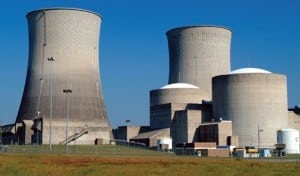
North American shale gas was supposed to realign the generation fleet here and abroad (thanks to anticipated exports) far into the future. Turns out, that’s not exactly how the near term is shaping up. Despite stagnant (and even putrid) economies and legislative bodies in the U.S. and EU, there promises to be sufficient market volatility to keep everyone alert.
-
 Solar
SolarDistributed Generation: California’s Future
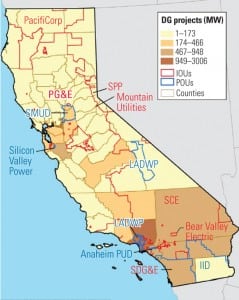
Once you synthesize all the elements of the Golden State’s clean energy strategy and extrapolate current trends, it’s easy to see that an impending break with the traditional power generation paradigm is coming, intended or not.
-
Solar
DOE Announces $29M to Bring Down Costs for Solar Installation
The Department of Energy (DOE) on Friday announced a $29 million investment in four solar projects aimed at improving grid connection and reducing installation costs through plug-and-play technologies and reliable solar power forecasts. The awards are part of the agency’s SunShot Initiative, which is working to make solar energy competitive with other forms of energy without subsidy by the end of the decade.
-
Solar
New Batteries and Energy Storage Hub Aims to Improve Grid and EV Performance
U.S. Secretary of Energy Steven Chu announced on Oct. 30 that a multi-partner team led by Argonne National Laboratory in Illinois has been selected for an award of up to $120 million over five years to establish a new Batteries and Energy Storage Hub.
-
Coal
EIA Projects Faster Growth of Natural Gas Production, Gas Generation
Compared to projections from last year, an Early Release Overview of the Energy Information Administration’s (EIA’s) Annual Energy Outlook 2013 (AEO2013) released on Wednesday foresees higher gas production and, with it, a higher share of gas generation by 2040. The outlook also projects a growing share of renewable and nuclear power, but dampened future coal use.
-
 Solar
Solar14-MW Solar PV Plant Completed at Naval Station
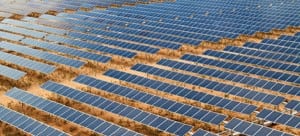
The U.S. Navy in late October saw the completion of its largest solar generation system, a 13.78-MW (DC) solar photovoltaic (PV) power system at Naval Air Weapons Station China Lake (NAWS China Lake) in California.
-
 Solar
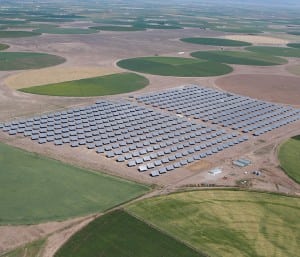
SolarTOP PLANT: Alamosa Solar Project, San Luis Valley, Colorado
As the largest solar plant of its type in the world, the 30-MW Alamosa Solar Project is currently enjoying its place in the sun. The innovative project consists of 504 concentrating photovoltaic (CPV) solar trackers, each featuring a CPV solar cell panel assembly mounted on a support column. The modular design of the assembly allows the project to easily accommodate future improvements in cell technology.
-
 Solar
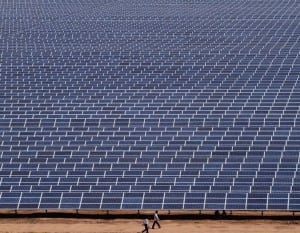
SolarTOP PLANT: Gujarat Solar Park, State of Gujarat, India
Set up by the Gujarat government, the Gujarat Solar Park is actually a group of solar parks that provide dedicated common infrastructure for photovoltaic-powered projects owned and operated by numerous individual companies. When construction at all the parks is completed by the end of 2013, the Gujarat Solar Park is projected to reach a combined capacity of almost 1,000 MW, which will make it the world’s largest solar energy generation installation.
-
 Solar
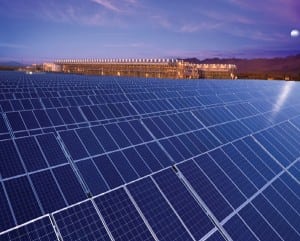
SolarTOP PLANT: Stillwater Solar-Geothermal Hybrid Plant, Churchill County, Nevada
The Stillwater hybrid facility is the world’s first renewable energy project that pairs geothermal power’s baseload generation capacity with solar power’s peak capacity. Inaugurated in May, the 26-MW solar plant is integrated with the adjacent 33-MW geothermal plant, which began operations in 2009, and provides energy to run the geothermal plant’s auxiliary loads.
-
 Solar
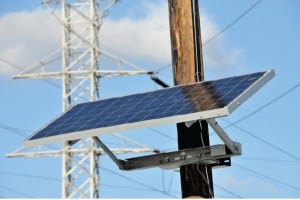
SolarDistributed Solar Challenges Utilities, Markets, and Regulation
Electricity produced from solar energy is being added to the grid—before and after the meter—in greater amounts each year. The uniqueness of this resource is pushing utilities, developers, users, and regulators to develop new and innovative interconnection rules and to rewrite some old rules that balance the costs and rewards among stakeholders.
-
 Hydro
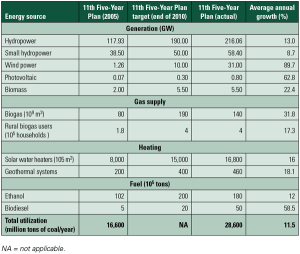
HydroRenewable Energy Development Thrives During China’s 12th Five-Year Plan
China’s 12th Five-Year Plan calls for expanding the use of renewable energy in all forms throughout the country. From solar and wind to biomass gas and briquettes, China has a true “all of the above” renewable energy policy.
-
Hydro
Hawaii’s Largest Wind Project Online as State Struggles to Integrate Renewables
On Monday, as First Wind announced its 69-MW Kawailoa Wind Project had gone into commercial operations on Oahu, other news underscored the difficulty the island state faces in trying to substitute renewables for expensive, imported fossil fuels.
-
Solar
European Solar Initiative to Source Power from North Africa Hits Blocks
The Desertec Industrial Initiative (Dii) oversees a $508 billion initiative to establish 6,500 square miles of concentrated solar power plants in the vast African and Middle Eastern deserts. Those plants are expected to furnish a fifth of Europe’s power needs by 2050, but in recent weeks the Dii has seen the exit of two of its 57 partners from 16 countries and a project held up by the Spanish government.
-
Hydro
Trend Shows Growth of Renewables on Contaminated Lands
Renewable energy projects installed on potentially contaminated lands, landfills, and mine sites have increased by 40% since 2008, a new list released last week by the Environmental Protection Agency (EPA) shows. Solar photovoltaic (PV) systems make up the bulk of about 184.7 MW installed at 60 sites in 25 U.S. states.
-
Gas
Blowing Sunshine
The influx of cheap Chinese-manufactured solar panels has upended the solar industry in more ways than one. The saga offers some lessons on what to do about LNG exports.