
Solar
-
 Renewables
RWE to Close 3.1 GW of Conventional Generation Across Europe on Profit Woes
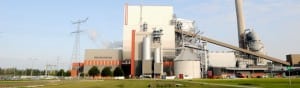
Europe’s third-largest power provider on Tuesday announced it would take offline 3.1 GW of natural gas and coal power plants in Germany and the Netherlands, citing a “continuing boom in solar energy.” Echoing several European utilities, Germany-based RWE has underscored the declining profitability of fossil fuel–fired plants that it says is pegged to fundamental changes […]
-
Solar
EU Strikes Deal with China in Solar Spat as China Imposes Solar Duties on U.S., S. Korea
The European Union (EU) Trade Commission reached a "targeted and innovative" settlement in its high-profile solar spat with Beijing, just as China imposed lofty duties on U.S. and South Korean manufacturers of solar-grade polysilicon.
-
Coal
Comprehensive Diagram Charts Nation’s Energy Use and Waste
An updated energy flow chart released by the Lawrence Livermore National Laboratory (LLNL) that visually depicts the relative size of primary energy resources and end uses in the U.S., with fuels compared on a common energy unit basis, shows the nation consumed more natural gas and renewables but less coal in 2012.
-
Solar
BLM Withdraws Solar-Designated Federal Lands from Mining Claims
A public land order approved by the Bureau of Land Management (BLM) on Friday extends the withdrawal of 303,900 acres of federal land within 17 zones designated for solar power from new mining claims.
-
Coal
Hawaii Power Companies to Deactivate Oil Plants, Ramp Up Renewables
Three Hawaiian power companies plan to deactivate a total of 226 MW of oil-fired generating units, convert remaining baseload plants to cycling duty, and substantially ramp up use of renewables by 2016.
-
 Coal
CoalGas-Electric Integration “Swamps” All Other Issues
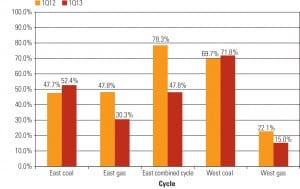
Panelists at the ELECTRIC POWER 2013 Keynote and Roundtable Discussion in Chicago in May were consumed by the need to ensure future reliability by more closely integrating the gas and electricity markets. Acknowledged less directly were distortions created by renewable energy subsidies and mandates, onerous regulations affecting coal, and “irreversible” demand destruction caused by the success of energy efficiency and demand management programs. The elephant in the room was the continued demise of electricity markets.
-
 Solar
SolarPower Sector Laments Europe’s Uncertain Future Energy Policy
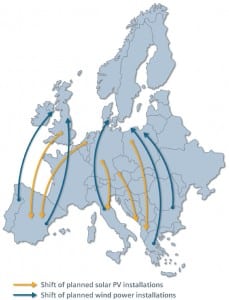
Energy policy in the European Union (EU) is in upheaval as concerns mount over the impact of energy costs on the competitiveness of the power industry.
-
 Coal
CoalIndonesia: Energy Rich and Electricity Poor
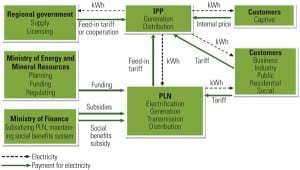
Even though it enjoys sizeable coal and natural gas reserves, Indonesia struggles to provide electricity to its growing economy. Geography is its most obvious challenge. Others include evolving international markets and an energy sector that remains highly politicized.
-
Coal
Obama: Climate Strategy to Be Driven by Natural Gas, Renewables
President Barack Obama’s landmark speech on Tuesday outlining executive actions to combat and prepare for climate change backed the growth of natural gas and renewable power in lieu of carbon-heavy coal power, but he mentioned nuclear power only once—and only in the context of energy security.
-
Coal
Reactions to Obama’s Climate Action Plan Swift and Varied
Amid the deluge of reactions to President Obama’s June 25 speech announcing wide-ranging executive actions to curb carbon emissions and prepare for climate change effects were some unexpected statements.
-
Gas
IEA: Renewable Generation Could Surpass Global Natural Gas Share, Double Nuclear by 2016
Driven by the booming growth of generation from hydro, wind, and solar photovoltaics (PV), generation from renewables on a terawatt-hour basis is set to surpass that from natural gas and double nuclear’s share by 2016, becoming the world’s second-most important global electricity source after coal, according to a new report from the International Energy Agency (IEA).
-
Solar
EU Imposes Antidumping Solar Duties on China as Trade Dispute Escalates
The European Commission (EC) last week imposed a provisional antidumping duty of 11.8% on imports of solar cells, wafers, and panels from China. Manufacturers have welcomed the controversial move, but installers and developers have decried it, saying it escalates a trade war that could drive up the cost of many solar technologies and undermine investment in the sector.
-
Solar
CORRECTED: Challenges to Order 1000 Filed in Federal Court as President Acts on Grid Modernization
Several power companies, state commissions, and trade groups have filed briefs with the U.S. Court of Appeals for the D.C. Circuit challenging parts of the Federal Energy Regulatory Commission’s (FERC’s) Order 1000, a rule they argue will lead to high costs for consumers and diminish the authority of state and regional regulators. Meanwhile last week, the White House issued a memo directing federal agencies to improve siting and permitting process to help modernize the nation’s grid.
-
Solar
Sempra Dedicates First Phase of Mesquite Solar Complex in Ariz.
Sempra U.S. Gas & Power dedicated the first 150-MW phase of the 4,000-acre Mesquite Solar facility in Maricopa County, Ariz., on Friday. Potential to build out up to 700 MW of nameplate capacity could make the photovoltaic (PV) complex one of the biggest in the U.S.
-
Coal
WTO Body Confirms Ontario’s Local Content Rules for Renewables Are Discriminatory
Domestic content requirements that require some generators to source up to 60% of equipment from the Canadian province of Ontario under its feed-in-tariff (FIT) program are inconsistent with international trade rules, officials from the World Trade Organization’s (WTO’s) highest court said on Monday.
-
Coal
Hearing Panelists Assess Grid Reliability Challenges Posed by Nat. Gas, Renewables
Panelists at a House hearing today refuted varied claims concerning if and how increased natural gas and renewables generation pose widespread challenges to the reliability of the electric grid. Some pointed to ineffective rules in the restructured wholesale power market and the failure of conventional power plants as being more of a threat to grid reliability.
-
Coal
Power Sector Is Critically Vulnerable to Drought, Hearing Panel Testifies
Drought is a serious vulnerability for the power sector, witnesses testified at a full committee hearing held last week in the Senate to assess the impacts of drought on the power and water sectors. Members of the panel invited by the Senate Committee on Energy and Natural Resources offered a number of possible solutions for federal agencies and power companies that could mitigate adverse effects from drought.
-
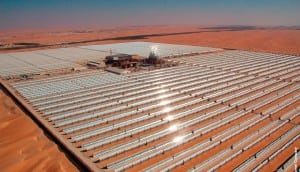 Solar
SolarSolar Thermal Gains in UAE, Spain, and California
Solar thermal technologies are experiencing increased popularity around the world. Three recent deployments illustrate how the technology and plant size specifics are tuned to local needs.
-
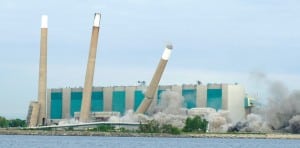 Coal
CoalOntario Goes Coal-Free in a Decade
By the end of 2013, one year ahead of its goal, the province of Ontario will be virtually coal-free—a first for a North American jurisdiction. How did the most populous part of Canada go from 25% to 0% coal-fired generation in just a decade, and what does this phaseout mean for the rest of the world?
-
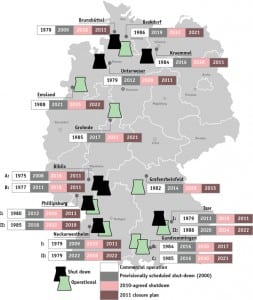 Coal
CoalGermany’s Energy Transition Experiment
Germany has chosen to transform its energy system within a few decades—an ambition that has evoked equal admiration and confusion. Has Europe’s largest economy embarked on a rational path to an energy future that will make it the bellwether for global acceptance of renewables, or will the complex array of current challenges encumber its grand transformation?
-
Hydro
Report: Global Renewable Investments in 2012 Tumble 11% as Market Shifts from West to East
Public and private investment in solar, wind, and other renewables worldwide declined 11% in 2012 from an adjusted 2011 record of $302 billion, a new survey from Pew Charitable Trusts shows. Yet the global renewable sector still registered a record 88 GW of new nameplate capacity last year, and China reclaimed the lead in global renewables investments from the U.S., it says.
-
Coal
Lawmakers Push for Financing Parity for Renewable Projects
Bipartisan legislation introduced on Wednesday by a bicameral group of lawmakers seeks to give renewable energy project investors access to an existing corporate structure whose tax benefits are now only available to investors in fossil fuel–based energy projects.
-
Coal
IEA: Carbon Mitigation Efforts Have Stalled Despite Rapid Renewables Expansion
The carbon intensity of the global energy supply has barely budged in more than two decades despite otherwise successful efforts in deploying renewable energy, the International Energy Agency (IEA) warns in an annual report submitted to the Clean Energy Ministerial (CEM) on Wednesday.
-
Coal
DOE Nominee Moniz Gets Bipartisan Support in Senate Hearing
Dr. Ernest Moniz, President Obama’s nominee for the next Secretary of Energy, appears poised for easy confirmation after responding to questions from the Senate Energy & Natural Resources Committee on April 9. His remarks indicated support for, among other things, small modular reactors, carbon capture technology research, and moving forward with the recommendations of the Blue Ribbon Commission on America’s Nuclear Future.
-
Coal
Proposed 2014 Budget: More Funds for the DOE, Less for the EPA
The proposed 2014 federal budget that President Obama submitted to Congress on Wednesday includes increases for the Department of Energy in general and for DOE-sponsored research and development (R&D) in particular. It also shows a slight decrease in funding for the Environmental Protection Agency (EPA).
-
Coal
Polish Coal Plant Scrapped, Renewable Subsidies Adjusted
Polish utility PGE scrapped plans to build two 900-MW coal-fired power units worth $3.6 billion at a plant near the southwestern city of Opole, citing falling electricity prices and weak demand.
-
Solar
Solar Thermal Power Plant Project Halted in California
Pacific Gas & Electric (PG&E) canceled plans to buy power from two planned BrightSource Energy Inc. 250-MW solar thermal plants on the same day that BrightSource asked regulators to suspended permitting for the $2.7 billion project in California’s Inyo County.
-
Coal
Shifting Sands
The United Arab Emirates (UAE) is made up of seven emirates, yet two dominate the demographic, economic, and geopolitical landscape. Download the report.
-
Solar
Environmental Groups Remonstrate Against U.S. Challenge of India’s Solar Domestic Content Rules
A dozen environmental groups on Wednesday called on the U.S. Trade Representative to reconsider a World Trade Organization (WTO) challenge to domestic content rules and subsidies in India’s national solar program, urging it instead to agree to a solution that allows India to support and build its domestic solar industry.
-
Solar
SEIA: Despite Decrease in Imported Chinese Modules, 2012 Was a Banner Year for Solar PV
Despite a sharp decrease of Chinese solar module shipments that are now subject to U.S. tariffs, solar photovoltaic (PV) prices continued to fall and installations nationwide grew 76% over 2011 to reach a total nameplate capacity of 3,313 MW in 2012 and an estimated market value of $11.5 billion, a new report from industry group Solar Energy Industries Association (SEIA) shows.